

Following recent decisions by some Building Control authorities to introduce a blanket ban on approving screw pile foundations, it’s a timely moment to pause and examine what’s really going on.
In a recent discussion with John Staves, Chartered Structural Engineer and the UK’s screw pile specialist, one thing became immediately clear:
Building Control concerns are justified, but the terminology is muddying the waters.
The Root of the Problem: Terminology Confusion
The phrase “screw pile” is being used too loosely.
In practice, it’s often incorrectly applied to two very different systems:
- Ground screws (lightweight, shallow, friction-based systems)
- Helical piles (engineered, deep, end-bearing systems)
This confusion is not just semantic it has real structural consequences.
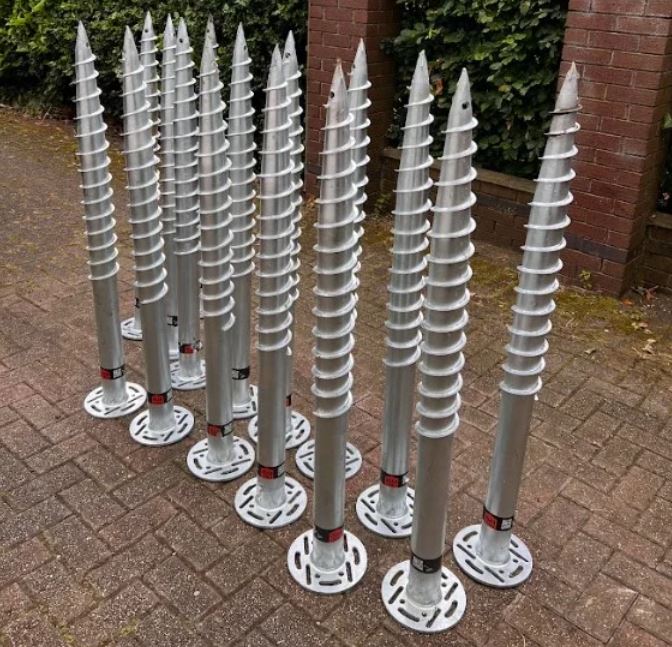
Image: Lux Garden Rooms
What Is a Ground Screw?
Ground screws are typically:
- Up to 2m in length
- Installed from the surface (handheld or small machinery)
- Variable in form, ranging from large threaded screws to twisted square bars
How Ground Screws Work
Ground screws rely primarily on:
- Shaft friction
- Resistance from the surrounding shallow soil
This means their performance is entirely dependent on the condition of the soil along their full length.
The Critical Weakness
Ground screws are often used in unsuitable conditions, especially:
- High shrinkability clay
- Areas within the zone of influence of trees
- Sites requiring deeper, stable bearing strata
If the top 50–100cm of soil dries and shrinks (common in clay), you lose capacity immediately.
A recent example:
We were approached by a homeowner who had installed a garden room using ground screws (1.2m deep) in high shrinkable clay, located 5m from an oak tree, and he was experiencing seasonal movement.
As moisture levels changed, the clay expanded and contracted, causing the structure to rise and fall, just like a shallow foundation.
It was suggested an attempted fix would be to excavate around the ground screws and backfill with concrete – this would only make matters worse, creating an irrecoverable and poorly performing shallow pad foundation.
A more appropriate fix would have been helical piles to 4m depth.
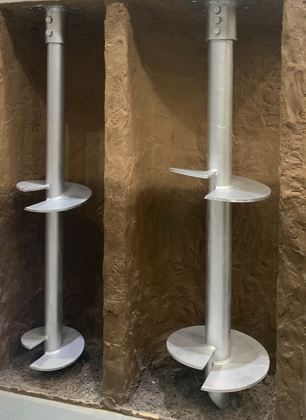
What Is a Helical Pile (True “Screw Pile”)?
Helical piles are a completely different technology.
They consist of:
- A central steel shaft
- Discrete helical plates (helices) welded at intervals
- Modular extensions to achieve depth
How Helical Piles (Screw Piles) Work
- End-bearing system
- Load is transferred through the helices into deeper, more stable strata
- Not reliant on shallow soil conditions
Unlike ground screws, they are engineered foundation solutions.
Why Helical Piles Perform Differently
- Load Transfer Mechanism
- Helical piles: End-bearing through helices
- Ground screws: Shaft friction in upper soils
This is the fundamental difference.
-
Depth and Stability
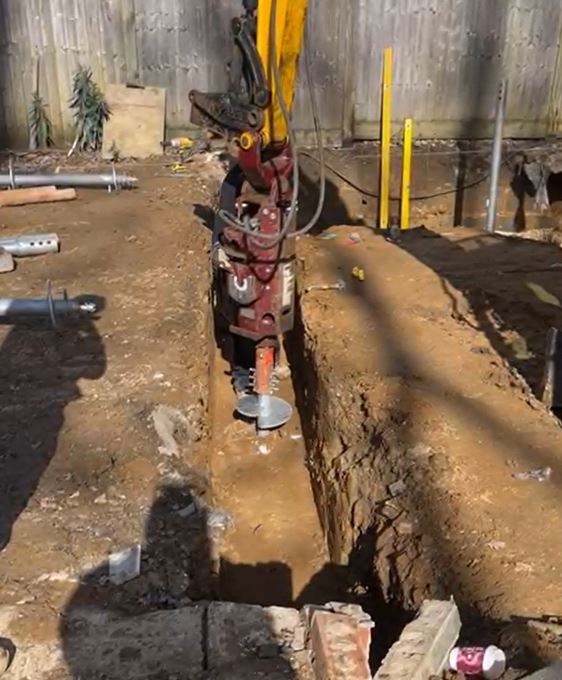
Helical piles are installed in sections, allowing them to:
- Reach deeper competent strata
- Avoid influence zones (e.g. tree roots, shrink/swell zones)
Ground screws cannot achieve this in any meaningful way.
-
Torque = Capacity (A Critical Advantage)
One of the most powerful features of helical piles is:
Installation torque directly correlates with load capacity
- Higher torque = stronger ground = higher capacity
- Measured in real time during installation using calibrated equipment
This gives Building Control something rare: on-site validation of performance as the foundations are installed. No waiting for concrete to cure. No waiting for testing.
-
Engineered Design vs “Off-the-Shelf”
- Ground screws:
- Typically selected from catalogues
- Rarely designed for site-specific soil conditions
- Helical piles:
- Designed using:
- Site investigation data
- BGS records
- Trial installations (torque testing)
- Designed using:
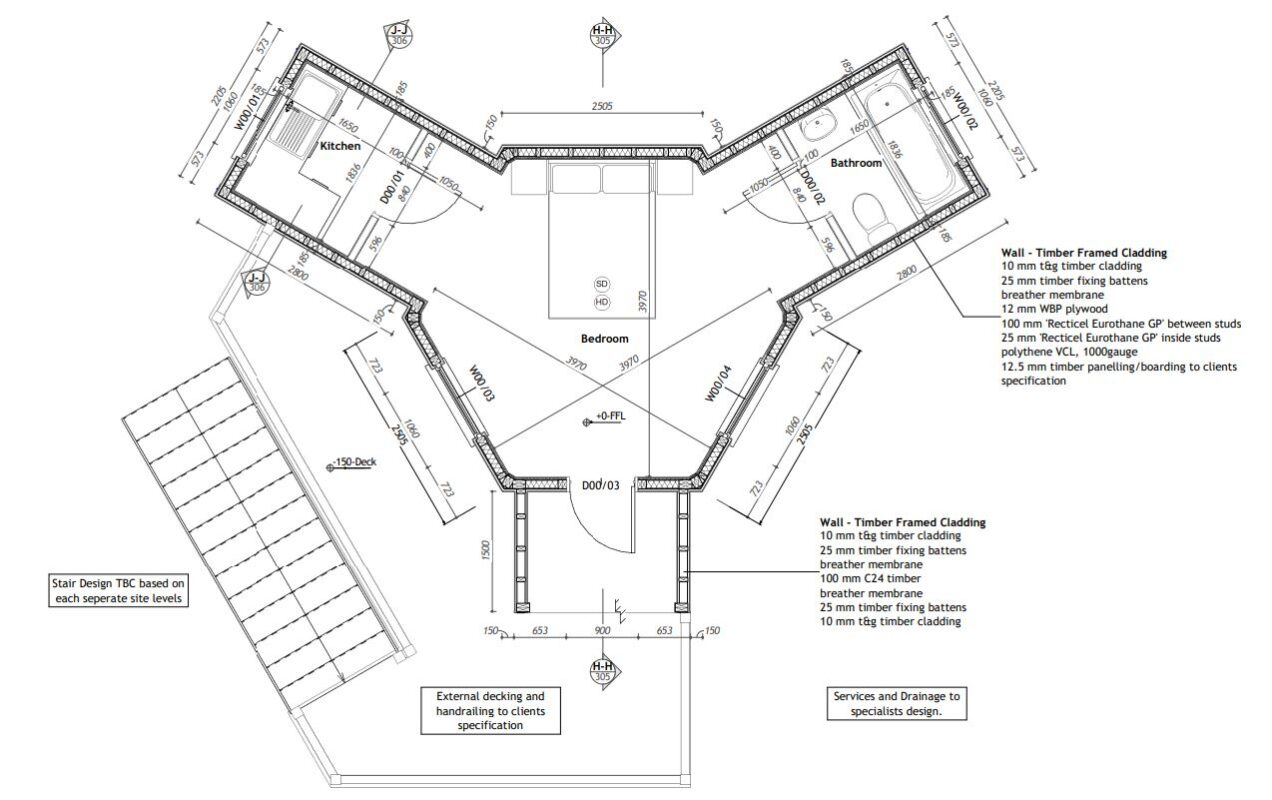
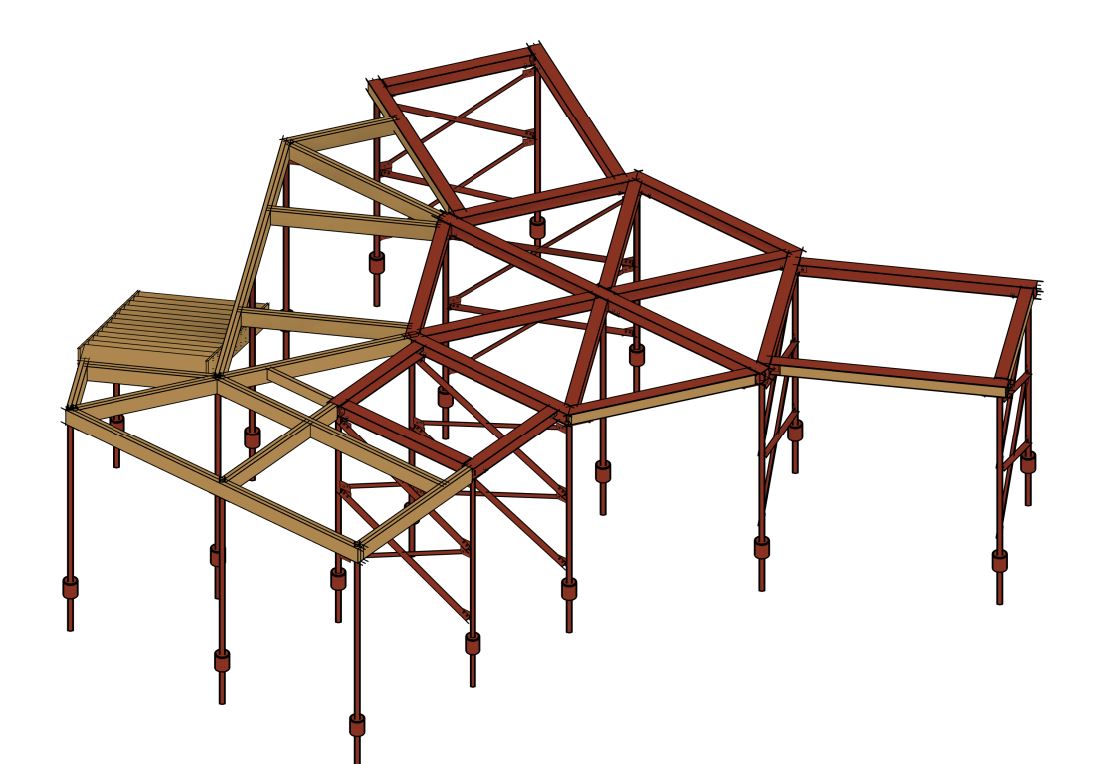
Installation and Design Detail (What Good Looks Like)
Helical pile helices are:
- Circular steel plates
- Cut and formed into a spiral
- Welded at specific angles and spacing
Spacing is critical:
- Typically 3x the diameter of the helix
- Ensures efficient load transfer and avoids interaction between plates
These aren’t lightweight components they are:
- Thick-walled steel shafts
- Designed to withstand high installation torque (often the maximum stress they will ever experience)
Why Building Control Is Right to Be Concerned
The issue is not that “screw piles don’t work.”
It’s that:
Ground screws are being used where engineered deep foundations are required.
They may perform adequately in the short term, but:
- They remain vulnerable to shallow ground movement
- They behave like shallow foundations
- They do not address geotechnical risks
Where Ground Screws Do Work
To be fair, ground screws have a place:
- Lightweight structures
- Stable, granular soils
- Situations without shrink/swell risk
But they are not a universal foundation solution.
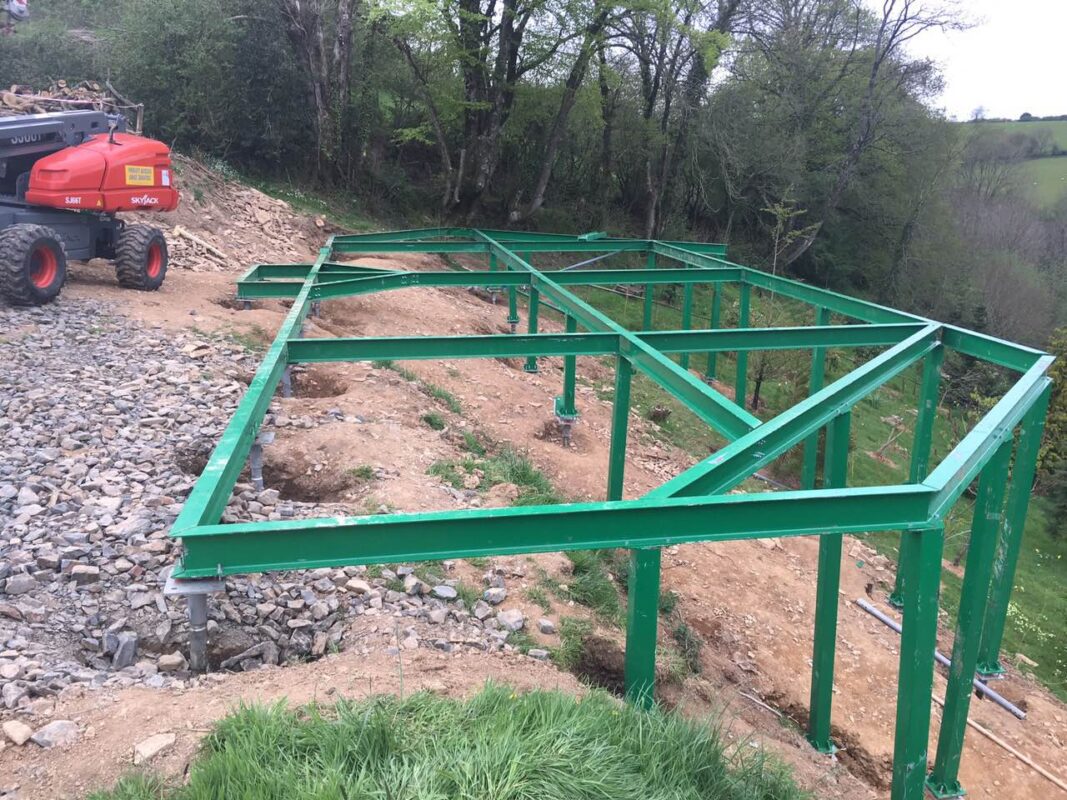
How Building Control Can Move Forward
Rather than a blanket ban, a more robust approach could be:
-
Demand Engineered Solutions
-
- Require site-specific design
- Distinguish clearly between ground screws and helical piles
-
Require Torque Verification
-
- Calibrated torque heads
- Digital readouts
- Data logging of installation
-
Encourage Validation Testing
-
- Trial installations to confirm design assumptions
- Adjust depth based on achieved torque
The Case for Helical Piles
When properly designed and installed, helical piles offer:
- No spoil removal
- Immediate load-bearing capacity
- Suitability near tree roots (displacement installation)
- Adaptability to variable ground conditions
- Real-time verification of capacity
Conclusion
The current concern from Building Control authorities is both understandable and justified.
What’s being challenged is not the principle of screw pile foundations but the misuse and misunderstanding of two very different systems.
Ground screws and helical piles are not interchangeable. One relies on shallow soil conditions and is highly susceptible to environmental changes; the other is an engineered, verifiable deep foundation solution designed to perform reliably across a range of ground conditions.
For Building Control officers, the key lies in clarity and specification ensuring that what is being proposed is appropriate for the ground conditions, properly designed, and capable of being verified on installation.
We’ve recently been approached by several Building Control officers, planners, and architects asking for our perspective on screw piles and their appropriate use.
Want to Find Our More? Register For Our Webinar
If this is something you’re currently navigating, we’ll be hosting a webinar in the coming weeks to explore the topic in more detail.
If you’re interested in attending, please click here to register your interest.
Related Blog; Ground screws vs helical piles – what’s the difference?
