Balcony Repair, Case Study

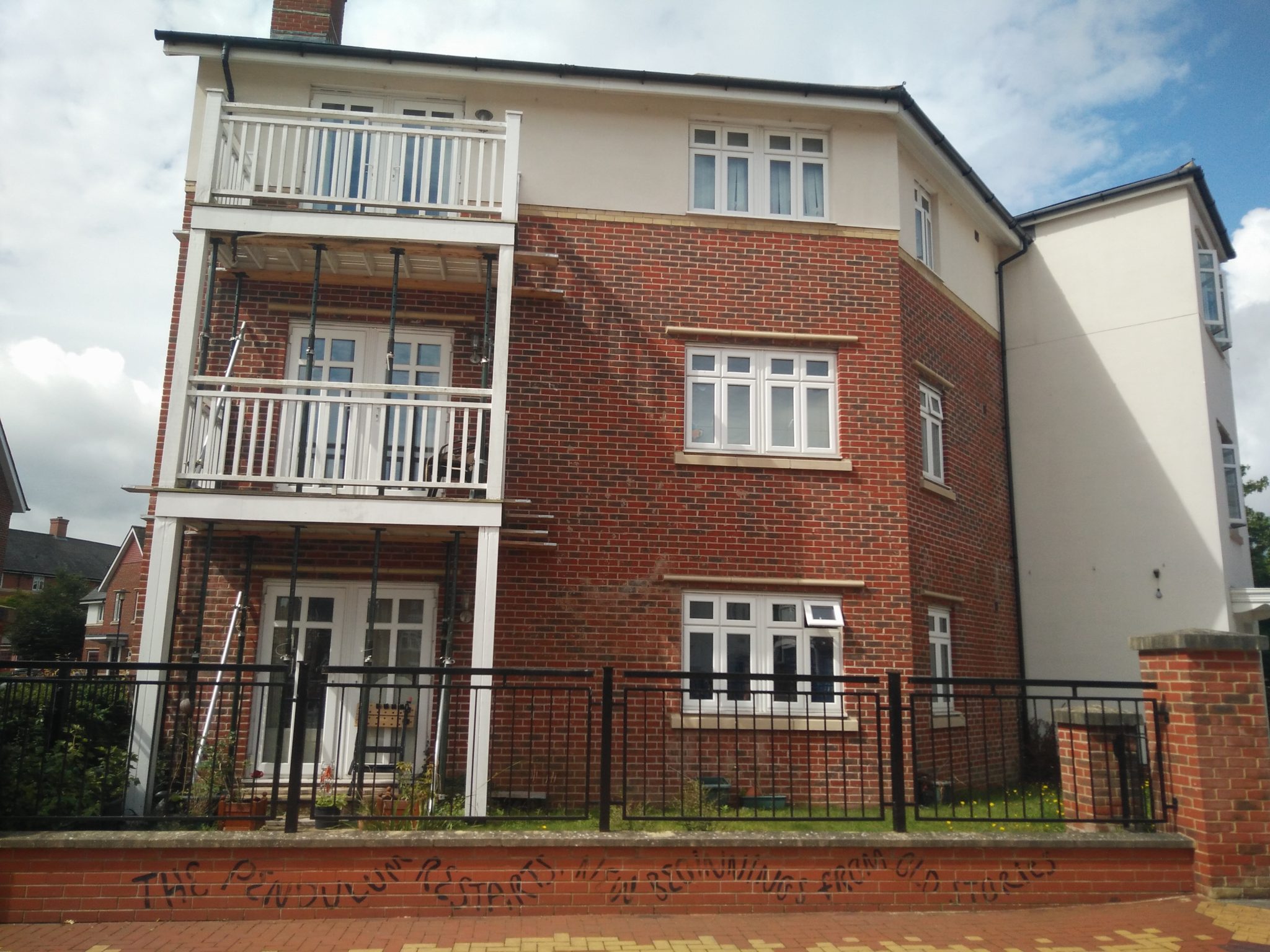
We have recently been working with a local property management company to oversee the balcony repair (design, demolition and build) of twenty two balconies in Berkshire.

The development was constructed in 2004/2006. It consists of two and three storey blocks of flats of traditional construction. The balconies are typically 1.3m deep and 3m wide, constructed of softwood.

Independent Survey

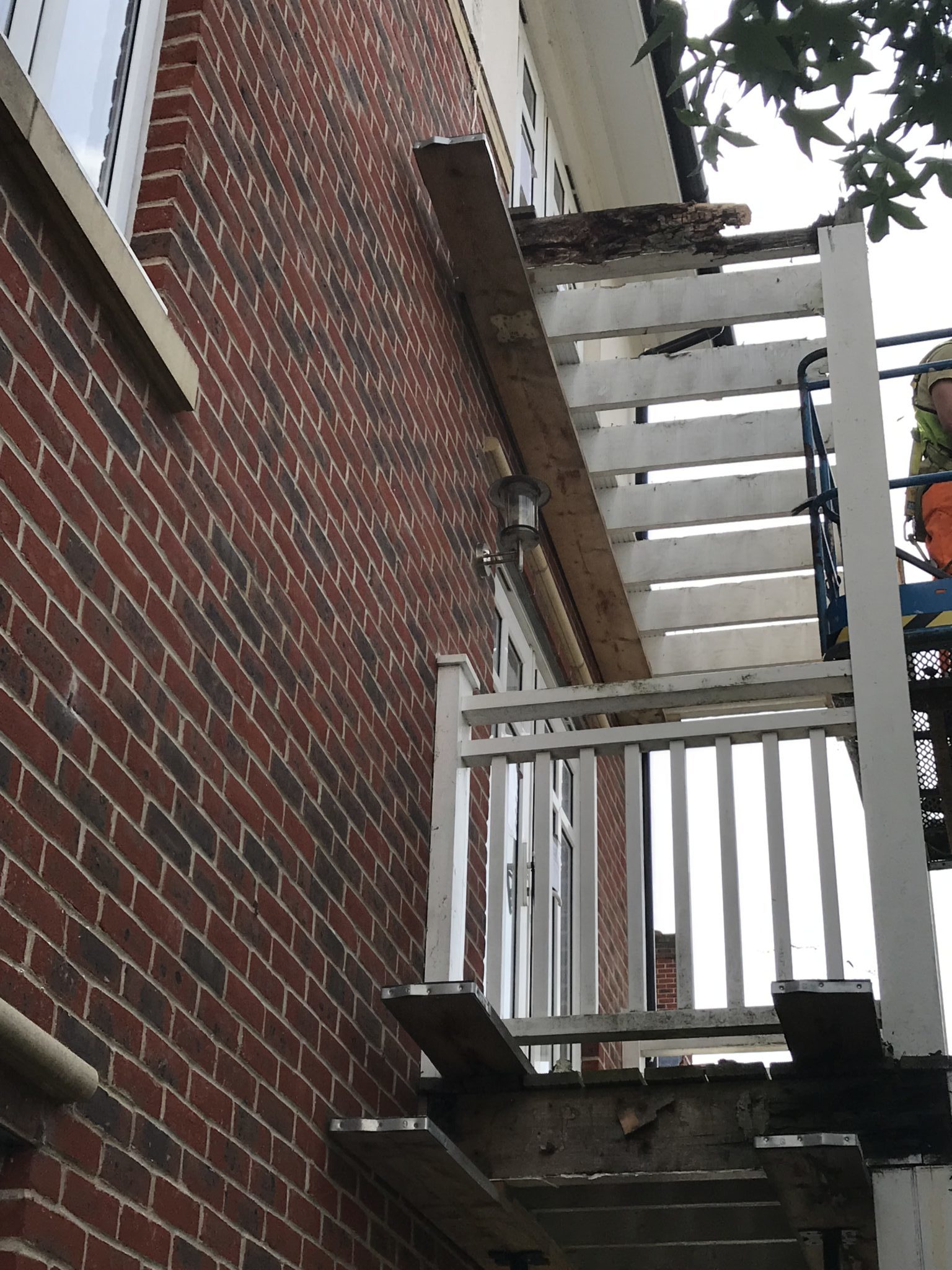
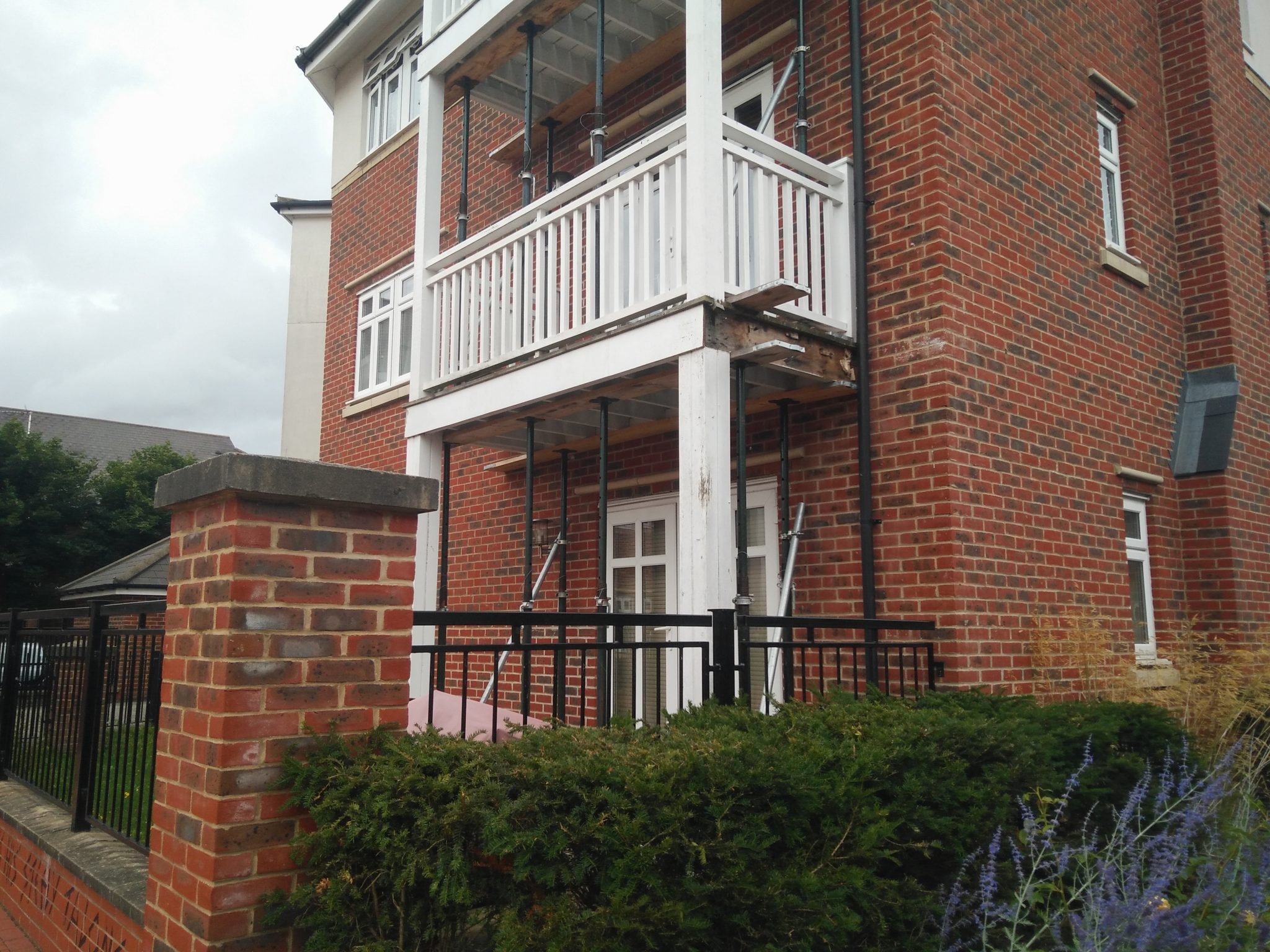
We were initially instructed to perform an independent survey of the temporary works that were in place supporting the rotting balconies. 

It was clear that over the two years since the props were installed, the condition had deteriorated significantly.

Structural Assessment of Balconies

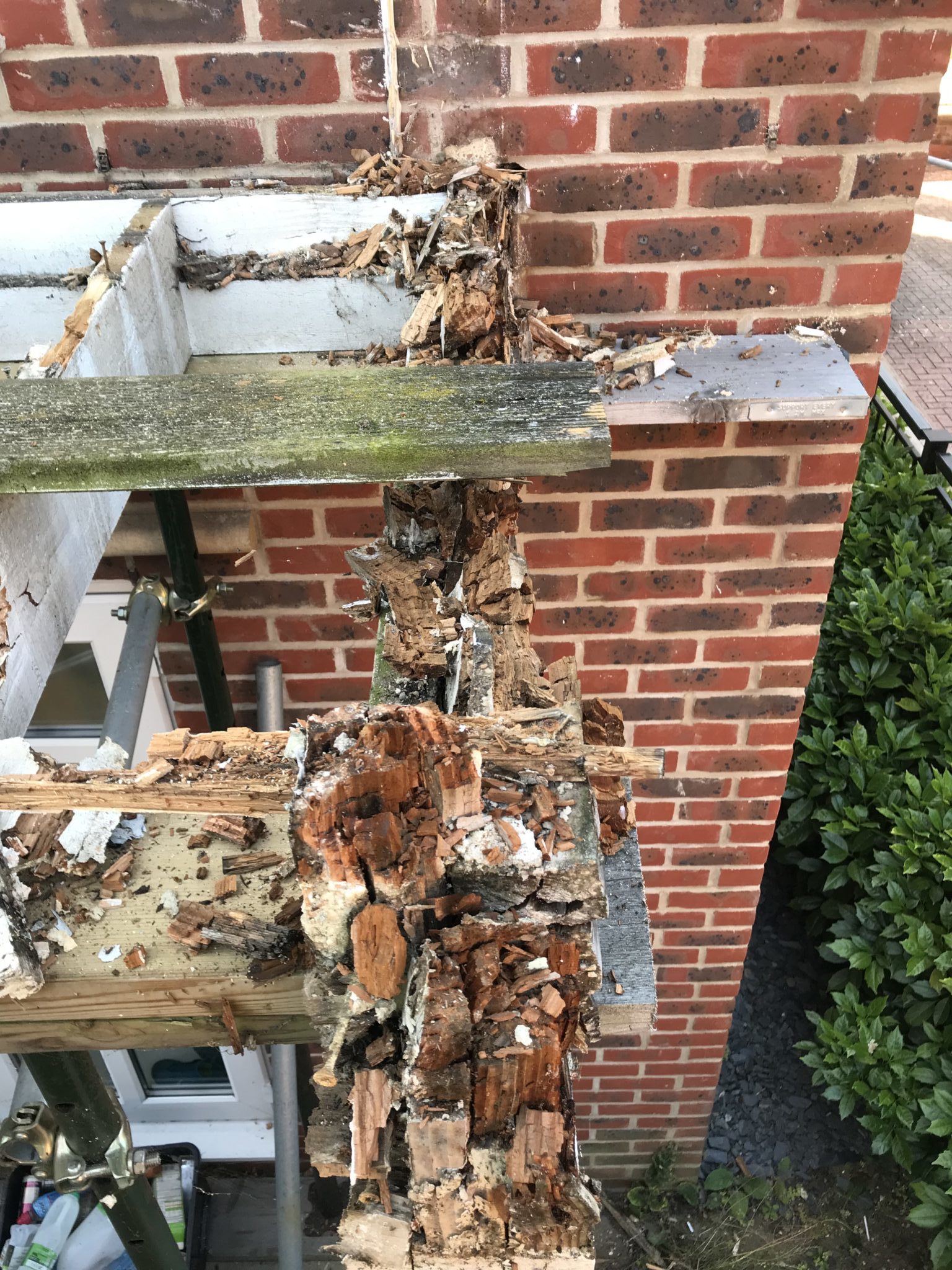
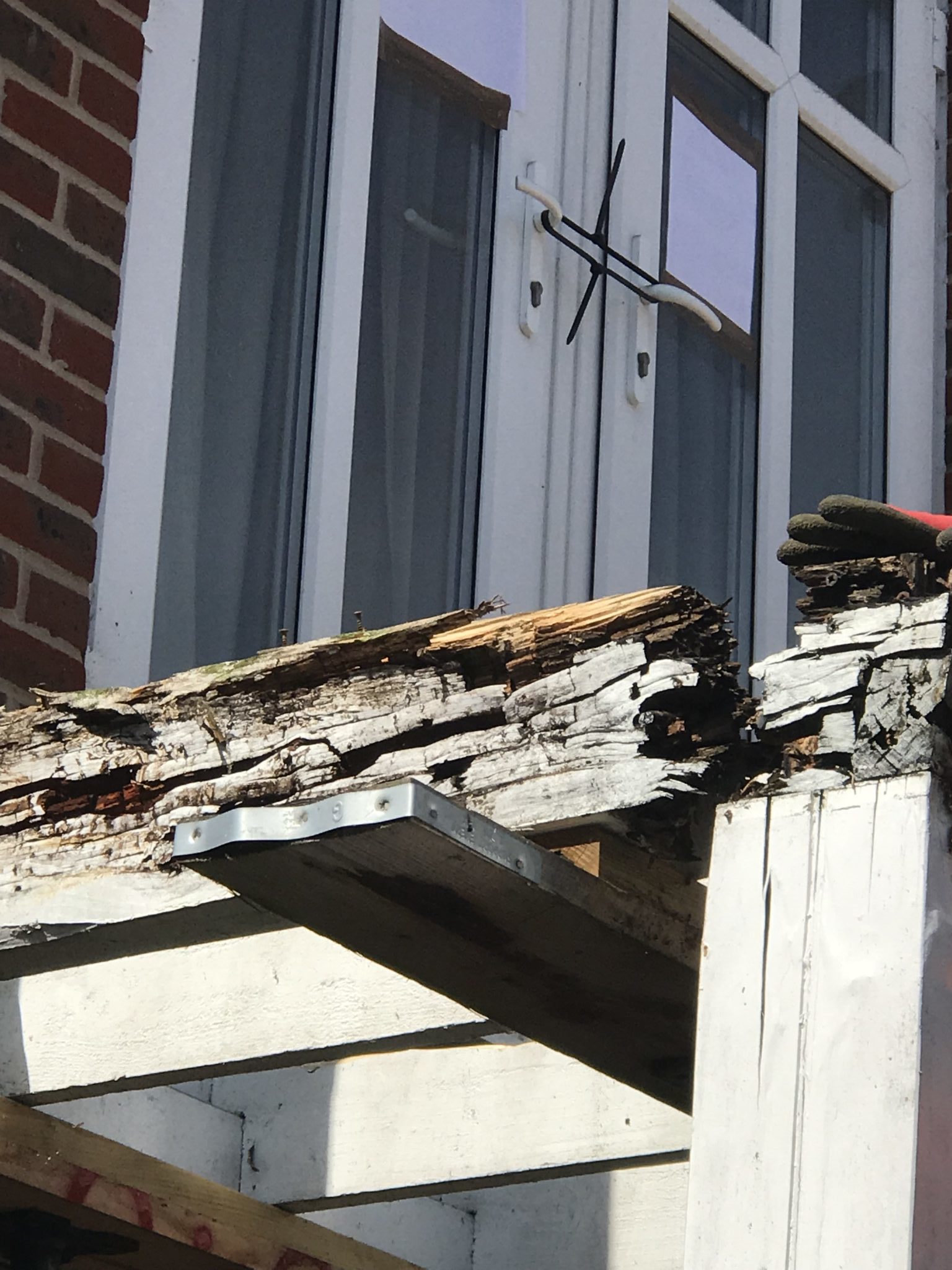
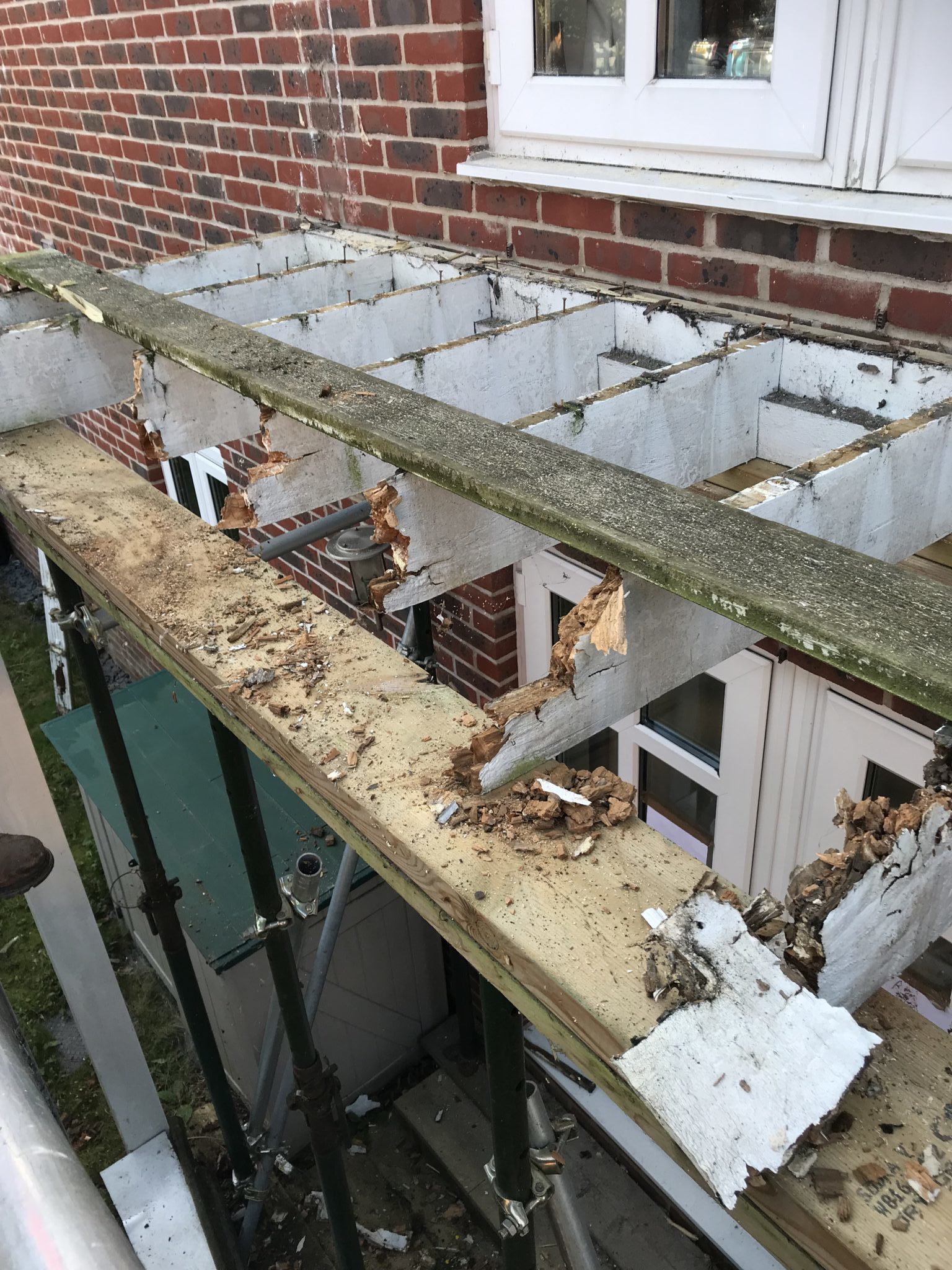
All timber balconies were suffering from substantial rot to the main structural members.

Typically occurring at, or close to the junction of the columns, the trimmer beam and the edge joists at first and second floor levels.

Substantial rot was also noted to the underside of the trimmer beam in places.

structural assessment balcony

Section 20 of the Landlord & Tenant Act 1985

In accordance with the Landlord and Tenant Act, Leaseholders were involved in the three-stage consultation procedure. 

Under Section 20 of the Act, funds needed to be in place before we were instructed, hence the reason for the two year delay.

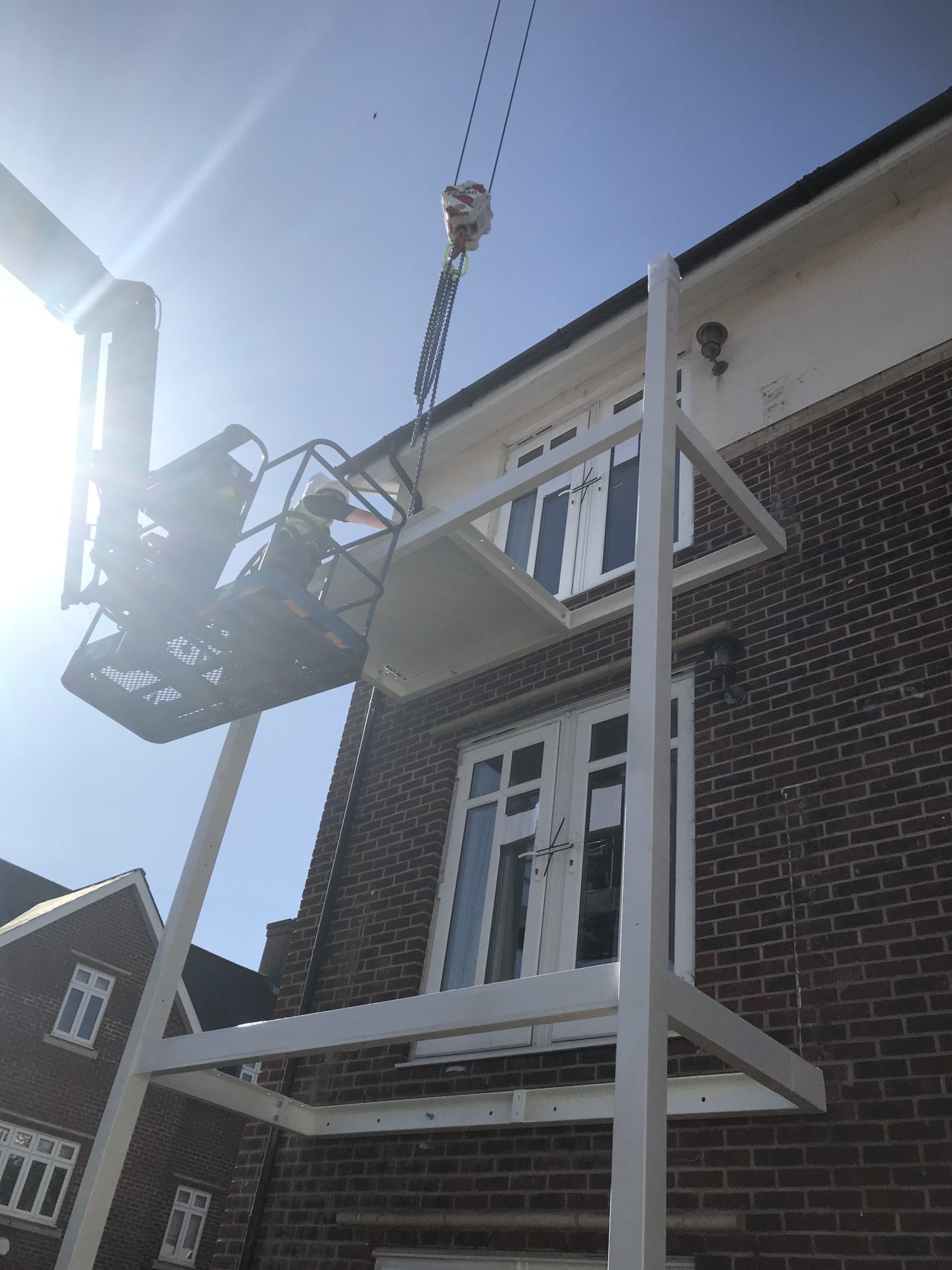
Early 2019 we were appointed as Main Contractor – The Design, Demolition and Build could commence.

“Balcony repair contractors”

Balcony Design

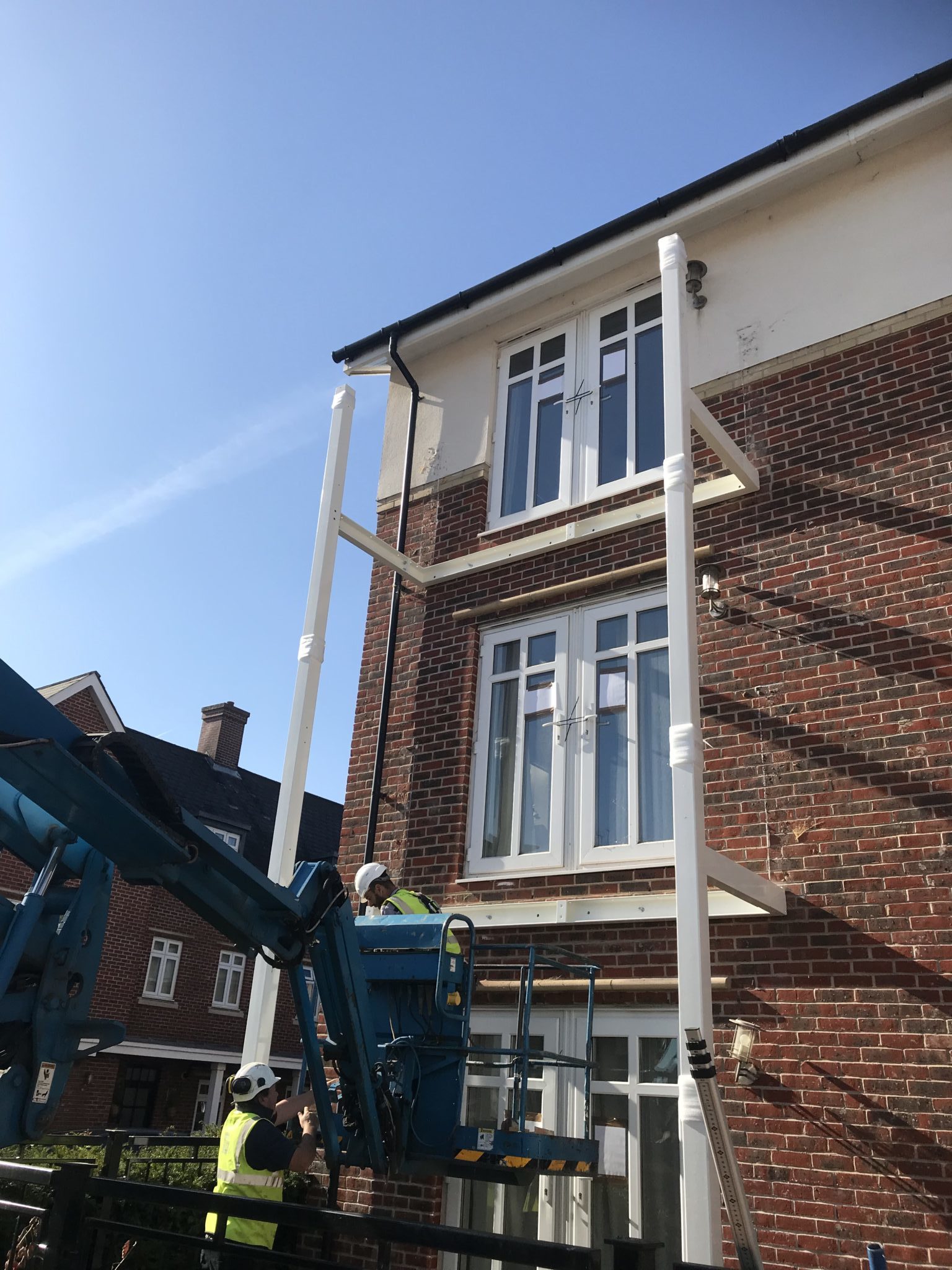
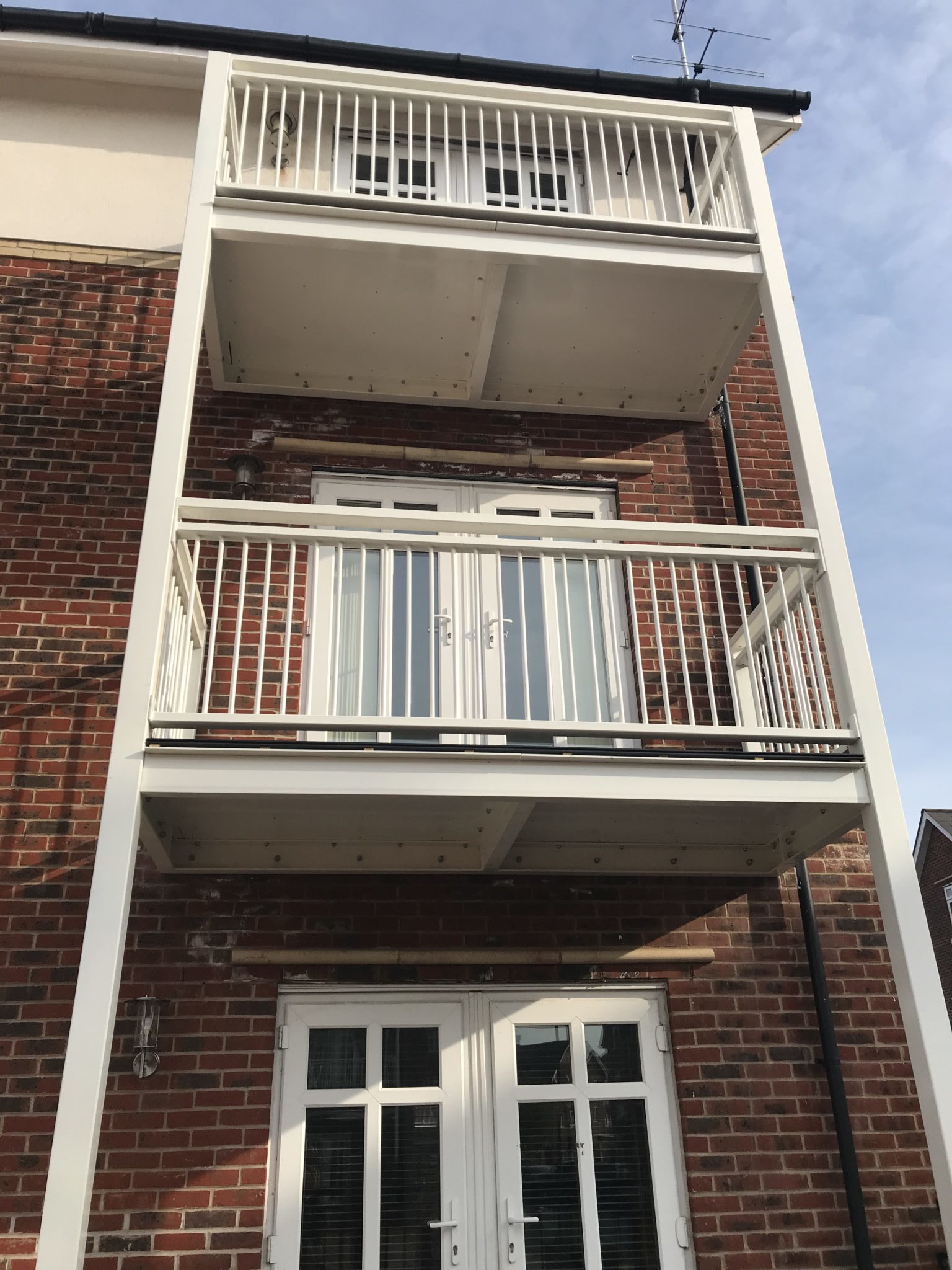
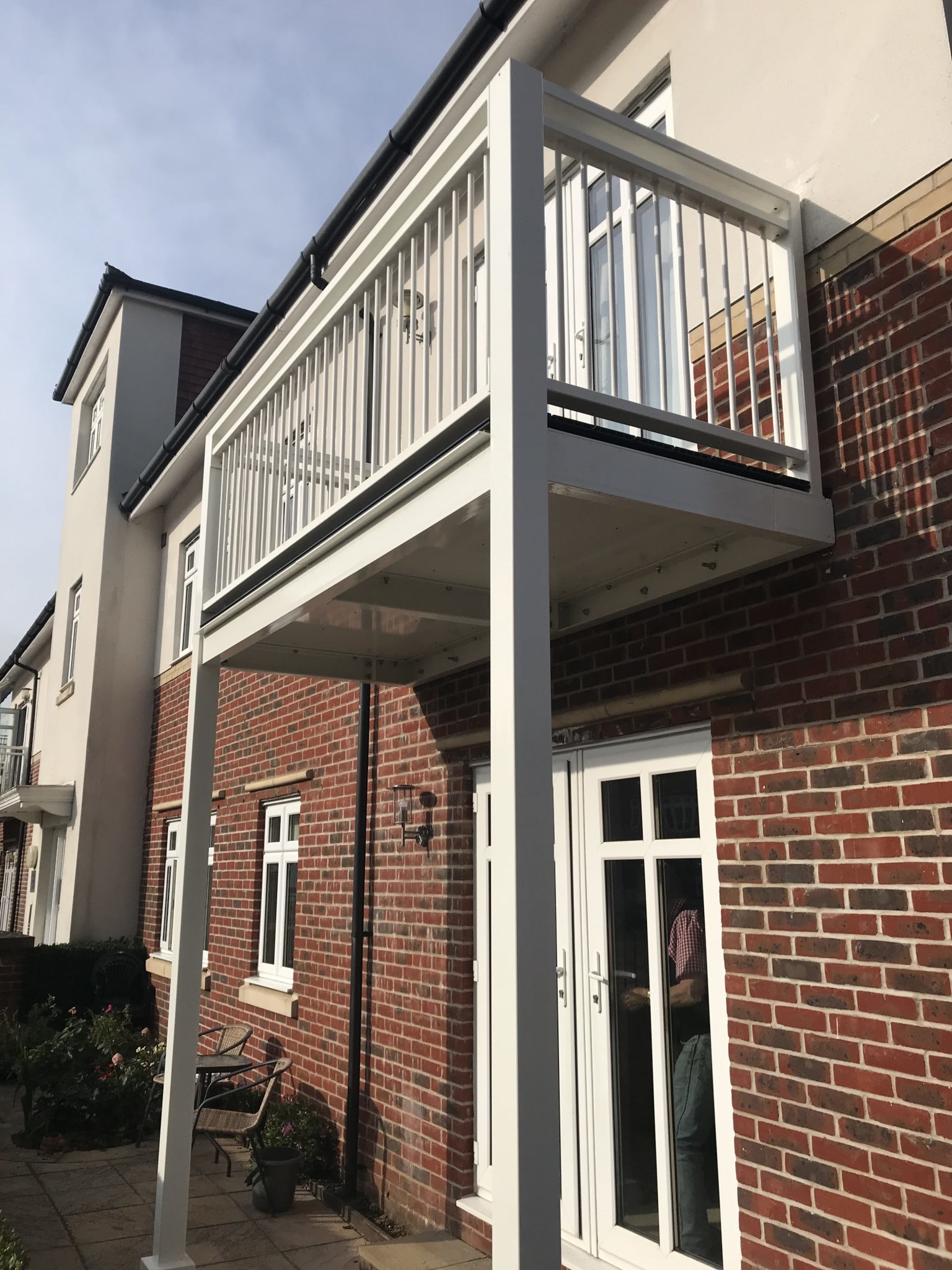
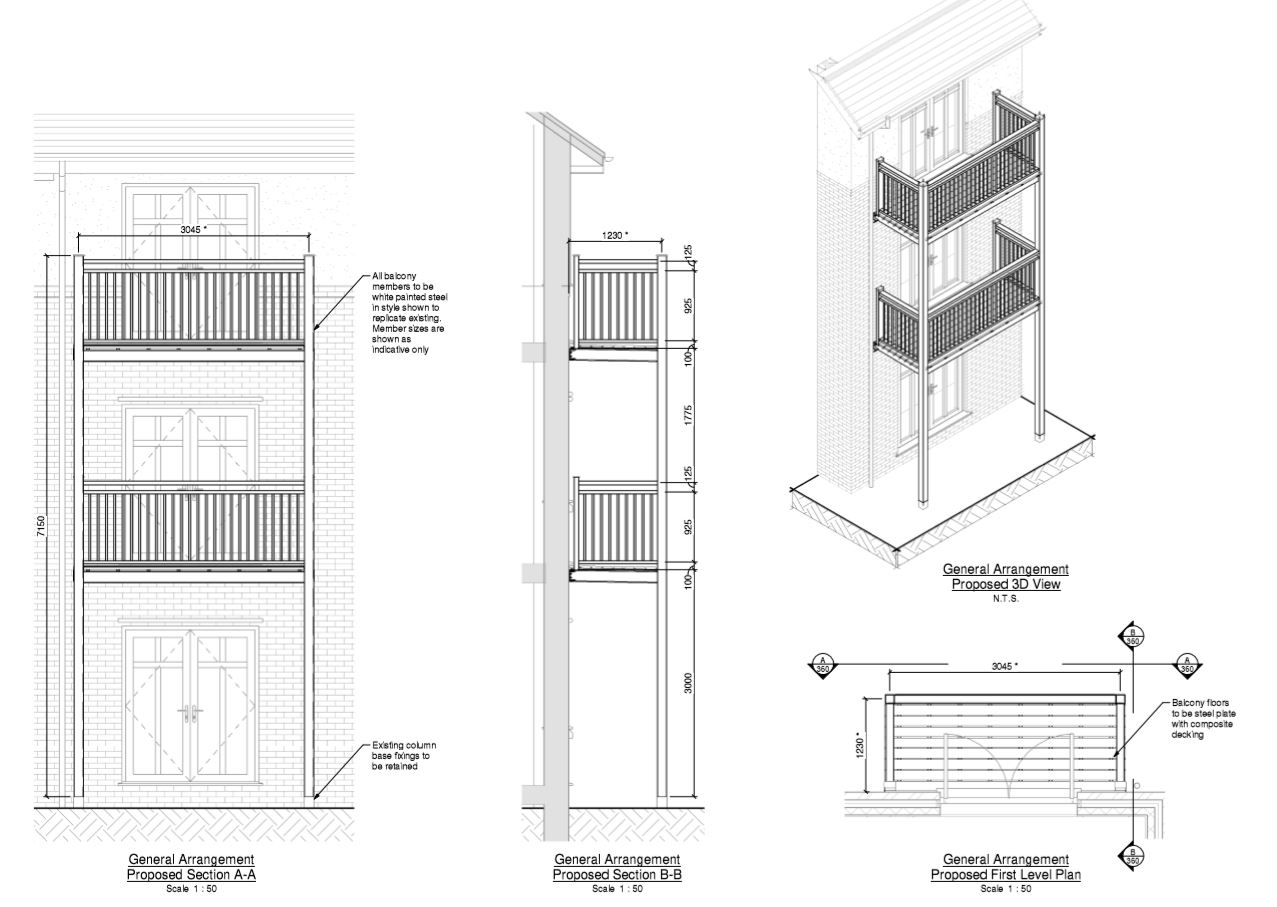
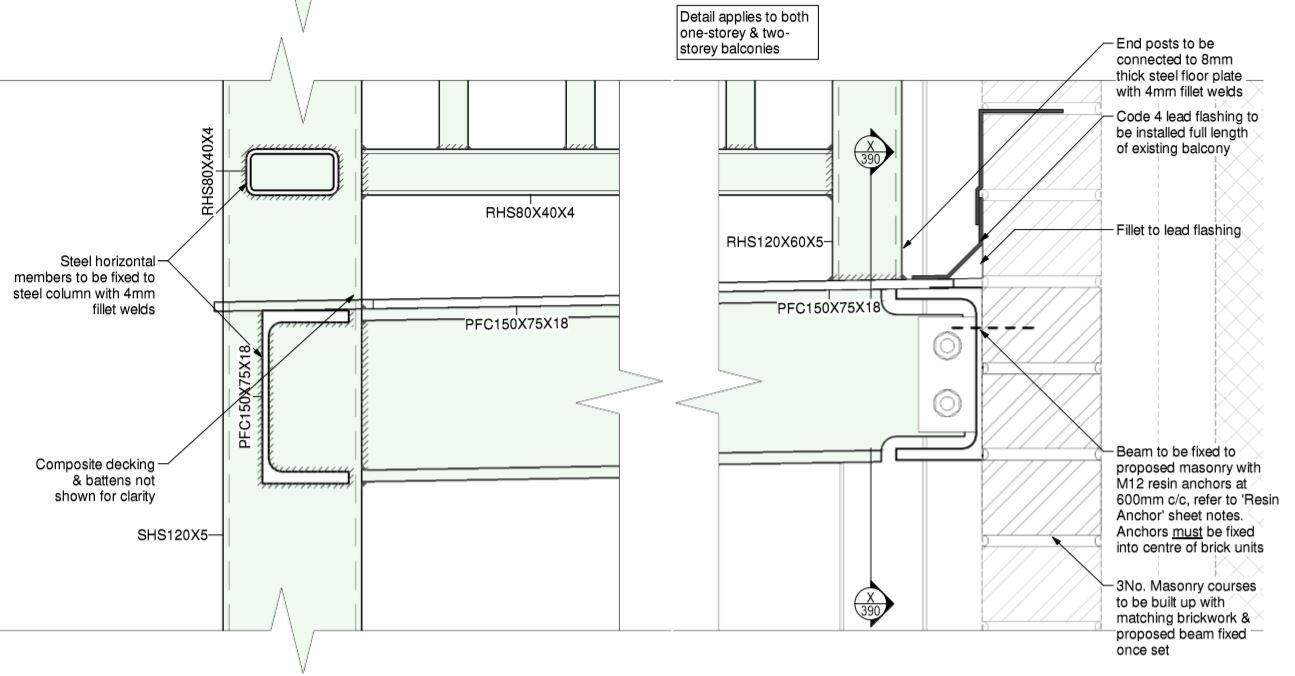
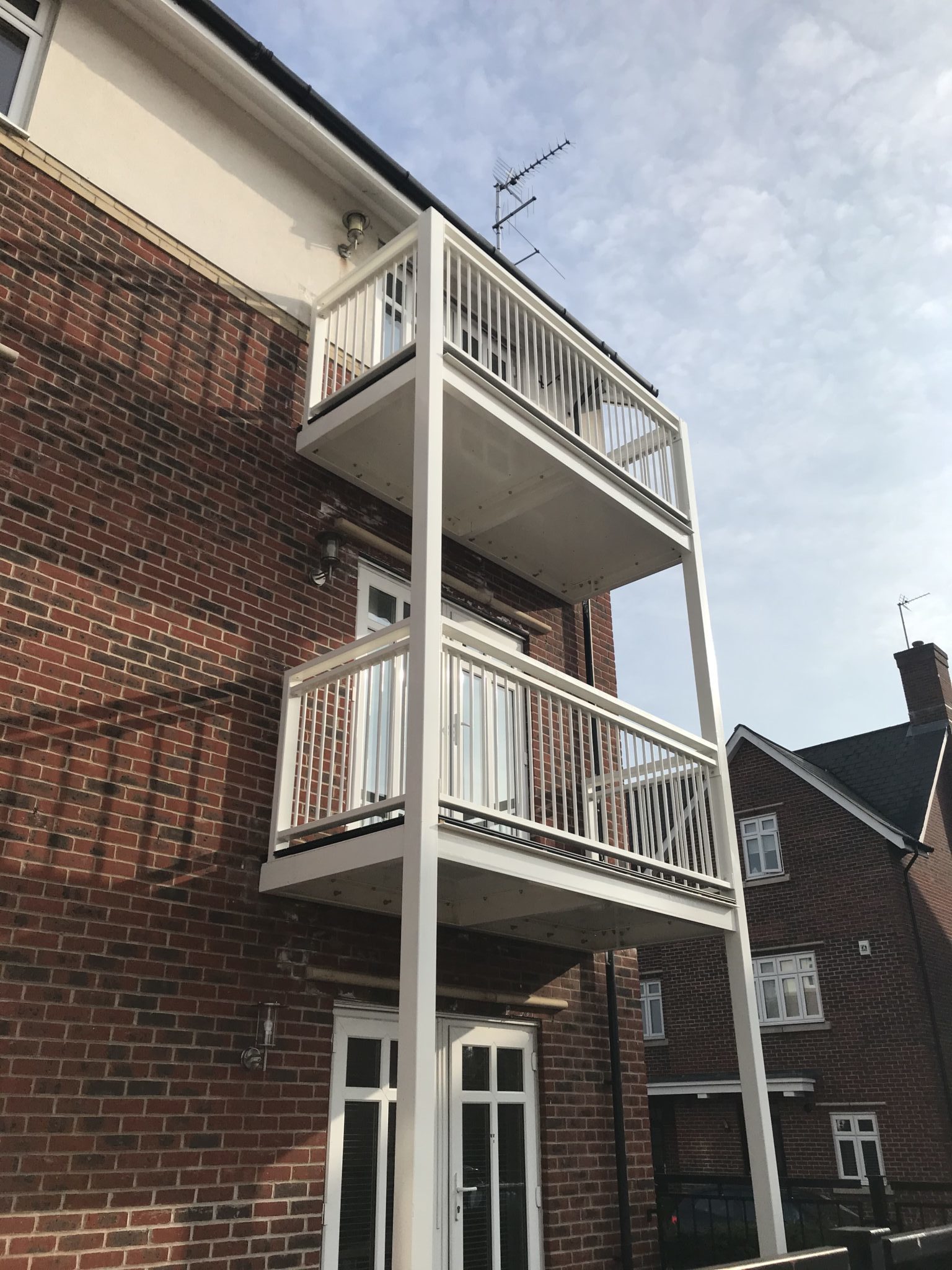
After consultation with the Leasehold Management company and the owners of the flats, the preference was for the new balconies to be primarily constructed of steel to reduce the costs of future maintenance.

All steelwork was galvanised and powder coated, with the balcony flooring constructed of wooden joists and composite decking.

To make maintenance easier and more cost effective, the balconies were designed so that flooring wasn’t part of the steel structure.

If the flooring of the balconies were to deteriorate in the future, it could be replaced independently from the steel balcony frame.

General Arrangement
Typical Sections and Details – Proposed Structure

Scope of Works

To manage the demolition of the existing balconies and their appropriate disposal as well as the design and installation of appropriate balcony foundations.

Design and Build of Balconies

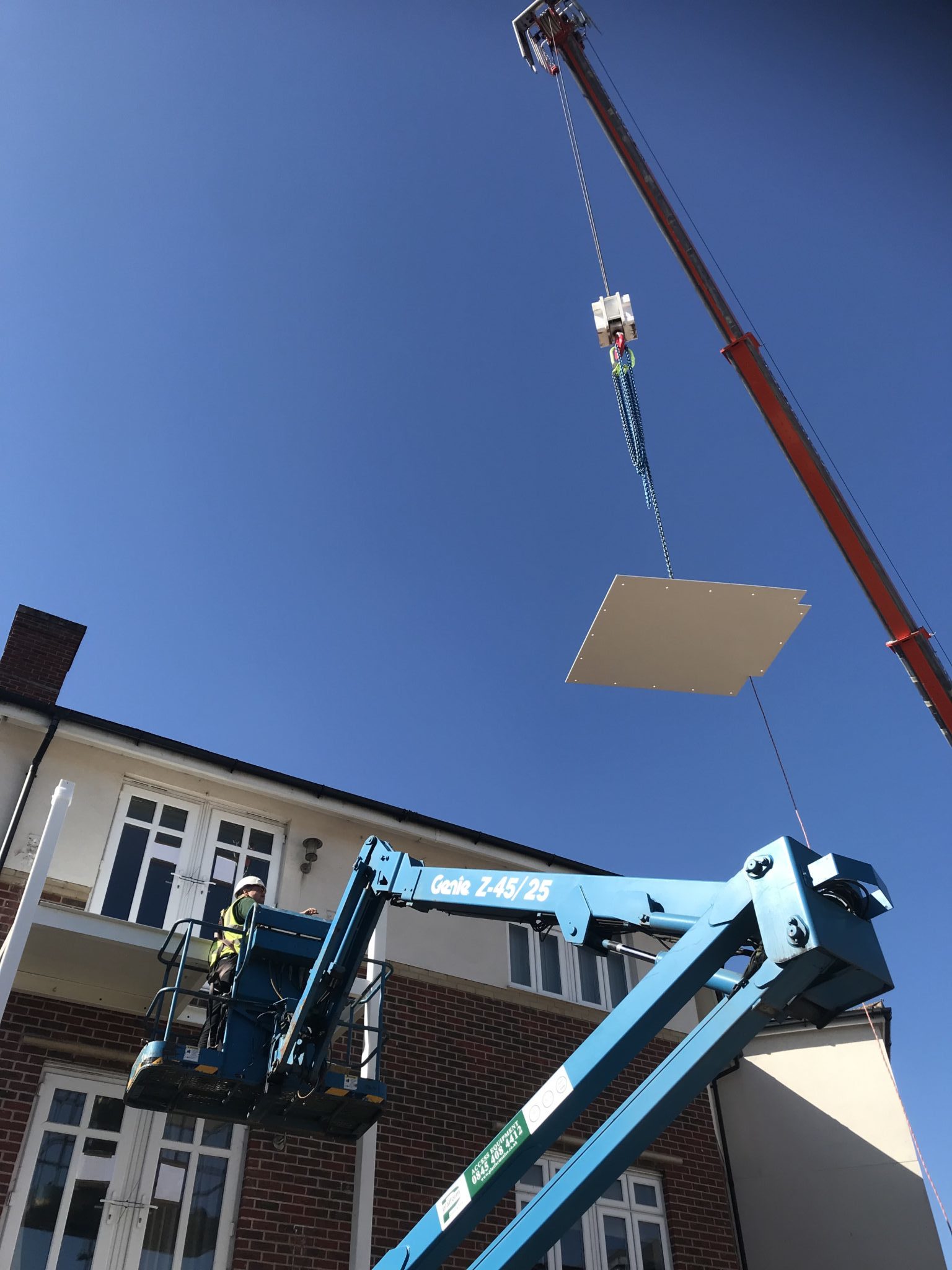
As main contractor we had overall responsibility for managing health and safety risks, planning, coordinating and supervising the work of specialist sub-contractors.

We successfully managed the project from Design Phase to the final inspection phase, delivering the finished product to Leasehold Management company and the owners of the flats.

Balcony Demolition and Construction Phase


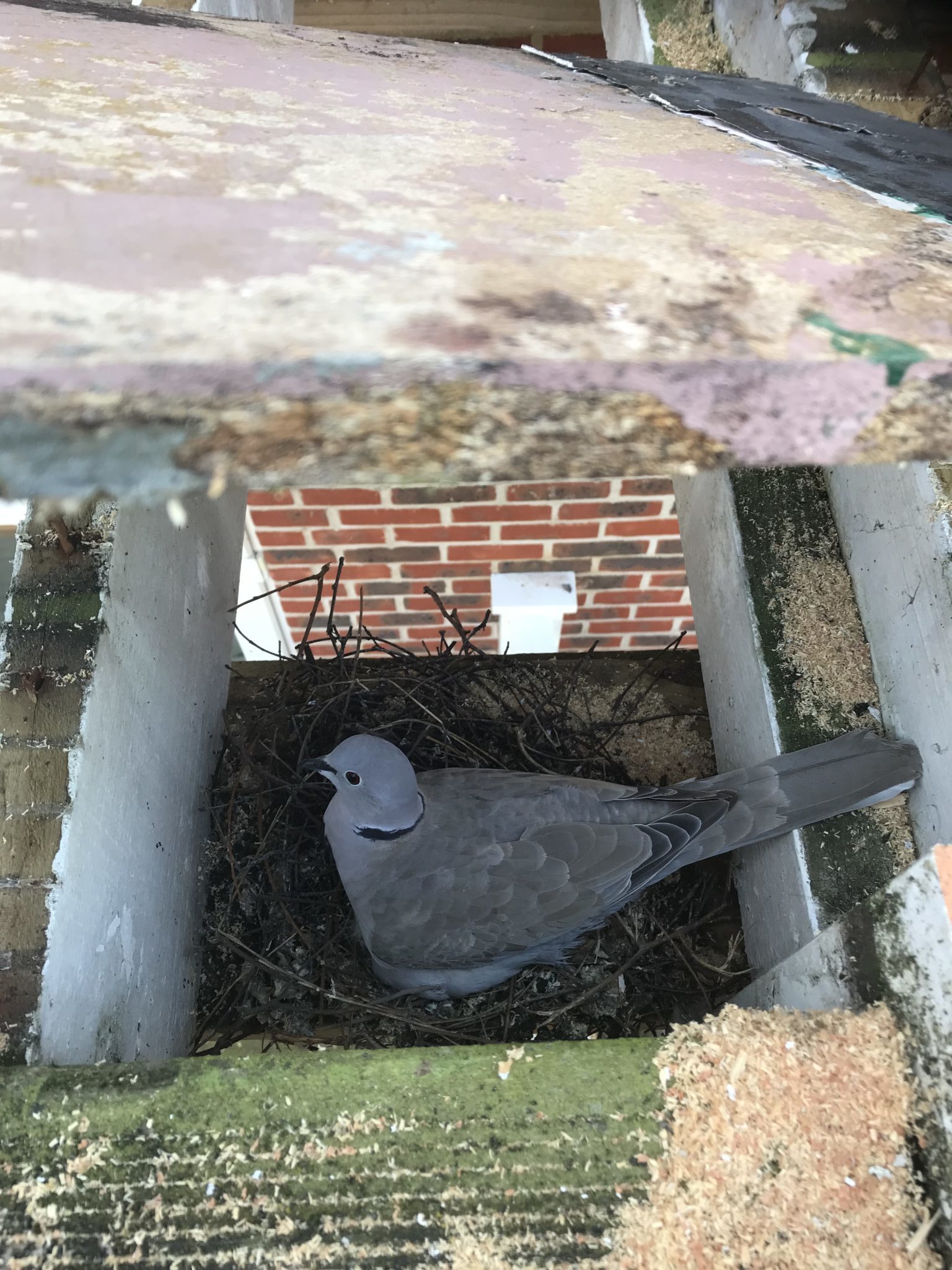
“Posh Pigeon”

As demolition work progressed, nestled under the floor of the 2nd floor balcony we found an unexpected guest!

Nicknamed the “posh pigeon” she was quite at home in her nest with her chicks.

To give them the best chance of survival the demolition contractors replaced the floor joists and waited a few days.

Luckily mum and her chicks flew the nest the following week.


Completion


Testimonial

“It all comes down to the management of the project – everything Michael Aubrey Partnership did was perfect”. Click here to read more.

Frank Smith, Property Owner, Gabriel Court


Balcony Repair

Do you own or manage properties with balconies?

Do you have concerns that they may be structurally unsound?

Contact us today for specialist advice.

Contact Us

I Do More Than Design Beams!

In July’s edition of Construction and Civil Engineering Magazine, catch up with our very own Managing Director, John Staves talking about what is a Structural Engineer and why are they so undervalued?


Structural Engineers help create record-breaking structures, beautiful structures, useful structures and sometimes just cool structures – anything from bridges, rollercoasters and skyscrapers to hospitals, schools, homes and public artworks.

Design Buildings

Structural Engineers design buildings, bridges and other structures to resist the forces applied to them.  These forces could be due to gravity, such as the weight of people and equipment within a building, the dynamic effects of people using a building or from natural events such as earthquakes.

Structural Engineers make sure the building works well in practice, depending on what it is used for: for example, a dance floor shouldn’t vibrate too much when people jump up and down on it.

Problem Solvers

Structural engineers are problem solvers.  Structural engineers use many skills.  From basic maths to cutting-edge technology. Every structure is different, so Structural Engineers are creative.  Finding solutions to unique problems all the time.

Practical

Structural Engineers are practical.  They don’t just think about the final permanent structure.  They think about how it will be built.

Safety Experts

Structural Engineers are safety experts.  Structural engineers are of critical importance in managing the risk to society throughout the lifecycle of the structure.  They consider the safety of structures from design and construction through to operation and demolition, in accordance with local legislation and best practice.  Structural engineers are key to ensuring that the built environment is robust and that lessons are learned when things go wrong.

Work Sustainably

Structural Engineers work sustainably.  They look to minimise materials used.  They innovate to make use of different modern materials.  Reducing demands on natural resources and recycling where possible.

Work as Part of a Team

But with all their skills, Structural Engineers don’t work alone.  They work as part of a team alongside Architects, builders and other engineers.  Construction is a collaborative game.  Sometimes the Structural Engineer will lead the team.  Calling for both project management and general management skills.


Proud to be a Chartered Structural Engineer

I am proud to be a Chartered Structural Engineer.  I am proud of the contribution I make to construction and more generally to society. 

But I sometimes get frustrated with the general misunderstandings around what I do and the benefits that what I do delivers.  Across the public as a whole, and within the political classes. 

Probably the worst is other allied professions misunderstanding what I do!


I Do More Than Design Beams! 

As I’ve outlined above, my skill set is broad and my contribution to projects is certainly more impactful than just safely transmitting vertical loads to the ground.

As a Chartered Structural Engineer, my education and training took longer than a medical doctor takes to qualify.  Like a Doctor, I have had to gain substantial experience and submit to both a gruelling examination and peer review to prove my competence. 

Just like a Doctor, I also have a professional obligation to keep up to date and improve my ability with Continuing Professional Development (CPD)

Lives Depend on my Decisions as a Structural Engineer

Multiple lives depend on a single decision I make as a Structural Engineer – if an occupied building collapses because of an error I make, many could be injured.  A Doctor deals with decisions that typically affect one person at a time.

The value a Doctor adds is clear and he is rightly recognised for that.  This is because most people have had some form of interaction with a Doctor.  Knowingly.  Either directly or via a close relative.

The Value a Structural Engineer Adds Is Subtler.

You are likely sat in a building, reading this.  A Structural Engineer has probably made sure that the building is safe and resists the forces applied to it. 

The Structural Engineer provides robust and durable shelters that people need to protect them from their environment. 

Did you cross a bridge on your journey to work or home? 

A Structural Engineer was undoubtedly involved in its design and currently helps with its maintenance, making sure you arrive safely.  You may not have engaged the Structural Engineer directly in either case, but you benefit from his/her work.

Structural Engineers Don’t Shout About What Value They Add

It is not a common trait of a Structural Engineer to shout about what he/she achieves and what value he/she adds, but it can be considerable. 

A little extra investment on the Structural Design of a building (spend on structural design is an investment because it will save absolute project cost) can pay back multiple times over during construction. 

Save on Build Costs by Early Input From The Structural Engineer 

Works can be kept simple and efficient, by early input from the Structural Engineer.  If investing £1k on Engineering fees could save £2k of build costs, how often would you want to invest £1k?  With the extra time that buys to refine and improve the design, and impact the buildability, this is easily possible and doubles your money!

And finally, the next time you visit your Doctor, just think, the surgery or hospital wouldn’t be there without the work of a competent Structural Engineer.

John M Staves CEng FIStructE is Fellow and Vice President of the Institution of Structural Engineers and Managing Director of Michael Aubrey Partnership

This article appeared in In July’s edition of Construction and Civil Engineering