Our third speaker for the day was John Staves, Managing Director at Michael Aubrey Partnership. John is a Chartered Structural Engineer and has worked in the Telecoms industry for over 30 years.

Specialist Telecoms Knowledge

He could be described as a “poacher turned game keeper” as initially, John’s specialist knowledge was gained through working with the mobile operators – he understands the Telecoms market and it gives Michael Aubrey Partnership a unique stand point when representing the Fire and Police Services – providing them with independent, unbiased advice.

John opened his presentation talking about what the drivers were for structural safety, with reference to BS8210 2012. He talked about how British Standards are moving away from being prescriptive to acting more as a “prompt” to think. Allowing you to set out a framework – more of a risk management approach where you;

  • identify hazards
  • identify who could be at risk
  • eliminate, reduce or control the hazard and
  • train those affected by it

Telecoms Condition Surveys

John shared his experience talking through a recent case study where Michael Aubrey Partnership were asked to undertake detailed condition surveys on 65+ drill towers and ancillary structures across the UK.

Masonry drill tower


Using a traffic light system of categorisation he was able to help the Fire Authorities identify which structures were in urgent need of repair.

  • 13% of drill towers were identified as being “red” and having defects so serious that they required immediate action
  • Over half of drill towers required maintenance within 12 months

Maintenance Schedule

Ordered by priority, a maintenance schedule was generated which allowed the Fire Authorities to plan their maintenance project around this.

Economies of scale were able to be achieved with contractors, as maintenance programs could be carried out in a methodical, planned way.

Importance of Routine Maintenance

John also talked about the importance of regular routine maintenance.

Whilst unexpected deterioration, damage or failures may still occur, with a regular maintenance cycle you will minimise the need for major refurbishment and repairs

Structures deteriorate over time and will continue to deteriorate if regular routine maintenance is not carried out. Minor repairs and preventative maintenance, should minimise future problems and ensure your structures remain in peak condition.

In summary;

  • Adopt a risk based approach
  • Set your maintenance policy in line with the British Standard BS8210: 2012
  • Adopt a tier based approach with regular inspections and reporting by users, annual reporting by your estates department and specialised surveys every 3 years

When was the last time you carried out a detailed inspection of your property portfolio? If you did, would you find your sites in the Red or Green category?

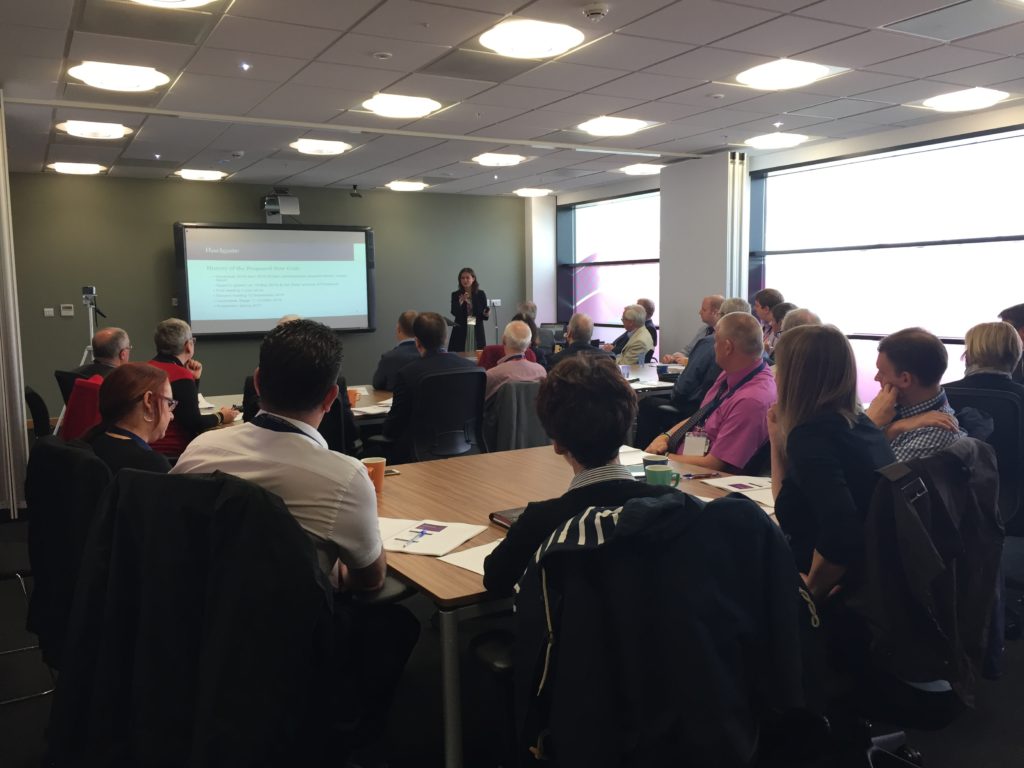
Property Managers, Health and Safety advisors and those responsible for property assets, gathered at Leicestershire Fire and Rescue Headquarters yesterday to attend the first in a series of seminars exploring the implications of the new Telecommunications code, RF and Structural Safety.

After welcome and introductions from Duncan Wells, Michael Aubrey Partnership, Thekla Fellas, Fladgate Solicitors opened the seminar examining how the new code will affect property owners.

Thekla talked about why the government feels reform is necessary; citing their commitment to incentivising investment to fully support the rollout of the country’s digital communications infrastructure.

Thekla talked about;

  • How the Department for Culture Media and Sport (DCMS) want to make it faster, easier to secure sites for the Operators – it’s a political decision
  • How it is going to be virtually impossible for landowners to get Operators off their sites
  • How the new telecommunications code will give Telecoms operators access to land – moving to a “no scheme” basis of valuation regime (a  valuation which will favour Telecoms operators).
  • How the new telecommunications code will put digital communications infrastructure on a similar regime to utilities like electricity and water.
  • New rights that will make it easier for telecommunications operators to deploy and maintain their infrastructure
  • Telecommunications operators will have a new automatic right to upgrade and share apparatus
  • Telecommunications operators cannot be charged extra for changes where there is minimal adverse visual impact or burden on site providers.
  • Improved dispute resolution

Telecommunications code

What Impact Will The New Telecommunications Code Have For Property Owners?

The change in the basis of valuation to a “no scheme” rule reflecting the underlying value of the land. Reduced rental income: This will limit the value of consideration that the site owner receives for granting the lease.

When Will this take Effect?

The new Telecommunications Code rights will only apply to contracts signed after the law has come into effect and will not apply to existing contracts retrospectively – transitional provisions are not supposed to be retrospective. The bill is currently scheduled to come into effect in Spring 2017.

Speaking after the event John Staves said

No one is sure what impact this new legislation will have on property owners, but after listening to Thekla’s presentation I think that these changes could well be detrimental to the operators who will find that property owners are reluctant to allow new installations with such sweeping terms. 

It seems really odd that private companies already making huge profits are being given powers which appear to reduce their costs at the expense of private landowners. 

Whilst the intent to make better communications readily available is positive, my concern is that the proposed Code will not achieve this objective and could well slow network development by driving more deals for sites to the Courts for determination“.

Are you a property owner? How do you think this new legislation will have an impact on your property portfolio?


On 6 April 2016 we successfully passed our ISO 9001 : 2008.

John Staves, Managing Director said

It was a great visit, with Dave Silcock, the Auditor, being very complimentary about the changes we are making to our systems to develop our service delivery clearly demonstrating our commitment to continuous improvement – the principle at the heart of ISO9001.  Our customers should benefit from the clarity that the changes will provide.”

Over the next 12 months we are embarking on the transition to ISO 9001 : 2015.

A great result for all of our team and our customers!

A fantastic night celebrating the extraordinary work of Structural Engineers across the world!

The winners and commended projects were announced during The Structural Awards ceremony, held at The Brewery on Friday 13 November.

The evening culminated in the presentation of The Supreme Award for Structural Engineering Excellence which was awarded to the Singapore Sports Hub, by Arup.

Martin Powell, Chief Executive at The Institution of Structural Engineers, said:

Once again The Structural Awards have delivered a magnificent illustration of the extraordinary work of structural engineers – preserving engineering heritage, finding solutions to the complex demands of the modern world, and shaping the future of our urban environment. This spread of winners illustrates the vital contribution engineers make as creative, innovative problem solvers and the guardians of public safety.

Click here to find out more about all of the Winning and Commended projects from this year’s Structural Awards.(link expired)

From the Institution of Structural Engineers website.

On Friday 18 September we welcomed Dr Phillip Lee, MP and his constituency managers, Ian and Rowena Collard to open our new offices in Finchampstead. We were joined by past customers, suppliers, and local businesses for a relaxing afternoon full of good conversations and a light lunch.

Talking about the event John Staves said,

“I am delighted that so many of our customers, past and present, suppliers and local businesses were able to join us to celebrate our new office premises. This new office space allows us greater flexibility to grow our business over the coming years”.

Opening the office, Dr Lee said,

“I am always keen to support local businesses and it’s great to see Michael Aubrey Partnership looking to the next stage to becoming bigger and more successful – without businesses like this where would we be”.

It’s great that you started from a flat in Bracknell and now you are here having purchased this building – a fantastic story. I’m very proud to cut the ribbon and officially open this building.”

John gave special thanks to members of his team, some of whom have been with us for 15 + years and for the support of past and current customers.

A relaxing afternoon had by all!


Listen to John Staves talking to BIM Crunch Editor, Jack White on their popular “Company Spotlight” feature.

Find out how an SME adopted BIM in the middle of a recession and the risks that presented and how an SME utilises BIM on ALL projects and more.  Click here to listen to the four-part interview, or read extracts from the interview below! (link now expired).

Welcome to a very special audio edition of Company Spotlight, the popular feature that enables you listeners to learn about the past, present and future of a BIM-related business. Today, I am going to be chatting to the Managing Director of Michael Aubrey Partnership Ltd., a structural engineering SME who have been utilising BIM on ALL of their projects since 2009. Please welcome John Staves, hi John!

Hi Jack, thank you for inviting me to talk to you.

It is a pleasure to have you hear and I know that it would be a pleasure for me to hear you give a brief summary of Michael Aubrey for the listeners. Can you discuss the origins of the business and maybe reflect on some big moments for the firm in its history?

Michael Aubrey was formed back in 1994 to deliver the right structural design information to the right people at the right time for the project.  I’d had a good blend of consultancy, contractor and client experience.  Sometimes as the Client we bought in structural consultancy to supplement the small in-house team capability.  My experience of the industry from the Client perspective was not good – suppliers wanted to deliver the job how they always did, rather than listening to our requirements, which were not for calculations and drawings – we needed the building completed for the business to operate from.  There was a lack of willingness to engage, to collaborate.  So Michael Aubrey came about to change this, to work in a better way.  So by 1999 we’d got to the point where the only staff were the Directors, but we were outsourcing a huge volume of the work we were winning.  We were becoming administrators.  After some discussion, we made the decision to employ, and our first employee started on 1 January 2000.  We grew quickly on the back of some niche work in telecommunications base station roll out projects.  Then in 2002 there was a bit of a slump in that sector as the licensed operators adjusted their plans.  Fortunately we had a broad spread of consultancy work by then – in building structures as well as the telecommunications work. In 2009, we faced the same challenge as many other practices with recession, but managed to avoid the compulsory redundancies and pay cuts that many suffered, but the business reserves were depleted.

I touched upon how long that Michael Aubrey have utilised BIM for in the introduction there and whilst you began implementing it in 2009, you first identified the positives that are born as a result of BIM in 2007. How did you discover BIM and was the process hard to implement within the company? Was it very costly and time-consuming?

Back in 2007, when everything was going well, confidence was high and project scale was increasing, we were looking for some improvement to our structural analysis and design tools.  One of my team came to me and said he had seen a tool called Revit which merited a look.  At that time, Revit was the product of a standalone US company.  We did some research and although it didn’t do what we wanted immediately, we could see the potential for it to help with our basic philosophy of getting the right design information to the right people at the right time to make the project go well.  So what came about was that we purchased Structural software that linked to Revit.  By the time we moved to look at adopting Revit in 2009, Autodesk had acquired the company and started to develop it.  The process to adopt BIM was very easy for us because it facilitated our collaborative style and desire to make the project work.  The direct costs of the tools and training were painful as the recession ate into reserves, but in reality were down to a core team, we had real time available to develop the skills.  I really think that not taking what was a bit of a leap of faith back then would have probably cost the business.  So yes, there was a short term financial pain, but the value, the return on the investment has been exceptional with last year being one of, if not the most, successful years in the business.

To strengthen your BIM offering for clients, Michael Aubrey believe that change management is a crucial part of facilitate the BIM process and helping your clients get up to speed with BIM quicker. Can you explain that methodology?

It’s all about attitude.  If people don’t genuinely want to collaborate for the good of the project, BIM alone can’t solve that.  It’s like when you interview for staff; you need the right basic skills, but probably most important is the attitude.  So the first part of a successful adoption of BIM is doing it for the right reasons.  If you adopt BIM because your Client says I want you to do BIM, or under sufferance because you have to do BIM to win work, your projects won’t be anywhere near as successful as those with parties who genuinely want to collaborate.  Like any successful construction project, it all comes down to the relationships between the individuals and their attitude to collaboration.  So it follows that you need to get peoples attitude and relationship right before starting.  This can be achieved by good alignment of rewards.  Just telling people to collaborate won’t help!

Your team at Michael Aubrey utilise BIM on every single project that they do. Whilst many people may think that some projects are just too small to bother using BIM for, do you see those smaller projects as opportunities for your team to gain BIM experience?

They clearly are good experience for new members of the team, but that isn’t why we do it.  We do it because efficiency and design quality are improved.  Because there is a level of automation to production of the design drawings (and yes, Clients and builders still expect to have drawings!) more of our fee time is spent refining the design to make it simpler or easier to build, which saves the Client money and delivers what they want.  And of course that leads to good referrals and helps deliver growth.

What are some of the BIM projects that you are most proud of?

Headmaster’s House – This project was a house with tricky foundations as it was partly built over an old outdoor swimming pool.  We worked for the design and build contractor, but none of the supply chain had any experience of BIM authoring tools.  So we worked with each party to develop their model for them, using an innovative process behind the scenes.  We then brought all the separate models together for coordination and published the construction information from the federated model.  The result was an early finish, on budget and with zero snags at handover.

Nine Mile Ride School was a small extension project.  Having taken the scheme through planning and Building Regulations, rather than tender and administer the contract, the school asked us to bid for the build.  We won the contract, delivered on budget on time and with zero snags.  The school had assumed we would be late and booked their carpets and furnishings for the following week, so they had a week of float, but all was ready for the new term as planned!  We have now been asked to help with planning another area of their buildings and working out a phased implementation plan to run alongside available devolved capital budgets.

We are just a few months away from the UK Government’s 2016 mandate. Do you think Michael Aubrey Partnership is ready for March 2016?

We have been ready for some time, but finding fully collaborative teams capable of working to level 2 is virtually impossible.  But that is why we worked like we did on the Headmaster’s House project – to facilitate the benefits of BIM without the perceived problems.  We can offer a similar service to others.

Do you think that people are taking the mandate, and BIM in itself seriously enough? Do you think a lot of people still need to wake up and understand the power of BIM?

I think there is a still a lot of misunderstanding out there.  People are still looking for short term what’s in it for me answers.  BIM facilitates collaborative working.  It is not some magic wand which makes construction more efficient, designs better and operational costs lower.  But if you genuinely want to work collaboratively, it is a great tool.  I actually think that the main benefits come from the collaboration and traditionally, that is not how the construction industry works.  The real problem is not BIM, it is the need for change in the way the industry works.  Like with any change, there is the issue that if attitudes are wrong, the benefits won’t be realised and the people who resisted change will say told you so!  The self-fulfilling prophecy conundrum.  But do you know what?  Businesses can’t stand still.  They either change, adapt and develop, or resist change and fall back.  The same goes for our construction industry.  We have historically exported construction skills around the world, but going forward the new world competition will overtake us because they are better at changing, better at adopting new technology and methods and don’t have the baggage that the UK has.  So yes, a lot of people still need to wake up and understand the implications of not changing how they work.

What would your advice be for businesses that are maybe similar to you, or those who involved in different stages of a project lifecycle, who are yet to reap the benefits of BIM?

Just get on with it.  If you genuinely want to deliver better projects through the capital phase and provide better handover information to the operational phase, what are you waiting for.  Your Clients will value the outcomes.  Imagine if you consistently delivered on time, on budget, to quality just as we have on the projects mentioned earlier?  Would your Client’s not order more work from you or tell everyone they know about you.  How would that affect your career and your business?  Wouldn’t it be more fun to be part of projects where everyone collaborates and delivers what the Client needs for their business, without all the adversarial squabbling that construction is well known for?

Elsewhere in the industry, you were recently recognised at the RICSBIM4SME Awards, and were nominated in the Best SME Innovation category. How did it feel to receive recognition for your efforts?

Brilliant.  The team work hard to deliver high quality designs to our Clients, but more than that, this recognised our contribution to finding better ways of working .

The nomination was related to your Headmaster’s House project, quite brilliant in that neither the client nor his supply chain used BIM yet the project was done successfully to Level 2. What do you think this project demonstrates that others can be influenced by?

Simply, that it is all about working together, not about adopting some new piece of technology.  One of the sticking points seems to be that there is an assumption that all parties in the supply chain from Client to specialist sub-contractor have to be using BIM authoring tools.  That is not the case.  By working with a supplier like us, Clients and Contractors can gain the benefits of BIM without imposing BIM authoring on all parties involved.

What is next for Michael Aubrey as the 2016 mandate looms ever closer?

We are actively developing our ways of working to get more use out of the data.  From simple three dimensional coordination and scheduling from the models to cost planning and programme management including test builds and FM data output, the next shift in value will be using the model data as fully as possible.

We are also talking to specialist sub-contractors about developing parametric objects of their components.

A key area of development is to help Clients to unlock the potential that they can see is there with BIM.  At the moment, it seems to be Contractors who are recognising the potential and gaining the rewards.  We want to help Clients engage with BIM so that they can gain the benefits.  We are increasingly hearing ‘we want to do BIM‘, but with little understanding of what that means.  As devotees of collaborative working and experienced BIM users, we are well placed to bridge this knowledge gap and deliver tangible benefits.

Are you ready for 2016? If not, what is the main reason that you haven’t introduced BIM into your organisation?

Congratulations to the RICS and the team at BIM4SME for organising such an enjoyable night!

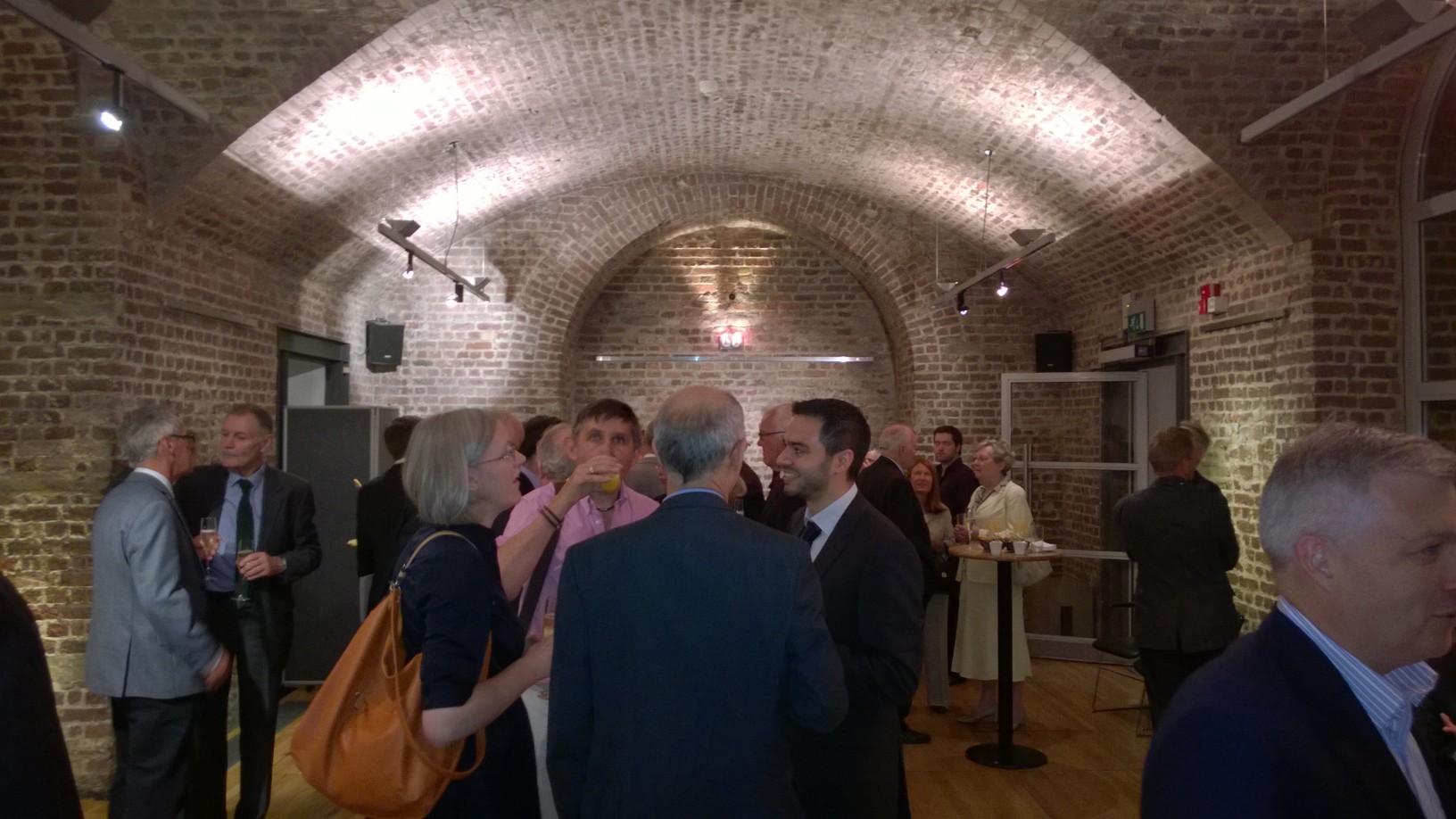
The delightful setting for the evening was the Westminster Boating Place and our enthusiastic host for the evening was Stefan Mordue from the NBS.

Stefan welcomed everyone to this, the RICS BIM4SME’s inaugural Awards event, unique in the industry because they recognise the hard work & achievements of small and medium sized enterprises.

Stefan talked about the strong sense of community that had built up around BIM and the positive role that social media had played facilitating the exchange of ideas and working as a tool for collaboration.

The BIM4SME Awards showcase excellence, promote best practice and highlight the tremendous opportunities BIM presents to small and medium sized businesses.

We are thrilled to have been part of these Awards as finalists in the “BIM SME Innovation” category. RICS_BIM4SME_Shortlisted_Banner

Matt DcDermott, from the RICS opened the evenings speeches followed by Tim Platts, Chair of the BIM4SME working Group.  “Being able to respond quickly, showing flexibility in working patterns and seeing BIM as an opportunity for growth for SME’s”  were key themes of the evening.

Other high profile speakers addressed us, including Chris Chivers, Vice Chair of the Chartered Institute of Building (CIOB) and Richard Saxon CBE, Chair of the Judges (and former Chair of BDP)

Congratulations to all the finalists and winners.

The Winners of the Awards
Best BIM Project, Medium enterprise (51-250) – Bond Bryan Architects
Best BIM Project, Small enterprise (1-50) – Howard Russell Construction
Best SME BIM Blog – Bond Bryan Architects
Best BIM SME Website – Atom Publishing
Best SME Newcomer – Baxall Construction
Best SME Innovation – Specified By
Best SME Training Strategy – Coombs Ltd
Best SME Engagement and Support Programme – Imarati Engineering

Here are a few images from the evening.

“Live blogging” from the event was by Su Butcher, to find out why these awards matter to the industry, take a look at her blog The First BIM4SME Awards

Are you an SME in the construction industry, are you using BIM? Leave me one word that describes your experience.

Photographs MAPL, BIM4SME, RICS

Proud and thrilled to see John Staves, Managing Director at Michael Aubrey Partnership, receive the “Lewis Kent Award” for his dedicated service to the Institution of Structural Engineers, through his work on the Board, including as Honorary Treasurer, Council and the Thames Valley Regional Group and his contributions to Committees, Panels and Task Groups over the past 20 years.

John was presented the Award by Martin Powell, Chief Executive at The Institution of Structural Engineers at the RSA House, London on 4 June 2015.

dungeon


This Award forms part of “The People and Paper Awards” celebrating the accomplishments of exceptional individuals and teams in the field of Structural Engineering.

Awards presented at this ceremony include; the achievements of young members of the Institution of Structural Engineers, excellence in education and papers published in The Structural Engineer, alongside those who have made outstanding contributions to the profession.

The Lewis Kent Award is presented for personal services by a member to the Institution or the profession, chosen by The Nominations Committee.

Who was Lewis Kent?

Lewis Kent became President of the Institution in 1959. He was an early recipient of this Award which, from 1973, was re-named in his honour.

Speaking about receiving this prestigious Award, John Staves said,

“I am passionate about Structural Engineering. I am thrilled and delighted to receive such an honour in recognition of the contribution that I have made to the profession over the last 20 years”.

To read more about the Awards click here.

Celebrations this week for Andy Campbell who celebrated 15 years working at Michael Aubrey Partnership

Being employee number one, Andy has seen a lot of changes in 15 years.

When I first started working at Michael Aubrey Partnership it was just John, Gail and myself working from a small office in Woodley, Reading with just 3 computers. Most of our work was in the Telecoms market, micrcocell based station designs. We had email, but the majority of our designs were printed out hardcopy and sent out by post. Gradually the team built up and we moved to our office in Maiden Lane. The thing that I like about working at Michael Aubrey is the variety of work we do and working with a great pro-active team. The future is exciting, as we are expanding the team and hopefully moving offices shortly”.

Talking about Andy’s 15 years service, John Staves said

Andy has been with us since the early days and such a lot has changed in that time. Not only the types of jobs that we deliver, but how we delivery those jobs to our customers. Andy started working on AutoCAD2000 and since 2009 he helped identify BIM as a way of working that would really improve the accuracy of our designs. He has shown hard work and dedication over the 15 years, and he has contributed in making Michael Aubrey Partnership what it is today“.

Congratulations Andy and thank you for your excellent work to date. As a token of our appreciation Andy is enjoying a weekend away with his lovely wife Karen.

Have you worked at your company for more than 10 years? What’s the best thing about where you work?

In this second part of our series, I’m talking to John Staves, Chartered Structural Engineer and Managing Director at Michael Aubrey Partnership, about the benefits of working with BIM.

What Would You Say To An Architect or Contractor Who Currently Doesn’t Use BIM At All?

What are you waiting for?

BIM has given us such a better product. If I look back to before we started using BIM, and to where we have taken our product to now, which is effectively a quality design, the quality of information we are producing is far, far better with less cost.

Where we have worked with Design and Build Contractors, they are getting the benefit of delivering on time or early. They are delivering within their cost plan i.e making their margin on the job, in fact they are probably gaining, as they are handing over with zero defects which means that they have no comeback which improves their margin because they are not putting their time into call backs on jobs, mending defects.

Architects – BIM allows a better quality design to hit site, one that is better thought out, so everything works. Where an architect’s traditional role would be to coordinate the design, so that all the design team members and the design as a whole that gets built, it’s now fully coordinated so we don’t get services clashing with walls, beams and structure.

BIM definitely facilitates better coordination. That’s just scratching the surface for what BIM can do for a project.

What Do You Think Is The Biggest Myth About Structural Engineers?

That they are too precise, don’t produce practical designs, everything is belt and braces and costs the Client money. Clients often seem to think that rather than adding value, we cost them money.

I’m biased I know, but in reality, good structural engineering design will actually save you money. A well thought out design will save you money on site because things are well thought through, buildable and practical.

Not necessarily smaller member sizes, it’s a myth that the cheapest overall building is one where you have designed everything down to the absolute minimum; in actual fact it can be cheaper if you standardise and used the same component throughout. The simplicity that members are all the same, keep things simple, this will keep your costs down.

What’s Your Favourite Building Structure?

I tend to like structures which use materials to their best advantage, all the normal materials, whether its timber, concrete, steel, masonry, they’ve all got advantages in different situations.

So steel is good in tension, for example, “Embankment Place”, where the building is over a railway station (Charing Cross) in London. That building was built where the columns, the vertical steel members, were adequate to carry the loads during construction as the building was built upwards, but they are then used as hangers in the permanent solution, where they hang the load from the major structure at the top of the building, so they are actually working in tension, rather than columns which are inefficient pieces of steel.

Another favourite type of structure is the “grid shell roofs”; for example Saville Gardens.

Grid shell


A great example of fairly sophisticated engineering being applied to a very traditional material, gives a great aesthetic as well as the structure being efficient.

If You Weren’t A Structural Engineer What Would You Be Doing?

I think by now I’d be in a commercial role, I didn’t enjoy corporate life when I worked for larger businesses because of all the politics, I just like to get the job done.

What’s The Best Thing A Client Has Ever Said To You?

thank you

When a Client gets what they want. When their project is there and they are getting to use it how they want to. It’s rewarding for me when a Client says “thank you” and really means it.

So, BIM: What Are You Waiting For? What’s the one reason that’s stopping you from adopting BIM on your next project?