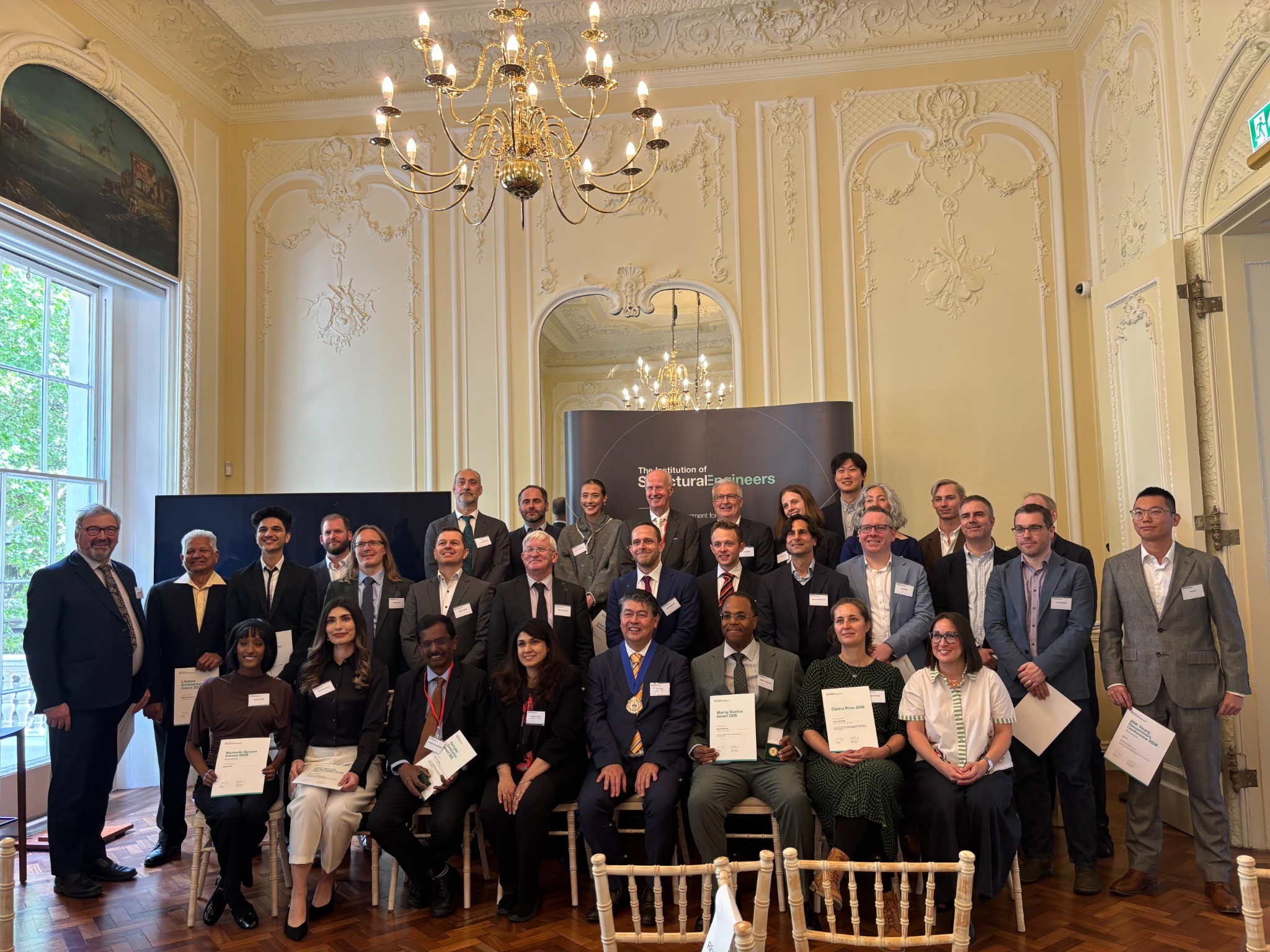
We were incredibly proud to celebrate our Managing Director, John Staves, receiving the prestigious Lifetime Achievement Award 2026 from the Institution of Structural Engineers.

The Lifetime achievement award recognised individuals who had made an exceptional contribution to the structural engineering profession throughout their career and represented one of the Institution’s highest honours.

John was formally recognised at the Institution’s annual People and Papers Awards ceremony on Friday 15 May 2026 at the iconic 10–11 Carlton House Terrace in London.

Celebrating the People, Ideas and Innovations Shaping the Future of Structural Engineering

Hosted by 2026 IStructE President Brian Uy and Chief Executive Yasmin Becker, the event celebrated the people, ideas and innovations shaping the future of structural engineering, alongside outstanding contributions to research and technical knowledge.

Over the course of his career, John established a reputation for technical excellence, practical problem-solving and an unwavering commitment to the engineering profession. Through his leadership at Michael Aubrey Structural Engineers, he played a significant role in delivering complex structural engineering projects, mentoring engineers within the industry and driving innovation across the sector.

Those who worked with John knew not only his exceptional engineering knowledge, but also his approachable nature, integrity and willingness to support colleagues and clients alike.

people and papers award

The award reflected the enormous respect John earned throughout the profession over many years and was a fitting recognition of his contribution to structural engineering.

Everyone at Michael Aubrey Structural Engineers was delighted to see John receive this well-deserved honour and it was a proud moment for the entire team.

Congratulations John on an exceptional achievement!

An Inspiring Evening with the IStructE President

Last night I had the privilege of meeting the President of the Institution of Structural Engineers (IStructE) at an event hosted by the IStructE Thames Valley region.

It was a fantastic opportunity to hear directly from Mohamad Khodr Al-Dah, the 104th President of the IStructE, who shared his inspiring vision for the future of the profession.

Mohamad’s global experience was clear throughout his presentation. From his early days at Arup UK to his leadership role in Dubai’s Real Estate Regulatory Agency. He spoke passionately about the importance of adaptive reuse and retrofitting, drawing on landmark projects like Unilever House and the award-winning Expo 2020 Dubai Sunshades. His emphasis on collaboration between engineers and architects resonated strongly with the audience.

Following the President’s address and Q&A, we enjoyed a thought-provoking CPD on Sustainable Structural Vibration Isolation led by Philip Mohan, AMIOA. The session explored innovative uses of natural materials like cork and rubber, offering practical and environmentally responsible alternatives to traditional elastomers.

With engaging discussion, valuable insights, and a welcoming atmosphere (not to mention a great buffet!), the evening was a brilliant reminder of the strength and forward-thinking spirit of the structural engineering community.

For clients, selecting the right Structural Engineer can make or break a project. But with the market flooded by individuals with varying levels of qualifications and experience, how can you tell the difference between an expert and someone unqualified to make critical structural decisions?

  • The hidden costs of errors

The truth is, a lack of expertise may not be evident—until it’s too late. Poorly designed structures can lead to increased construction costs, delays, or even safety risks.

  • Lower fees seem appealing

On paper, less experienced engineers may seem appealing due to lower fees, but the hidden costs of errors, redesigns, or failed inspections can far outweigh any initial savings.

  • Anticipate challenges before they arise

Chartered Structural Engineers bring invaluable benefits to your project; 

  • Years of training
  • accreditation
  • hands-on experience and
  • ensure designs that are not only compliant with building regulations but also optimised for cost-efficiency and long-term durability.

Qualified structural engineers anticipate challenges before they arise, offering innovative solutions that will save you time and money.

What qualifications should you look for?

When appointing a structural engineer, you should look for the following qualifications and attributes to ensure you hire a competent and trustworthy professional:

Formal Education and Accreditation

Professional Certifications

  • Look for Chartered status, such as CEng MIStructE (member of the Institution of Structural Engineers or CEng FIStructE (fellow of the Institution of Structural Engineers)  which demonstrates advanced qualifications and experience way beyond Masters Graduate.

Relevant Experience

  • Experience with similar projects, whether it’s residential, commercial, or industrial structures.
  • Expertise in addressing the specific challenges of your project (e.g., structural assessments, or defect diagnosis.

Knowledge of Building Regulations / Building Safety Act

  • Familiarity with building regulations and compliance requirements to ensure safety and legal adherence.
  • The Building Safety Act requires Clients to appoint competent designers

Communication and Collaboration Skills

  • A good structural engineer should be able to clearly explain technical concepts and work effectively with property owners, architects and contractors

Reputation and References

  • Positive reviews, recommendations, or case studies from previous clients.
  • Examples of completed projects that align with your needs.

Professional Insurance

  • Ensure the engineer carries Professional Indemnity Insurance, which protects you in case of errors or omissions in their work. What level of indemnity is provided? Is the cover adequate for your project?

Working with experienced professionals ensures confidence in your project’s success. Clients can rely on solutions that are both structurally sound and financially sustainable.

Don’t gamble on one of the biggest investments you’ll make; choose a structural engineer who can deliver expertise, precision, and reliability.

Feedback

Have you hired a structural engineer before? What was your experience like? Did you feel you received good value, or did the service leave you disappointed?

We’d love to hear about your experience …

On Tuesday 21 May 2024 the Institution of Structural Engineers are hosting an interactive panel discussion on the Building Safety Act in practice – John Staves our Managing Director will be speaking at this event.

Here are the details:-

April 2024 marks two years since the Building Safety Act established a new and enhanced regulatory regime for building safety and construction products. It has reshaped responsibilities and systems for everyone involved in designing, constructing, and managing Higher Risk Buildings (HRBs).

Join John and the interactive panel where you will have the opportunity to ask the expert panel your questions on:

  • Building control regime
  • Gateways
  • Golden thread
  • Safety cases
  • Impact on small domestic projects

Reasons to attend

  • Gain a deeper understanding of how the Building Safety Act affects your duties & liabilities and strategies for compliance
  • Acquire practical knowledge on implementing the Building Safety Act in real-world scenarios
  • Explore the implications of the new regime for HRBs and its broader impact on the industry
  • Discover how the Building Safety Act influences various projects, including industrial and small domestic projects

Chair, Victoria Martin

Speakers:-

  • Gavin McLachlan, Associate, Conisbee
  • John Leach, Director, Buildings+Places at AECOM
  • Mark Pundsack, Assistant District Surveyor
  • Mark Snelling, Managing Director, Safetymark Consultancy Services
  • John Staves, Managing Director, Michael Aubrey Barrow

For more information and details how to book your place (it’s free!)

https://www.istructe.org/events/hq/2024/building-safety-act/

A recent report by CROSS- UK (Collaborative Reporting for Safer Structures) identified a potential disaster due to inadequate structural design.

cross logo


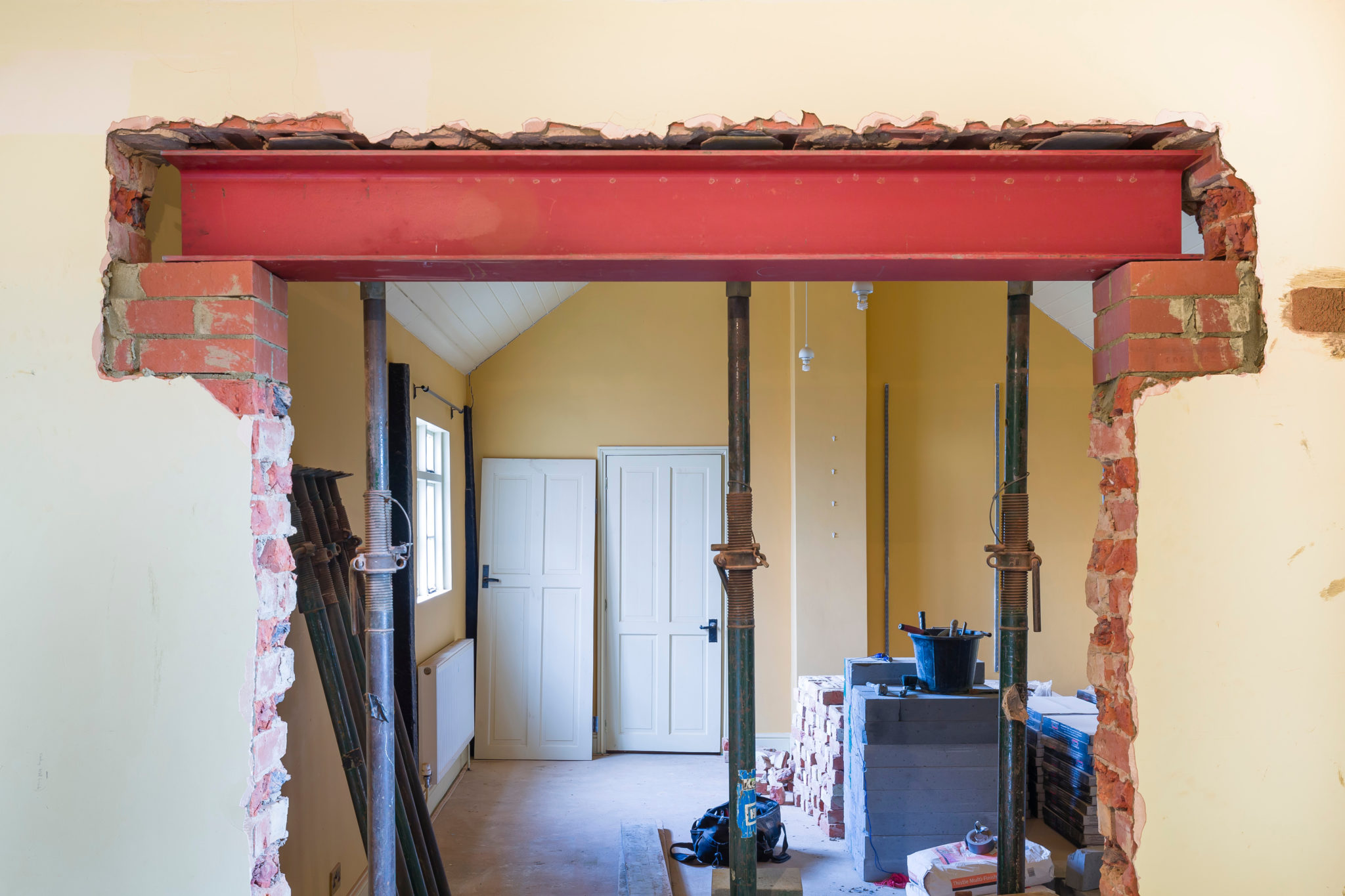
A Chartered Structural Engineer, was called upon to review the design for the removal of a loadbearing wall during a refurbishment and uncovered critical flaws that could have had dire consequences.


The Design

“The design showed four steel beams, steel columns, some lintels, and new foundations.

It did not show how applied loads had been calculated and did not allow for any wind loadings. No calculations had been provided to show how the beams should be framed with the columns to provide sway stability.

The structural information showed new foundations, but trial pits dug by the builder revealed competent existing foundations which could be reused.

The builder and building control body had agreed that two of the proposed new structural members could be omitted since there was no loading applied to them, and they were not required for reasons of stability”.

The design did not show how applied loads had been calculated and did not allow for any wind loadings – this was luckily picked up by a competent builder.


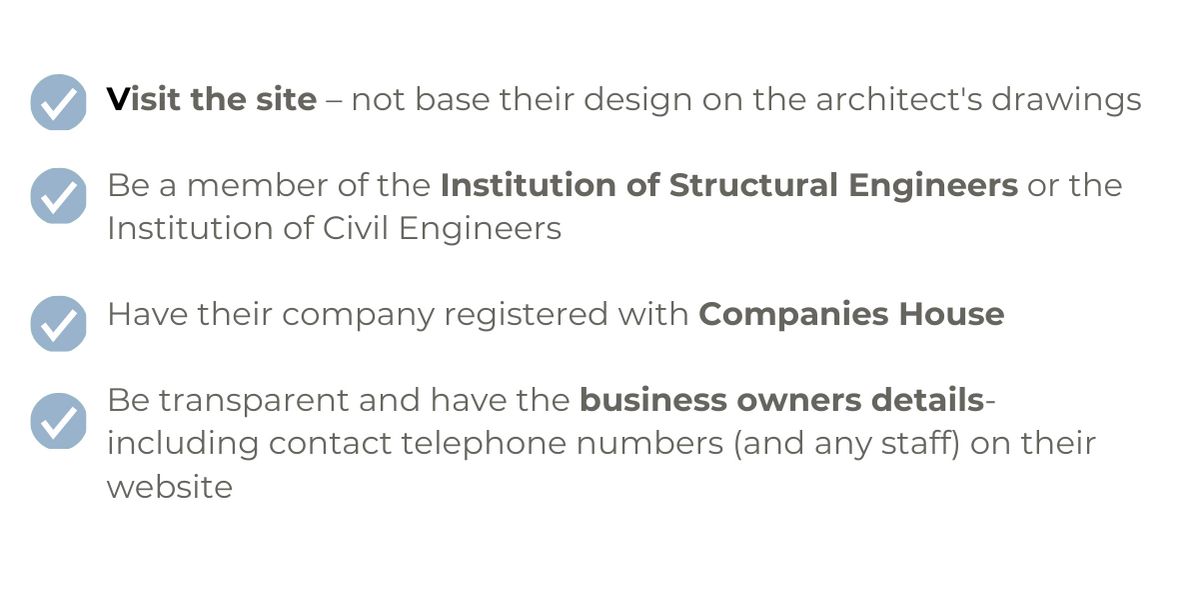
As minimum you should expect your structural engineer to;

cross report what to look for

Don’t be persuaded by a glossy website!

Lateral Stability

Unfortunately, some homeowners mistakenly assume that the walls they intend to remove serve solely to support vertical loads. However, these walls may actually play a crucial role in providing lateral stability for the entire building.

Buildings may collapse if walls are removed without measures to safeguard the overall stability of the building. Clients should understand that structural engineering, domestic work included, is a complex discipline that should only be entrusted to a suitably qualified and experienced person such as a professional civil or structural engineer.

In Conclusion

Efforts to communicate with the structural designer failed to resolve the issue, ultimately leading to a halt in construction.

Subsequent review revealed that the original designer had not visited the site, casting doubt on their competence and qualifications.

This incident underscores a widespread problem in the industry: individuals claiming to be structural designers without the requisite expertise.

These unqualified practitioners pose serious risks to public safety, as evidenced by reports from organisations like CROSS (Confidential Reporting on Structural Safety). The repercussions of inadequate design can be dire, potentially endangering lives and resulting in legal consequences.


Are you working on a project? Please get in touch today and one of our qualified Structural Engineers will be happy to advise you 0118 962 9666

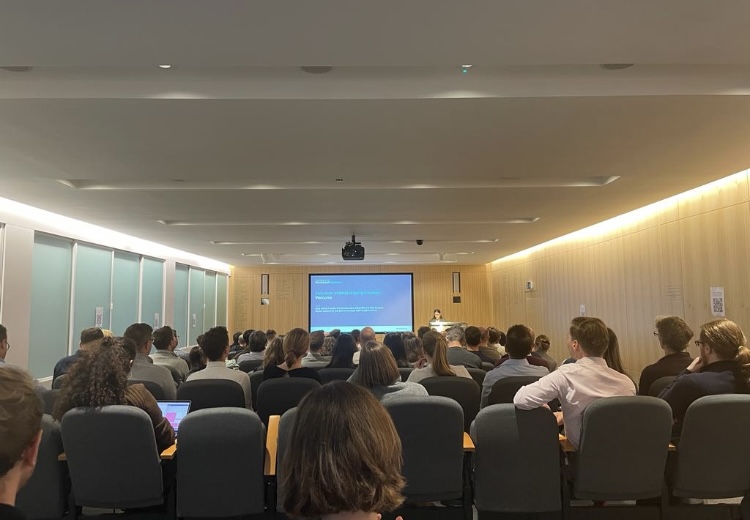
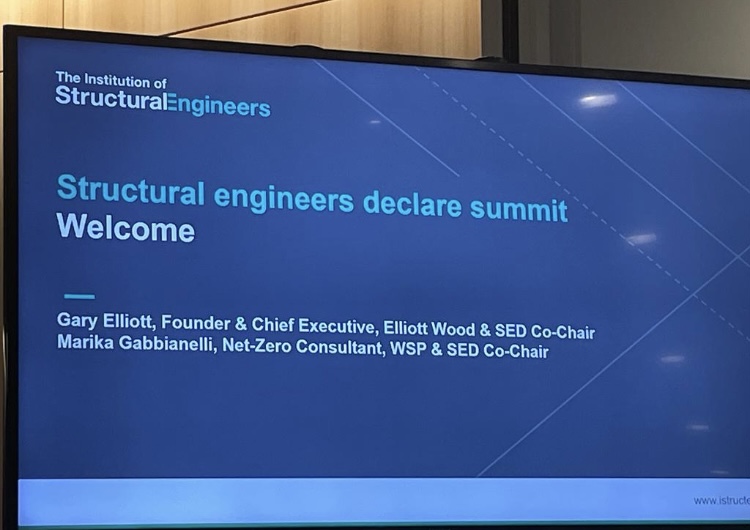
Today John Staves, our Managing Director attended the Institution of Structural Engineers “Engineers Declare” summit in London.

Climate change and its impact on the construction industry have been recognised for some time. Recently, the UK government announced a groundbreaking move to legislate a Net Zero Carbon target, ringing the alarm bells for all involved in the built environment. This shift will place substantial responsibilities on structural engineers to tackle the challenges and seize the opportunities that lie ahead.

Supporting a Positive Change

In response to this pivotal moment, IStructE (Institution of Structural Engineers) is embracing the “Structural Engineers Declaration,” an initiative led by influential structural engineers. This declaration urges companies to transform their working methods to address climate and biodiversity emergencies.


The Role of IStructE

IStructE is committed to supporting its members by sharing best practices and providing opportunities for cross-disciplinary professional development. This support will help individuals navigate the changing landscape of structural engineering.


The Urgency of Climate Action

The declaration highlights the dire consequences of climate breakdown and biodiversity loss. The construction industry contributes significantly to these issues, being responsible for nearly 40% of energy-related carbon dioxide emissions. It’s time for a paradigm shift in our industry, where we create buildings, cities, and infrastructures as integral components of a self-sustaining system in harmony with nature.

  • Commitment to Change
  • Structural engineers are committing to:
  • Raising awareness of climate and biodiversity emergencies among clients and collaborators.
  • Advocating for regenerative design practices and government funding.
  • Measuring success by climate and biodiversity mitigation principles.
  • Sharing knowledge and research openly.
  • Evaluating projects to contribute positively to climate mitigation.
  • Prioritizing extended use of existing buildings.
  • Incorporating life cycle costing and whole-life carbon modelling.
  • Embracing regenerative design principles.
  • Collaborating to reduce construction waste.
  • Shifting to low embodied carbon materials.
  • Minimizing wasteful resource use in structural engineering.

A Call to Action

IStructE hopes that every structural engineering practice in the UK will join in this commitment to tackle climate change and biodiversity loss. It’s time for the industry to embrace change, advocate for sustainability, and work toward a more regenerative future. The “Structural Engineers Declaration” is not just a starting point; it’s a collective step toward a sustainable and resilient future for all.

What is a Certificate of Structural Adequacy?

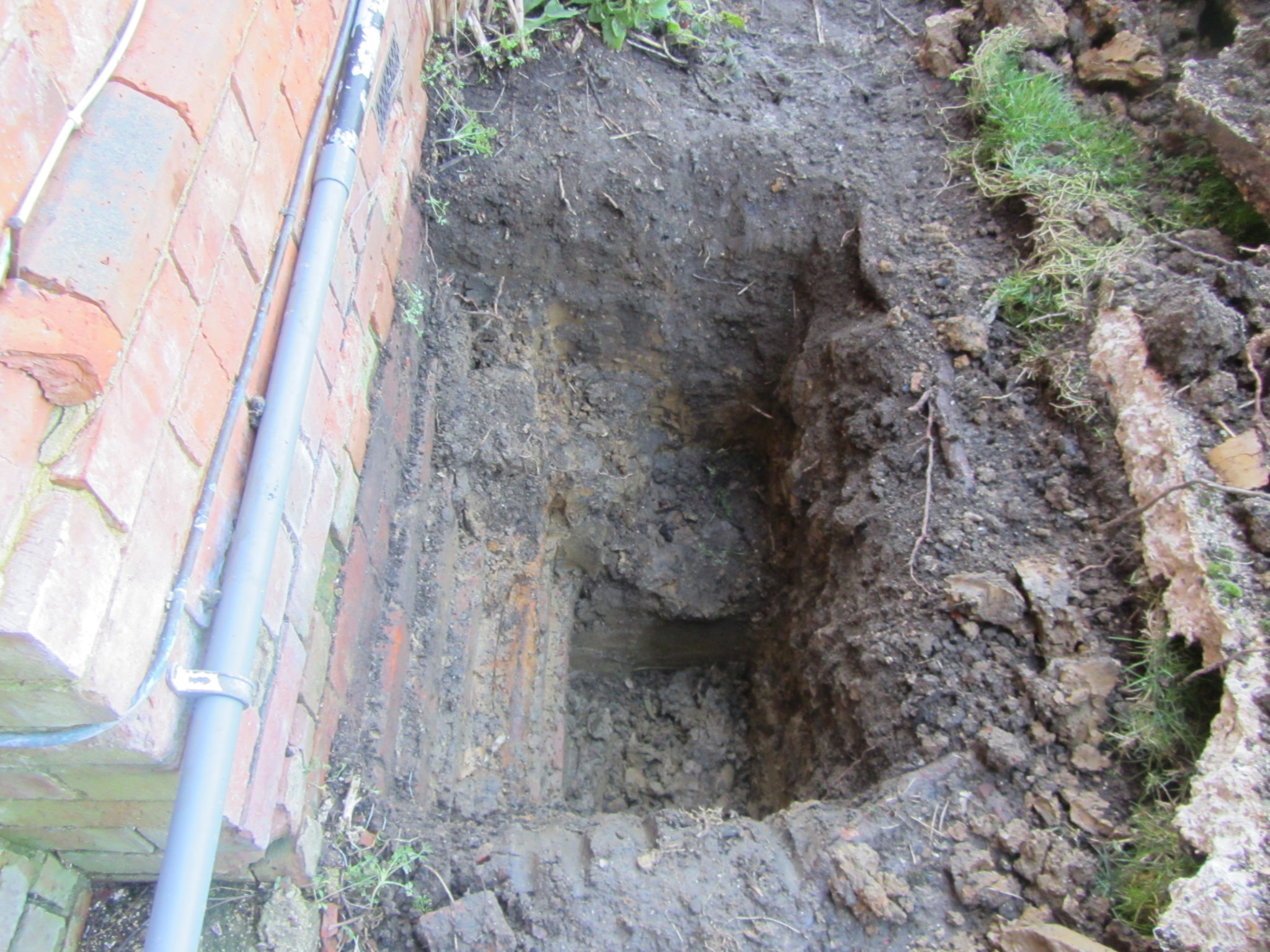
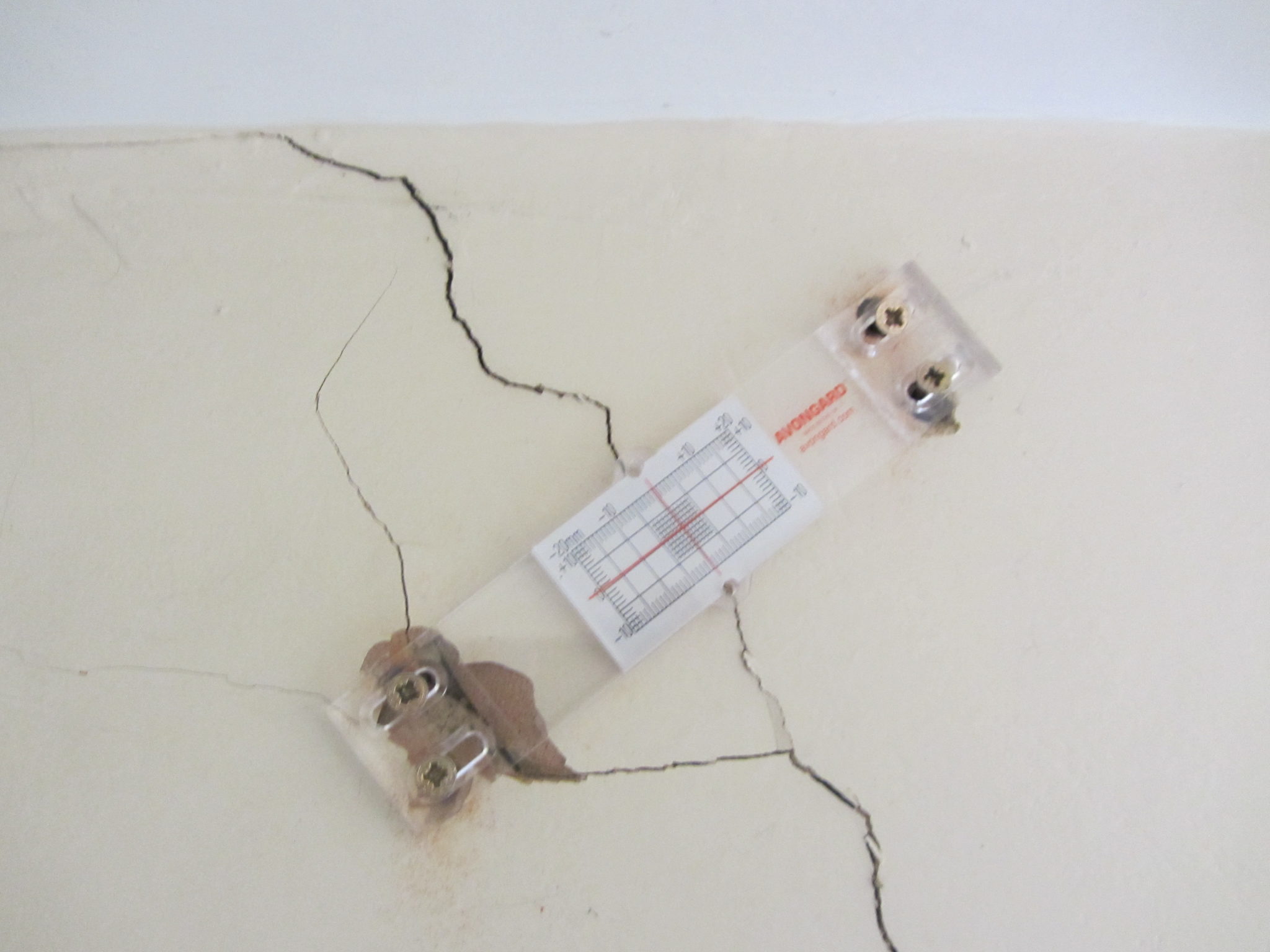
A Certificate of Structural Adequacy is issued if you have had work completed on your property, typically where you have had subsidence, heave, or landslip. It can also be issued by an independent Chartered Structural Engineer to provide reassurance to the building owner that what has been built, is what was designed.

In the case of subsidence, the certificate of structural adequacy details the causes of the damage, the repair work undertaken and confirms that the work was carried out correctly and that the property is now structurally sound.

Who Usually Issues a Certificate of Structural Adequacy?

Loss adjusters, mortgage providers and insurers normally require the certificate to be issued by a Chartered Member of the Institution of Structural Engineers.

When is a Certificate of Structural Adequacy Issued?

Following completion of any building work and/or structural repairs and (in the case of underpinning) after a period of monitoring.


Is Building Regulations Approval Required for Structural Repairs eg underpinning aswell?

Yes. If you are carrying out underpinning work, under the Building Regulations it is deemed to be “building work” and would require Building Regulation approval.

Can I Get A Retrospective Certificate of Structural Adequacy?

Yes, but you would need to expose all of the structural elements of the build so that the engineer would be able to see that what has been built is correct (eg. as per the engineers’ design drawings), so the best thing is to have the engineer inspect during the works

Why Do I need a Certificate of Structural Adequacy if I have obtained Building Regulations Approval – Building Control Inspect Don’t They?

Building control only inspect a limited number of parts of the build.

The Chartered structural engineer would inspect at regular intervals to check to make sure that his/her design was implemented correctly. The Certificate of Structural Adequacy closes the loop. It makes sure that the builder has built what he has been paid to build.

Does A Certificate of Structural Adequacy Guarantee the Work?

In effect, the structural work will be guaranteed by the chartered engineers’ professional liability insurance. This insurance covers the design and advice provided and with satisfactory inspections it is clear where responsibility lies.  If the builder hasn’t correctly implemented the design, this devalues the benefit of the insurance.

How much does a Certificate of Structural Adequacy Cost?

They can vary from £195+VAT to £295+VAT .

How Much Does Is Cost To Have a Chartered Structural Engineer Oversee The Build?

Again, this can vary, depending on the complexity of the job and hence the number of visits required to ensure the design is correctly implemented.

A Recent Example

This was a small project in Reading, Berkshire but demonstrates what can go wrong when you trust the builder to follow the approved plans, without any independent checks

  • The client obtained Building regulations approval for their project.
  • The builder built what he thought was correct (didn’t follow the drawings).
  • The client was none the wiser, as they didn’t know how to read the drawings.
  • The builder didn’t call out building control to inspect the works (even though there was a building control application and inspections should have been made).
  • Only after the works were completed did the client realise – he hadn’t received anything from building control.
  • Building control confirmed that they hadn’t inspected at all.
  • The client had photographs of the works being carried out, unfortunately, it was clear that the builder had not built to the approved drawings.

How Did the Client Resolve The Matter?

Sadly, this is not yet resolved.

The builder left site with the clients money and the client is left with a bill to sort out, or live with a structural defect and a potentially devalued property (as conveyancing solicitors would typically warn their clients not to buy a property without the final completion certificate). 

The 3 Key Questions To Ask Yourself before You Start Your Project.

  1. Do you understand what those stages are when building control need to inspect?
  2. How are you making sure that the builder is notifying building control to check the work at the right time?
  3. Are you confident doing that?

Are You Having Building Work Carried Out On Your Home?

Would you like an independent engineer to inspect the works as they proceed?

Please contact us today to see how we can help you.

Contact us

Today I’m talking to Oliver Goodyear.. Ollie has been part of the team here at Michael Aubrey Partnership since 2011, starting with us as a Graduate Engineer.

In January Ollie sat his Chartered Exams and we are thrilled that he passed first time!

Ollie, Why Did You Study Engineering?

“I’ve always had an interest in buildings and infrastructure and how things work.  I kind of fell into engineering. At school and college my better subjects were sciences and maths.

During my A levels I realised there was an engineering degree in applied science and maths and it felt more practical, more fun than doing further maths.

At the time and also now, I realised that there was a shortage of engineers so I thought there would be good jobs prospects at the end of it”.


What Do You Like About Being A Chartered Structural Engineer ?

“I like that every week is different. It’s not a monotonous job.

It keeps things interesting and variable, your weeks do change.

It can be a rewarding job, I feel you are actually achieving good stuff and adding value to the world.

It’s challenging, puzzle solving which engineers enjoy.”


It can give you a headache but when you actually solve a problem you get a high degree of satisfaction.

It’s quite a social career, always interacting with Architects, builders, members of the design team and homeowners.”

Any Downsides To Engineering?

“A tricky question … I guess it can really give you a headache when you can’t get things to work, it can be quite soul destroying.  A lot of the time you are thinking about it too much and just need to have a break from it.

In terms of structural engineering I think people don’t really understand what the role of a structural engineer is.

Pioneering Architects were pretty much engineers .. designing buildings and understanding the mechanics behind it.

I feel Structural Engineers are the unsung heroes in construction.

I think the engineer’s role is becoming more important. Buildings are becoming more wacky, more complicated”.

What Skills And Qualities Do You Think Are Important For A Chartered Structural Engineer ?

“I think you always have to be asking the question “why?”

That’s the difference between an engineer and a technician – you are challenging why things are done a certain way, not necessarily just going with what has always been done.

You have to be very thorough in what you do.

Constantly looking at options, analyse the constraints. You need to be an excellent communicator. This is a skill that comes with time I think. Understanding the project dynamics and the economics of the project.

Learnt not to go too far too early. when there are too many unknowns. As soon as there is an unknown, stop work and highlight the question, otherwise you go too far and end up with abortive works.

Try to get items agreed and back it up with a paper trail.

You come out of University design based, but the actual business side is something that you have to learn.

I always did well at the maths and science side of things and I’ve got quite a good memory, but I’ve released that’s quite a useless skill for an engineer.

The trick is not knowing the answer, but knowing where to find the answer – it’s fundamental really – I don’t need to memorise the Eurocodes!”

What Was The Exam Preparation Like? Any Tips?

structural engineering

“Pretty tough to be honest.

The toughest couple of months in my professional and academic life so far.

It’s so intense the amount of work that you have to produce in such a short time.

7 hour exam .. but it’s not long enough!

The length of the exam was the challenge because you are not prepared for the mental and physical challenge of it.

Preparation – I did a four part evening course with Institution of structural Engineers, Thames Valley group. Run by Rosie – she had passed the exam a few years previously. That was brilliant.”

She broke the exam into five parts and talked through each part in detail with tips and techniques and then as homework we would carry out a question and then the following week the first thing we would do was talk through what each of us did and what went wrong!

It gave me a lot of confidence knowing that people were in the same boat and at the same level.

It was valuable to go through past exam papers with other candidates and talk through exam techniques.

Every week they brought in an experienced engineer and talk about specific parts of the exam.

One week they brought in a temporary works engineer, who was actually one of the examiners, he came to talk to us about the method statements and programme section.

It’s the last part of the exam and is worth 10 marks, which is 20% of the exam .. by that point people have run out of time and get maybe 1 or 2 marks out of 10 and often fail just because they missed this section. In fact it’s probably the easiest part of the exam.

[click here for details of exam preparation courses run by the Institution of Structural Engineers]

My main tips would be to;

  • Encourage anyone going for the exam to go on one of the IStructE courses. Either evening one, like I did, or an intensive 1 or 2 day course. You’ve got to practice exam technique.
  • Spend some time putting together your resources for the exam. I started off with two large folders .. like War and Peace .. then soon realised it was going to be too much and I wouldn’t have time to look through it properly in the exam.
  • Get all your rules of thumb to hand in a small concise folder that you know inside out so you don’t waste any time.
  • You’ve just got to put in the hours. Lots of past papers, lot of exam preparation.
  • I took a week off work in November and from Boxing day to New Year’s Day I just worked solidly on it.

A lot of people told me I’ve got to do a past paper – under exam conditions. I did and failed it massively.

But it did give me a lot of confidence .. most people fail first time so it got that fail out of the way.

I could do it in 7 hours, it’s not too bad, it went quite quick, that made me feel a lot better about it.

Pass rate this year was 28%.

I’m still buzzing from finding out that I’ve passed the exam now.”


What Does Becoming Chartered Structural Engineer Mean To You?

“It means a lot.

You’ve got the exam and you’ve got the review. It’s been a few years leading up to it.  Firstly it’s a massive relief.

From a professional point of view it’s given me a lot of confidence and a feel good factor of passing is just brilliant.

I feel I can call myself an engineer now. I have met the industry standard and it is such a high standard to meet.

The route from school, College, University and onto professional qualification, that’s it I’ve reached the level, it’s complete.”


Do You Have A Favourite Building Structure?

“As a modern engineer you have so many resources available to you to do your job.

The advance of computational analysis and finite element and techniques like that have really changed engineering. I don’t think it’s any coincidence that the form and shape of skylines around the world has started to change over the last 20 years.

It really makes me appreciate the work of Engineers and Architects before computer times.

I really like historic buildings.”


Pantheon, Rome

“I went to Rome a few years ago and what they managed to achieve was amazing. My favourite building is the Pantheon.

It’s a large concrete cofferdome.

I think today it’s still the largest unreinforced spanning structure in the world and it was built 2,000 years ago!

A span that large .. the temporary works .. the construction techniques used would have been impressive.

That’s my favourite building.”


Getting the Right Experience

“I was pleased that I was able to get the right experience to pass the Chartered exams at one company.

A lot of people said that I had to move company to get the right experience, but I’m very pleased that wasn’t the case and I’m grateful to John Staves at Michael Aubrey Partnership for supporting me from a Graduate engineer right through to Chartered Engineer.”

We are thrilled to announce that our Managing Director John Staves has been elected Vice President to the Institution of Structural Engineers on 3 September 2018 (on his birthday!)

John Staves


John Staves Elected as Vice President IStructE

Speaking about his appointment John said,

“I am delighted to accept the opportunity of working alongside other vice presidents, Kwok-fai Chung, Matt Byatt, Jane Entwistle and Don McQuillan and of course supporting next Years’ President, Joe Kindregen.

It’s a time of great challenges and change for our industry. As a BIM Advocate I will be pushing forward and promoting better ways of working and encouraging members to think about how Structural Engineers can add value to Clients projects.

I’m looking forward to helping define the future initiatives of the Institution then seeing that they are delivered in a timely and cost-effective manner.”

John Staves


John is a fellow of the Institution of Structural Engineers, and Treasurer of the Thames Valley Constructing Excellence Board.

He also sits on the Resources Committee at the Institution of Structural Engineers, having previously been a Trustee for eight years.

John takes up his post on the 1 January 2019 for a term of two years.

Members of the Institution of Structural Engineers gathered in London last week for the Institution of Structural Engineers 2017 BIM Conference, “Moving towards BIM 2020 – Business as usual”.

BIM conference

Institution of Structural Engineers Headquarters, Bastwick Street, London

Delegates were welcomed by John Staves, Managing Director at Michael Aubrey Partnership. John talked about his passion for BIM and how as an industry we need to embrace these changes if we are going to continue to grow and meet the needs of our clients.

Our first speaker of the day was Dr Anne Kemp, chair of the UK BIM Alliance and Atkins Director responsible for BIM Strategy and Implementation across the UK.

Dr Anne Kemp

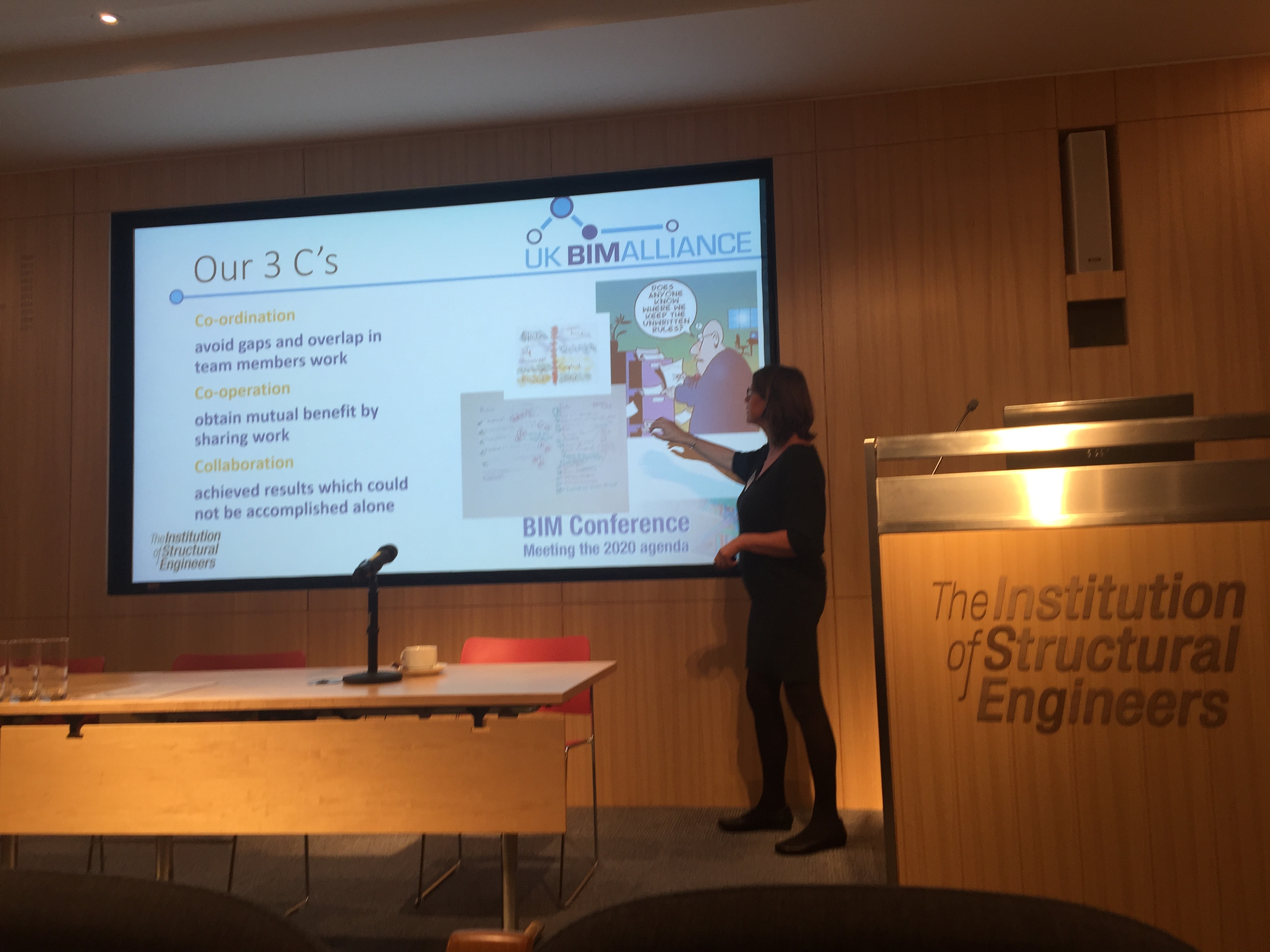
Anne talked about the UK BIM Alliance and the 3 “C’s”

  • Co-ordination
  • Co-operation
  • Collaboration

and how BIM supports what we already do – it’s about the management of the data. Together with other industries we need to mix up our ideas. At the moment we are struggling to truly collaborate.

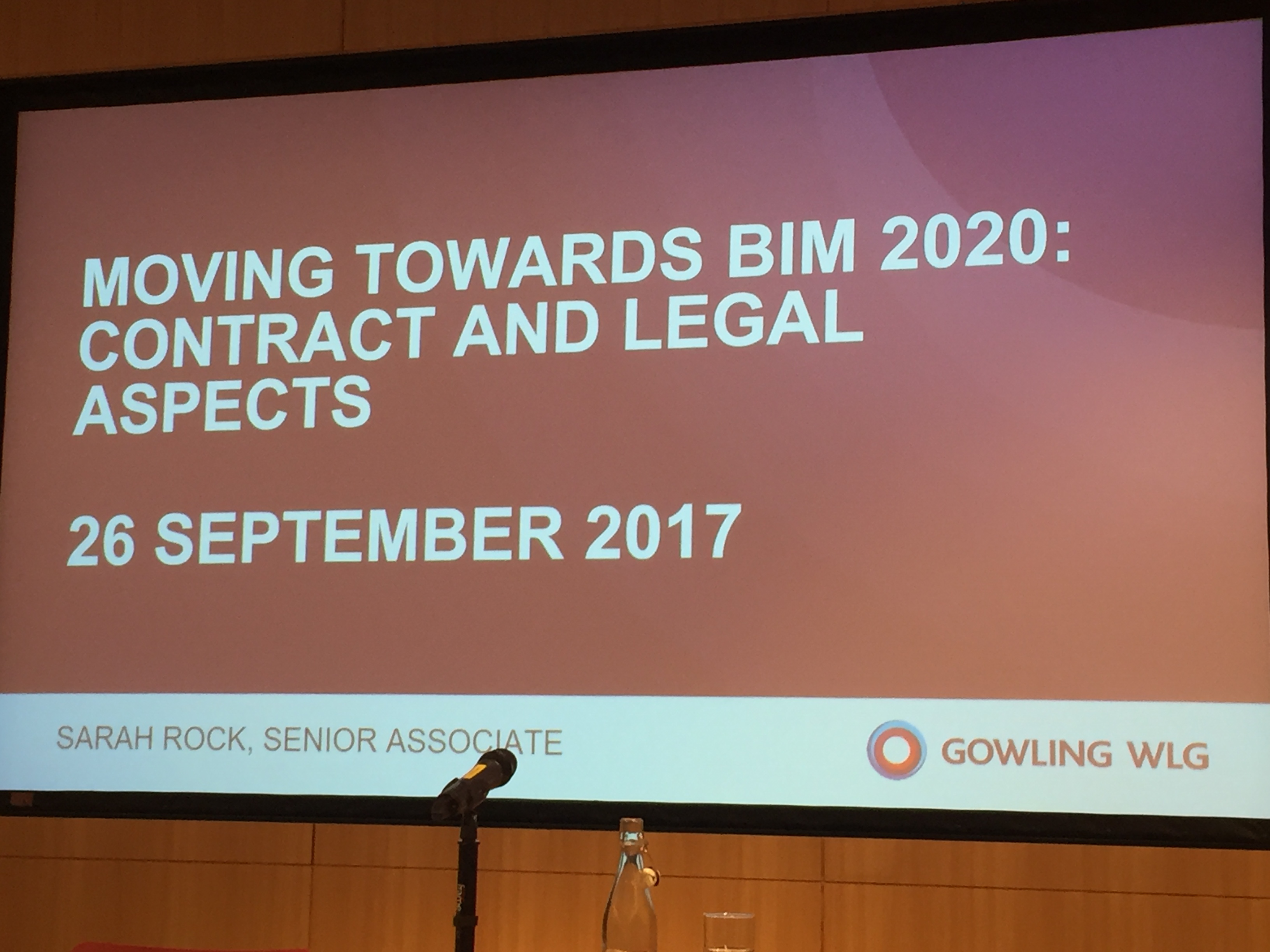
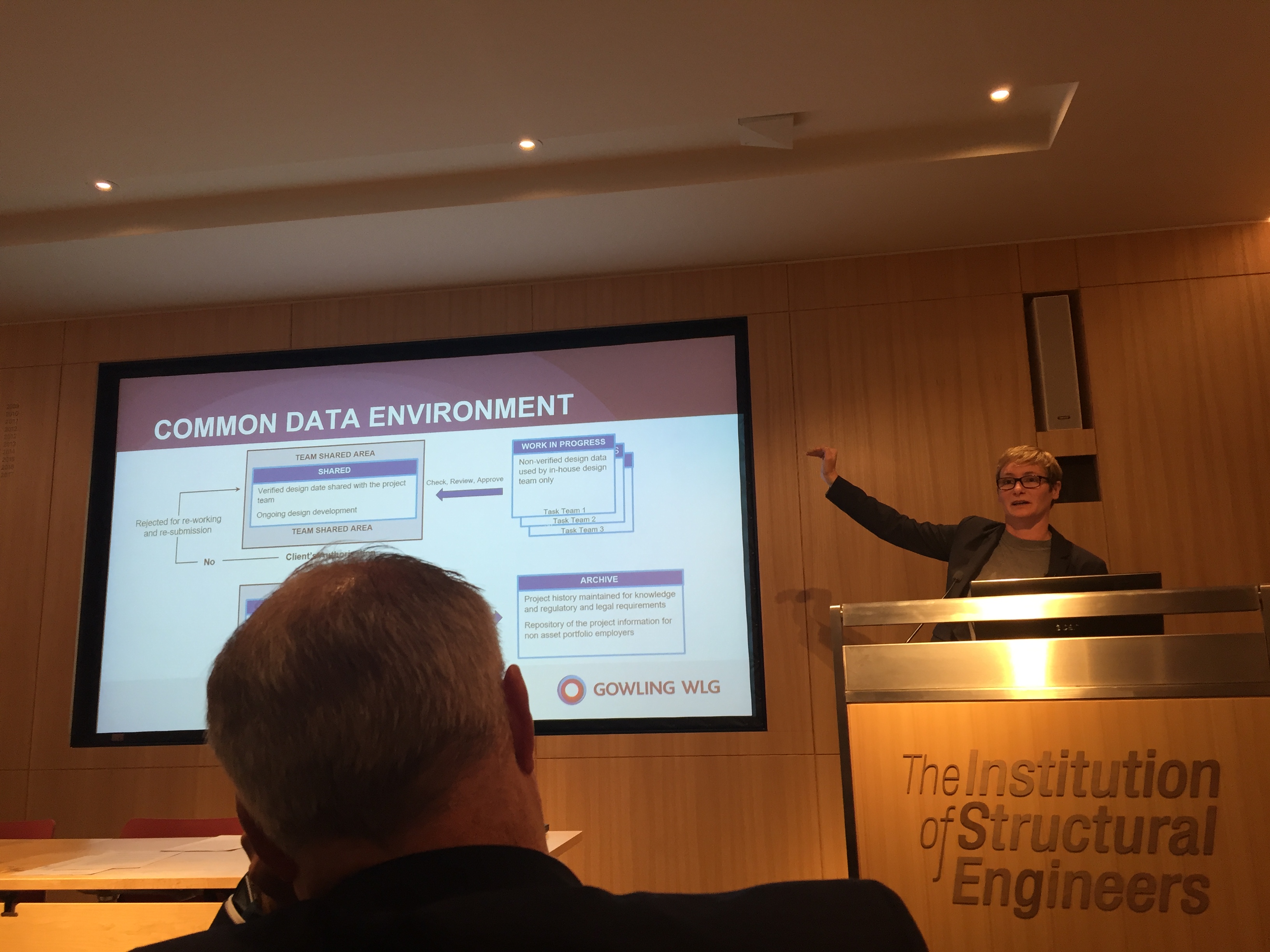
Next up was Sarah Rock, Associate at Gowling. Sarah has written extensively on BIM for various publications including the Construction Manager BIM Handbook and is a well regarded speaker on the legal aspects of BIM.

BIM conference

There is very little case law around BIM, but Sarah highlighted a recent case Trant V Mott Macdonald Ltd (MML) where the question of who should host the common data environment was brought into sharp focus.

A considerable amount of reliance is placed upon the party hosting the data, the BIM Operator.  The BIM Operator should have a continuing obligation to ensure that the data is available to others, to allow them to progress the project.  This obligation should survive suspension and termination of their employment.

To read more about this case and judgement, click here http://bit.ly/2hGt5m

Sarah Rock

Sarah stressed the need for BIM practitioners to “talk” to the legal profession and to get in touch via the UK BIM Alliance.

Next up was Nigel Stroud, Geometry Information Manager at Heathrow Airport.

BIM conference

Nigel is currently part of a company wide Asset Information team leading Heathrow’s asset information strategy

Nigel talked about the enormous task of collating all the information at Heathrow and attaching this information to each asset.

At Heathrow they have a “Gateway Delivery Process” where Employer requirements won’t allow you to proceed until the next stage until it has been signed off. This ensures that everyone is clear what is required at each stage.

Graeme Forbes from Clearbox was next on stage. Graeme asked the question; are we doing BIM for the right reasons? Simplicity must dominate. As a business what is motivating you to change – is it compliance or are you trying to save time and money or both? Leadership is key and the right  technology to deliver your project is critical.

bim conference

After a quick break for tea and coffee, up next was Martin Simpson, Professor at the University of Liverpool. Martin is passionate about the digital transformation of the built environment and at Liverpool University he has set up a group to support the construction industry in its digital transformation journey “The Centre for the Digital Built Environment”

BIM conference

Martin referred us to a brilliant blog by Marzia Bolpagni

Marzia provides a comprehensive review of the ‘LOD’ term and its many nuances from across the world.

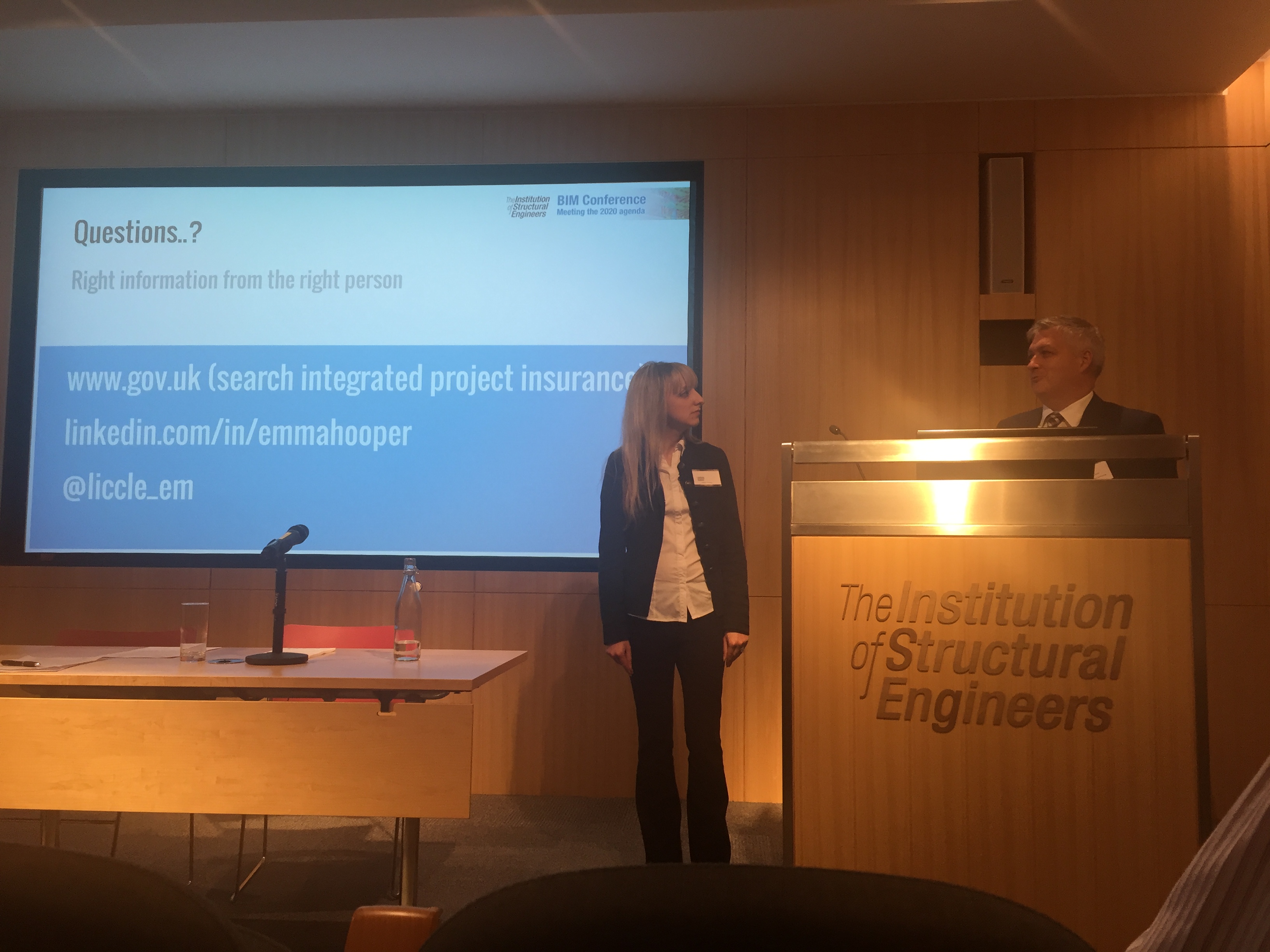
Last up was Emma Hooper, Independent Digital Information Specialistl.

Emma Hooper

Emma talked about her inspiration reading the Latham and Egan reports and how so little has moved forward since then.

A fear of liability has taken over, it’s become a game of blame.

Emma talked about how the procurement models we use are out of date for the new digital age. BIM promotes collaborative and efficient working, yet the way we procure our projects promotes siloed working and individual agenda plagued by inefficiency and a culture of blame.

Integrated project insurance (IPI)

Integrated project insurance (IPI) was one of the new methods of procurement put forward in the 2011 Construction Strategy. Described as an industry disruptor it will change the way we all work from client to subcontractor. One project bank account, one insurance, one team, removing the issues associated with liability and blame which suffocates the industry.

The fact is BIM cannot change the industry alone. IPI complements BIM methodology, and is an example of what is needed to change the industry – Dudley College Advance2, the world’s first IPI project, demonstrates how this can work.

Conclusion

John finished the day by thanking all the presenters and summing up the presentations.

John said “Now that the industry is getting to grips with model authoring, this day has provided a great overview of the commercial concerns and pointed to a range of possible solutions for us all to take away and update our approach to construction projects in a collaborative BIM environment”.

How are you dealing with these BIM challenges in your business?  We’d love to collaborate with you!  Give us a call on 0118 962 9666.

John Staves