Training the Next Generation – What’s The Plan?

Training the next generation of professionals whether in engineering, architecture, or construction is about more than completing a checklist or ticking off competencies.

In high-stakes industries like ours, success isn’t just about what you know it’s about how you apply that knowledge under real-world conditions. That’s especially true for structural engineers, where the consequences of poor judgement can be expensive, dangerous, or both.

It’s Not Just About Skills, It’s About Environment

Young engineers don’t just need tutorials and task lists.

They need to be immersed in an environment where they can see real decisions being made, understand the trade-offs involved, and learn how theoretical ideals play out on active sites.

This kind of learning doesn’t happen through check-ins or Teams calls.

It happens in the flow of the work through shared sketches, overheard conversations, and collaborative problem-solving 

Running structural analysis software is important.alongside experienced professionals.

Engineering Isn’t Just Technical. It’s Situational

But so is knowing:

  • When a design is over- or under-engineered
  • How to balance safety, cost, and programme
  • When (and how) to push back on unrealistic proposals
  • How to clearly explain structural risks to architects or clients

These aren’t things you learn in isolation.

They’re picked up by being in the room, listening, asking, and absorbing.

Why It Matters More Than Ever

Today’s engineers face increasing complexity climate pressures, legacy buildings, tighter budgets, faster programmes.

To prepare them properly, we need to create learning environments that are active, informal, and embedded in the work not siloed away in training manuals or periodic reviews.

We don’t just want engineers who are qualified.

We want them to be confident, competent, and trusted.

Finding the Balance: Office vs Remote Work

We believe in flexibility but not at the expense of development.

That’s why we work three days in the office and an optional two from home. It gives our team the best of both worlds

  • focused time for deep work, and
  • in-person collaboration that’s essential for learning.

The informal moments questions asked across the desk, solutions sketched on the spot just don’t happen the same way on Teams.

For junior engineers especially, this balance matters.

It ensures they’re surrounded by experience while still enjoying autonomy and flexibility.


How are you developing your junior engineers? Do you work hybrid? What have you found that works for you and your teams?

Let me know in the comments.

At Michael Aubrey Structural Engineers, we are proud to introduce a groundbreaking solution for the UK’s RAAC (Reinforced Autoclaved Aerated Concrete) crisis.

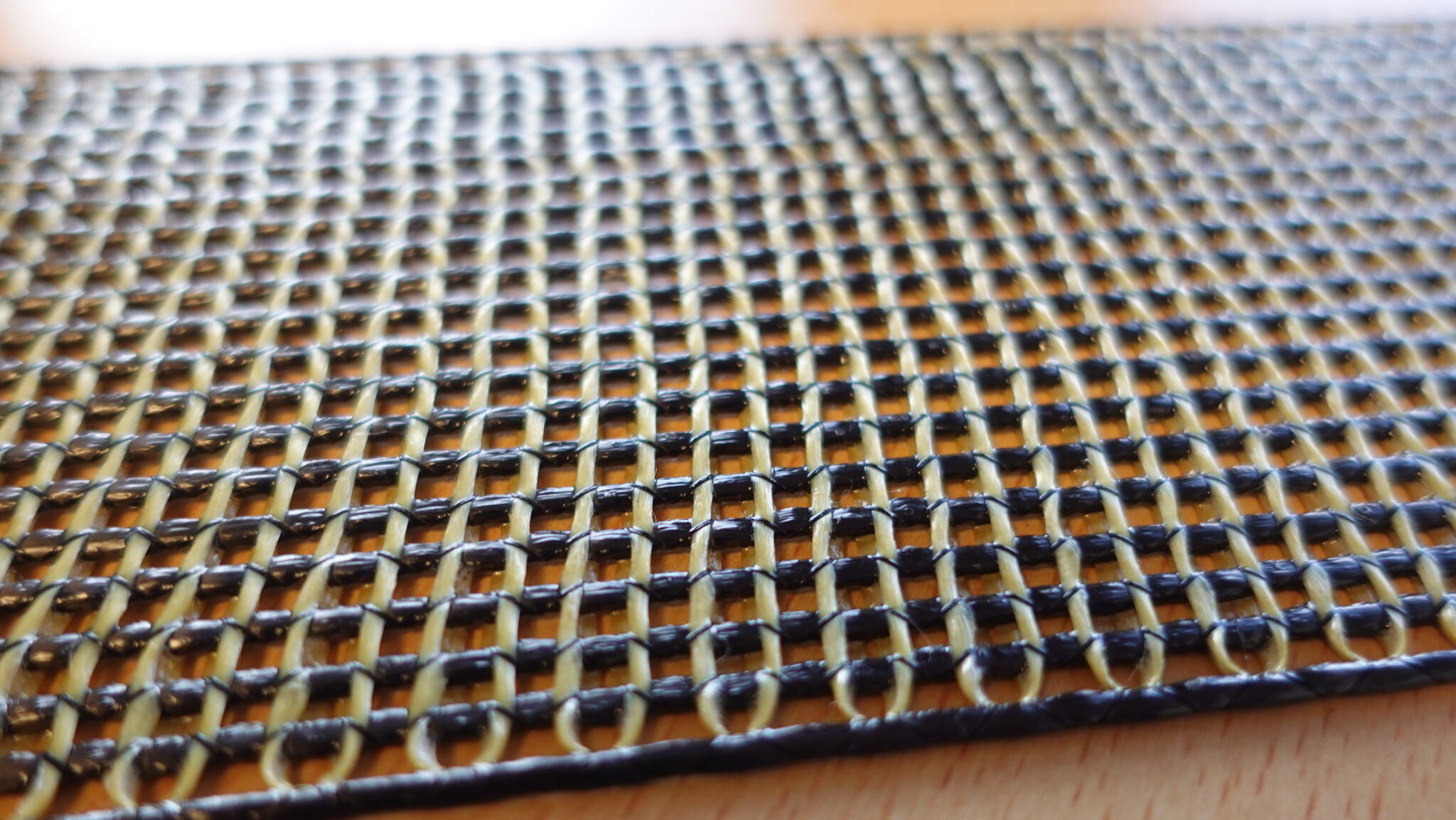
In a UK first, our team has developed and successfully delivered an in-situ repair method for RAAC panels using Carbon Fibre Reinforced Polymer (CFRP) technology – a material more commonly used in aerospace and automotive industries.

Until now, repairing RAAC meant expensive, disruptive demolition or full roof replacement.

By returning to first principles, our engineers have adapted CFRP to strengthen RAAC panels directly, without the need to vacate the building.

“This was uncharted territory,” says John Staves CEng FIStructE, Managing Director. “The Eurocode standards didn’t cover this solution – but through rigorous engineering, testing, and validation, we made it work.”

The benefits are clear:

  • No demolition required
  • Minimal disruption to occupants
  • Cost-effective, scalable, and safe

Already successfully implemented with Network Rail, this pioneering system gives councils, schools, hospitals, and public bodies a practical way to restore building safety without the huge cost or disruption of traditional methods.

This is engineering innovation at its best – providing real solutions for hundreds of at-risk buildings across the UK.


Do you have a building that has been affected by RAAC?  Call us today 0118 962 9666 and we’ll see if we can help you.

Today I’m talking to Andrew Wiggett, one of our latest Structural Engineers to pass his Chartered exams.

Why Did You Choose To Study Structural Engineering?

When I was a school I didn’t really know what I wanted to do.

I chose the A levels that were interesting and “do-able” – Maths, further maths and physics and chemistry AS

I didn’t know what engineering was, or that you could do a degree in it

I thought I was going to do a Physics degree, or I looked at Medicine – but that was an idea that died out pretty quick!

In lower 6th form someone suggested looking at Engineering, I thought that’s a good idea – this is what I pictured physics to be like.


I did a general engineering degree at Cambridge University – 4 year Masters

My best module in first year was structures and materials – my two favourite subjects. I tried to avoid pure Maths, but there was a lot of this.


What Do You Like About Being An Engineer?

It’s a varied job, with lots of projects on the go at the same time.

I’m glad that none of my projects take too long, I wouldn’t like to be working on a project that had a two year deadline .. I wouldn’t know where to begin with that. Whereas twenty things to do in the next month is a lot more interesting.

Any Downsides To Structural Engineering?

Lack of protection of the name “Engineer” A friend said once they did a two day course installing BT infinity and now they were an “Engineer”

People come up to me and say “you’re an engineer, why can’t you do this task” it’s usually sawing a bit of wood in a straight line!

What Skills And Qualities Do You Think Are Important To Become A Structural Engineer?

Maths, but not someone who gets bogged down in the exact details.

Rejecting the negative answer out of hand and explicitly state it, it would drive pure mathematicians bonkers.

The ability to visualise things. That why I always struggled with the electronics side of things at university because it was something that I couldn’t picture. Whereas building structures I can picture as well as the mechanics and materials.

Communication skills There’s no point knowing the answer if you can’t tell someone what it is and there is no point designing something that a Contractor can’t build.

What Was The Exam Preparation Like?

I’d advise you doing the January exam, if you are like me and don’t like Christmas!

A big chunk of my revision was based around past papers, but I didn’t actually sit down and do a whole paper for 7.5 hours.

I started by working on basic scheme design. Coming up with two distinct schemes for a question. Choosing questions that I wouldn’t necessarily pick in the exam. Then I’d move on to the sketch drawings.


structural engineering


Any Tips?

I did prepare a folder of how to do calculations by hand – the sorts of calculations that would come up and set up so I could copy them out – much faster than just having the formula or procedure to hand.

The scheme design was what I concentrated on as that was the part I failed the first time.

I also worked on the end of the afternoon – the method statement. As this was something that I rushed badly last year, but you pick up some good marks here. There are 10 marks out of 50 available in part B – 40/45 minutes. I stopped what I was doing in the exam when I had 45 minutes to go and concentrated on the method statement.

You find out if you fail or pass.

If you fail you get a mark and feedback, but no mark if you pass. However there is a “best solution prize” – it’s across all the papers, across the world.


What Does Becoming Chartered Mean to you?

 It’s sort of the next step in my career.

I remember doing the first graduate interviews for my first job after University and they’d always say “where do you see yourself in 5 years” … Annoyingly it’s taken me 5.5 years – but I got there!


Do You Have A Favourite Building Structure?

 I’m a big fan of timber.

From a sustainability point of view, timber structures are the way things are going especially in this country.

Design lives of buildings are much more suited to timber, rather than putting up concrete and brick monstrosities to be then torn down in 40 years.

It’s like electric cars, we can’t all switch to timber overnight, there’s not enough of it. I think we need to push things in that direction, it’s slightly better.

what is a structural engineer


Preparing for Your Chartered Exams?

Are you preparing for your exams? 

Click here to find out about the Institution of Structural Engineers Chartered Membership exam and Professional Review Interview –

Good luck!

Today I’m talking to Robert Jones, one of our Structural Engineers, who recently pass his Chartered Exams and is on his way to becoming a Chartered Structural Engineer.


Why Did You Choose To Go Into Engineering?

When I left school, wasn’t sure what I wanted to do, so I did a one year course in public services to improve my English.

Then I wanted to do something more practical, so I completed a two year BTEC in Manufacturing Engineering, obtaining three Distinctions.

It was all coursework based, but it was very challenging, there was a lot of Maths together with a practical side (which I enjoyed) using the machinery and building stuff.

So I decided to go for Civil Engineering as it was practical;  science and Maths based – which I‘m very good at – I enjoy problem solving.

That is what structural engineering is really – working out what is wrong and working how you are going to fix it.

So I went to Coventry University for four years and obtained a BEng followed by a Masters. I left university in 2013 and joined Michael Aubrey Partnership.

what is a structural engineer

What Do You Like About Being A Structural Engineer?

I like the engineering career, as you come into work and you have a different problem every day, every day is different, you don’t get board.

I like going out on site, especially the older buildings – finding out what’s wrong – being a detective.

Any Downsides To Engineering?

Probably the fact that people don’t understand the importance of Structural Engineers when you are designing a house or building, they think the Architect does it all, so that’s a bit frustrating, rather than a downside.

What Skills And Qualities Do You Think Are Important To Become A Structural Engineer?

To have a practical mind to see how things work and don’t accept everything is right just because you have been told it. You have to question “why does that work?”.

Being organised. I’ve got several big projects on at the moment and you have to be able to handle them at the same time.

You have to be quite a “people” person, especially when you are meeting Clients and Contractors. You have to be able to talk to them and come down to their level and find out what the problem is, instead of being totally analytical and just doing the maths. You need to be able to communicate your design, both by sketches and discussing what you are thinking to them.

If working with a Contractor you can find out what their preferred solution is, and that can sometimes results in a lower cost

What Was The Exam Preparation Like?

I spent over 50% of my weekends studying in the office practising exam questions. Doing it in exam conditions, total silence, against the clock. 

Any Tips?

  1. Sugar. Take some sugar into the exam to keep you going!
  2. Get your folder up to date so that you know the basic equations, so that you can design a beam quickly.
  3. Chunks. Break the exam up into chunks and concentrate on the concept stage, sketches. Know before you go into the exam how you are going to answer the questions exactly.
  4. Plan your time. I did a three day exam preparation course – it was brilliant!

Exam Technique

You meet a lot of people in the same boat as you and you can bounce ideas of each other – you do some of the exam questions; you see other solutions. See what the examiners are looking for

First exam I took, I think I concentrated too much on the concept design, and then left he later part of the exam too short of time.

The second time I sat the exam I broke the time evenly and split it by the marks, it worked out a lot better – it was down to exam technique.

What Does Becoming Chartered Mean To You?

I’m very happy. It means it’s a stamp of approval.

All the work you have done means that you have reached a certain level, it doesn’t mean you stop learning, it just means you are at a level that people believe you are competent.

I aimed to become Chartered before I was 30 years old and I did it!

Do You Have A Favourite Building Structure?

I enjoy going to London and looking at the tall buildings to see how they are working ; looking at the bracing, the steel structures. I can’t name a single building, but I like timber framed buildings; barn conversions they are quite interesting, as you are always wondering how they are actually working!

Timber framed or structures that I can see myself designing; you see projects on Grand Designs that look quite cool, I’d like to design them, something a bit special.

Preparing for Your Chartered Exams?

Are you preparing for your exams? click here to find out about the Institution of Structural Engineers Chartered Membership exam and Professional Review Interview – Good luck!

Service of Thanksgiving

A multi-faith Service of thanksgiving to celebrate the Year of Engineering took place in Westminster Abbey Thursday 22nd November 2018.

“The Year of Engineering” celebrates the significant contribution that Engineers have made to the life of the nation and aims to inspire a new generation of Engineers.

Outstanding Contribution

Representatives from the Engineering community, Engineering charities and members of the general public were invited to join the Secretary of State for Transport and Government representatives to celebrate the outstanding contribution that engineers past and present have made to society.

Talking about the event in London John Staves said,

“I was thrilled to be invited to attend the service of thanksgiving to celebrate “The Year of Engineering” at Westminster Abbey.

It was a fantastic service bringing together Government, Academics and Engineers from all professions.

Sometimes I feel that Engineers aren’t given the recognition that they deserve. It was encouraging and humbling to be part of the service where the contribution that Engineers make to the wider world was acknowledged.”

Professor Dame Ann Dowling President of the Royal Academy of Engineering summed it up perfectly..

“We must continue to work together to ensure that young people from all walks of life have the opportunity to consider a career in engineering, so that the diversity of our profession properly reflects the society it serves.

Our collaboration should also extend to other areas of our work; it is together that we can best increase the visibility and impact of our profession.

As His Royal Highness The Duke of Edinburgh highlighted, Engineers play a remarkable role in creating and shaping the world around us.


“Everything not invented by God was invented by an Engineer”

These were the memorable words of His Royal Highness The Duke of Edinburgh, Senior Fellow of the Royal Academy of Engineering, when asked to describe the Engineering profession.

Shape The Future of Our Profession

“We must now work together to create and shape the future of our profession, placing engineering at the heart of a sustainable and prosperous society, improving lives and opportunities for all”.

Did you attend the event? Join the conversation and inspire the next generation of Engineers! 

#inspireanengineer #yoe

Today I’m talking to Oliver Goodyear.. Ollie has been part of the team here at Michael Aubrey Partnership since 2011, starting with us as a Graduate Engineer.

In January Ollie sat his Chartered Exams and we are thrilled that he passed first time!

Ollie, Why Did You Study Engineering?

“I’ve always had an interest in buildings and infrastructure and how things work.  I kind of fell into engineering. At school and college my better subjects were sciences and maths.

During my A levels I realised there was an engineering degree in applied science and maths and it felt more practical, more fun than doing further maths.

At the time and also now, I realised that there was a shortage of engineers so I thought there would be good jobs prospects at the end of it”.


What Do You Like About Being A Chartered Structural Engineer ?

“I like that every week is different. It’s not a monotonous job.

It keeps things interesting and variable, your weeks do change.

It can be a rewarding job, I feel you are actually achieving good stuff and adding value to the world.

It’s challenging, puzzle solving which engineers enjoy.”


It can give you a headache but when you actually solve a problem you get a high degree of satisfaction.

It’s quite a social career, always interacting with Architects, builders, members of the design team and homeowners.”

Any Downsides To Engineering?

“A tricky question … I guess it can really give you a headache when you can’t get things to work, it can be quite soul destroying.  A lot of the time you are thinking about it too much and just need to have a break from it.

In terms of structural engineering I think people don’t really understand what the role of a structural engineer is.

Pioneering Architects were pretty much engineers .. designing buildings and understanding the mechanics behind it.

I feel Structural Engineers are the unsung heroes in construction.

I think the engineer’s role is becoming more important. Buildings are becoming more wacky, more complicated”.

What Skills And Qualities Do You Think Are Important For A Chartered Structural Engineer ?

“I think you always have to be asking the question “why?”

That’s the difference between an engineer and a technician – you are challenging why things are done a certain way, not necessarily just going with what has always been done.

You have to be very thorough in what you do.

Constantly looking at options, analyse the constraints. You need to be an excellent communicator. This is a skill that comes with time I think. Understanding the project dynamics and the economics of the project.

Learnt not to go too far too early. when there are too many unknowns. As soon as there is an unknown, stop work and highlight the question, otherwise you go too far and end up with abortive works.

Try to get items agreed and back it up with a paper trail.

You come out of University design based, but the actual business side is something that you have to learn.

I always did well at the maths and science side of things and I’ve got quite a good memory, but I’ve released that’s quite a useless skill for an engineer.

The trick is not knowing the answer, but knowing where to find the answer – it’s fundamental really – I don’t need to memorise the Eurocodes!”

What Was The Exam Preparation Like? Any Tips?

structural engineering

“Pretty tough to be honest.

The toughest couple of months in my professional and academic life so far.

It’s so intense the amount of work that you have to produce in such a short time.

7 hour exam .. but it’s not long enough!

The length of the exam was the challenge because you are not prepared for the mental and physical challenge of it.

Preparation – I did a four part evening course with Institution of structural Engineers, Thames Valley group. Run by Rosie – she had passed the exam a few years previously. That was brilliant.”

She broke the exam into five parts and talked through each part in detail with tips and techniques and then as homework we would carry out a question and then the following week the first thing we would do was talk through what each of us did and what went wrong!

It gave me a lot of confidence knowing that people were in the same boat and at the same level.

It was valuable to go through past exam papers with other candidates and talk through exam techniques.

Every week they brought in an experienced engineer and talk about specific parts of the exam.

One week they brought in a temporary works engineer, who was actually one of the examiners, he came to talk to us about the method statements and programme section.

It’s the last part of the exam and is worth 10 marks, which is 20% of the exam .. by that point people have run out of time and get maybe 1 or 2 marks out of 10 and often fail just because they missed this section. In fact it’s probably the easiest part of the exam.

[click here for details of exam preparation courses run by the Institution of Structural Engineers]

My main tips would be to;

  • Encourage anyone going for the exam to go on one of the IStructE courses. Either evening one, like I did, or an intensive 1 or 2 day course. You’ve got to practice exam technique.
  • Spend some time putting together your resources for the exam. I started off with two large folders .. like War and Peace .. then soon realised it was going to be too much and I wouldn’t have time to look through it properly in the exam.
  • Get all your rules of thumb to hand in a small concise folder that you know inside out so you don’t waste any time.
  • You’ve just got to put in the hours. Lots of past papers, lot of exam preparation.
  • I took a week off work in November and from Boxing day to New Year’s Day I just worked solidly on it.

A lot of people told me I’ve got to do a past paper – under exam conditions. I did and failed it massively.

But it did give me a lot of confidence .. most people fail first time so it got that fail out of the way.

I could do it in 7 hours, it’s not too bad, it went quite quick, that made me feel a lot better about it.

Pass rate this year was 28%.

I’m still buzzing from finding out that I’ve passed the exam now.”


What Does Becoming Chartered Structural Engineer Mean To You?

“It means a lot.

You’ve got the exam and you’ve got the review. It’s been a few years leading up to it.  Firstly it’s a massive relief.

From a professional point of view it’s given me a lot of confidence and a feel good factor of passing is just brilliant.

I feel I can call myself an engineer now. I have met the industry standard and it is such a high standard to meet.

The route from school, College, University and onto professional qualification, that’s it I’ve reached the level, it’s complete.”


Do You Have A Favourite Building Structure?

“As a modern engineer you have so many resources available to you to do your job.

The advance of computational analysis and finite element and techniques like that have really changed engineering. I don’t think it’s any coincidence that the form and shape of skylines around the world has started to change over the last 20 years.

It really makes me appreciate the work of Engineers and Architects before computer times.

I really like historic buildings.”


Pantheon, Rome

“I went to Rome a few years ago and what they managed to achieve was amazing. My favourite building is the Pantheon.

It’s a large concrete cofferdome.

I think today it’s still the largest unreinforced spanning structure in the world and it was built 2,000 years ago!

A span that large .. the temporary works .. the construction techniques used would have been impressive.

That’s my favourite building.”


Getting the Right Experience

“I was pleased that I was able to get the right experience to pass the Chartered exams at one company.

A lot of people said that I had to move company to get the right experience, but I’m very pleased that wasn’t the case and I’m grateful to John Staves at Michael Aubrey Partnership for supporting me from a Graduate engineer right through to Chartered Engineer.”

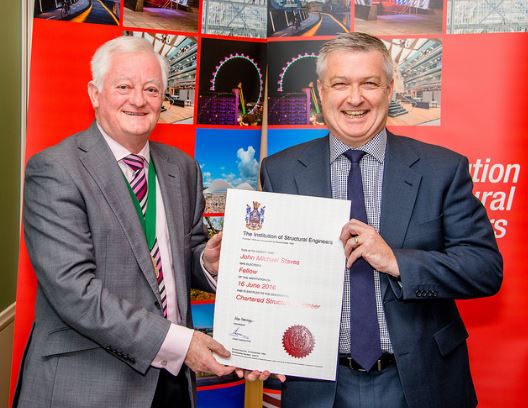
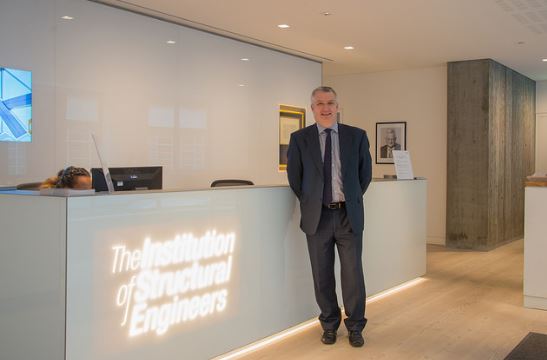
John Staves, Managing Director at Michael Aubrey Partnership has been awarded fellowship of the Institution of Structural Engineers (FIStructE) as a reflection of his outstanding individual achievements, success and expertise within the engineering profession.

The fellowship was awarded to John by Alan Crossman FIStructE, President of the Institution of Structural Engineers at a prestigious ceremony at the Institution’s headquarters in London.

john-staves-photo-certificate

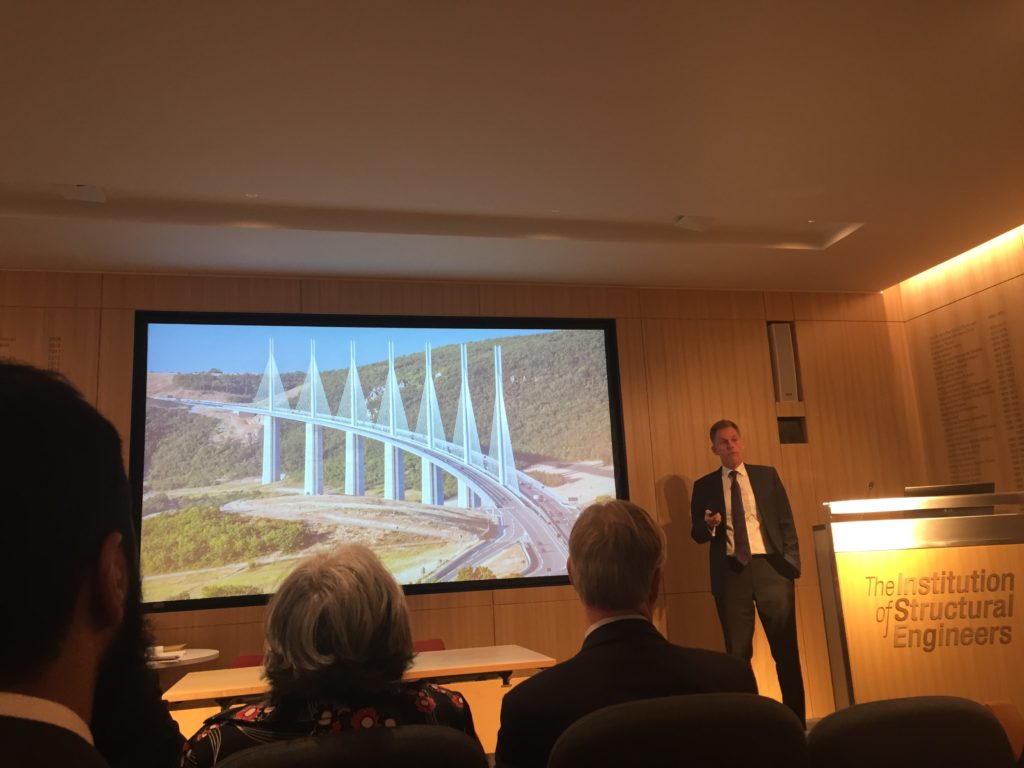
Key note speaker for the event was Simon Pitchers, Chartered Engineer and commonly known as “Crack Man” for his appearances on The Jeremy Vine show and with Sarah Beeny on C4’s “Help my house is falling down”.

Simon expressed what a privilege it was to be attending the presentations.

Simon Pitchers

What is a Structural Engineer?

Simon talked about how he is often asked “what is a structural engineer?” and one way of thinking about what a structural engineer does is to imagine the human body.

“If the human body was a building, structural engineers would be responsible for the skeleton”. 

Structural engineers take dreams and make them a reality.  We are guardians of public safety and rarely get the recognition we deserve.

The Journey to Fellowship

The journey to fellowship starts early in education – you can’t fail at anything. You need a degree and relevant experience to be allowed to even to apply for an interview.

Only if you pass the interview are you permitted to sit the professional exam.

For every 10 people who sit the professional exam only 2 or 3 pass.

It’s a rigorous process and only the committed engineers will pass and become Chartered.

John’s Route to Fellowship

After leaving Durham University in 1988, John worked at Arups in Newcastle on their graduate program. One of his first projects was working on the Ponds Forge Swimming complex in Sheffield for the World Student Games.

Following a move to a small engineering practice in Bristol and then to Mercury Communications in Bracknell, having achieved Chartered Status, John was keen to set up his own practice and founded Michael Aubrey Partnership in 1994.

John contributes to the wider structural engineering profession through his work as a Trustee of the Institution of Structural Engineers, as well as encouraging others to join the profession through school careers events and professional reviews of prospective members.

Talking about achieving the Fellow grade of membership, John said “I feel very honoured to have received this recognition from my peers and colleagues for the contribution I have made to the profession of structural engineering, both through strategic input to the Institution’s direction and my technical work at Michael Aubrey Partnership.”

john-staves-photo-front-desk


Join John Staves, Richard Lane and Tina McGeachan for our next Thames Valley BIM Hub Event!

BIM Hub

When? Monday 12th January 2015 16:30 – 19:00
Where? Hosted by: BSRIA: Bracknell – Old Bracknell Lane West, Bracknell, RG12 7AH

Our last event focused on design technology. This event looks at collaboration tools, surveying, 3d printing and interactive displays.

Come along if you want to:

  • stay up-to-date with what’s happening in the BIM world
  • receive updates from Richard Lane, Chair, on the latest work of the BIM Task Group
  • network with other companies in the Thames Valley with BIM on their agenda

Companies presenting include:

Project 4 : BIM Collaboration and Management Tools

FARO: 3D measurement technology
Computer-aided measurement and imaging devices and software. Technology from FARO permits high-precision 3D measurement, imaging and comparison of parts and compound structures. The devices are used for inspecting components and assemblies, production planning, documenting large volume spaces or structures in 3D, surveying and construction.

Hobs Studios: 3D printing
3D solutions for architectural, engineering, construction and product designers. Hobs has an impressive selection of technologies including full colour 3D printing, stereolithography (SLA) and multijet 3D printing to ensure we can support all forms of rapid prototyping.

Asite: BIM Collaboration and Management Tools

IDN: Interactive technologies
IDN specialise in collaboration and communications in the work place by integrating and supporting the adoption of technology. This includes interactive displays, digital signage, video conferencing, room booking technology, audio, control and collaboration tools.

What Are BIM Hubs?
BIM Hubs are part of a national and regional network established by CIC to promote a consistent understanding of what BIM means to the industry and its impact through all levels of the supply chain.
The resounding strapline to BIM is that we need to work better together and the Thames Valley BIM Hub meet regularly to:
•share BIM knowledge and best practice
•facilitate collaborative activity – helping companies to meet ‘BIM Buddies’
•support the development of the supply chain’s BIM capabilities
•increase BIM capacity across the region
•ensure regional input into national discussion and policy decisions

BIM is the future, so whatever your interest or level of involvement, please join us!

To book your place email Tina@secbe.org.uk
There is no charge for this event but do please let Tina know if you book, but are subsequently unable to attend.

Learning From ‘Build Sydney Live’

BIM Hub

When? Monday 19th May 2014  from 16:30 – 19:00
Where?
Hosted by Jacobs, Winnersh Triangle, Wokingham RG41 5TU

The last event was SOLD out, so book your place NOW!

Itinerary

Welcome & Introductions | Richard Lane | John Staves | Tina McGeachan
Host’s message | Jacobs
Keynote | David Greenwood
Open Discussion | All

Guest speaker: David Greenwood MA, MSc, FCIOB, PhD
Professor of Construction Management
Director,BIM Academy (Enterprises) Ltd.
Faculty of Engineering and Environment, Northumbria University

David Greenwood, Director – BIM Academy is from the winning team of the ‘Build Sydney Live 2013 challenge. He will present their winning team’s 2 day marathon that placed them in the lead in this Global competition.

David will share how the BIM Academy collaborated with a wide range of BIM specialists to produce this award-winning design during the gruelling 48-hour competition. With team members scattered across the globe, collaborative technologies played a key role in the success.

By using the power of collaborative working in the cloud and international developments in interoperability, Build Sydney Live demonstrated the power of these new paradigms for architecture, engineering, planning and construction.

On October 28th at Noon AEDT, a specially chosen and internationally known site in Sydney was announced, along with a brief for a significant multi-use development. All the key information was published in interoperable formats. Teams were free to exploit any interoperable technology and to add updates to a public collaboration-site and all visitors were free to comment.  Teams from around the world were invited to participate.

This will be an information packed event – book your place now!

To book your place contact: tina@secbe.org.uk

There is no charge for this event but do please let Tina know if you book but are subsequently unable to attend.