Are you looking for a fast, efficient method to install foundations near trees? click here for a quotation.
More and more we are being asked to design screw piles in root protection areas, sites where access is difficult and temporary structures.
Today I’m talking to John Staves, our Managing Director about why screw piles are an alternative to trench fill foundations and how they can benefit your project.
So what Are Screw Piles?
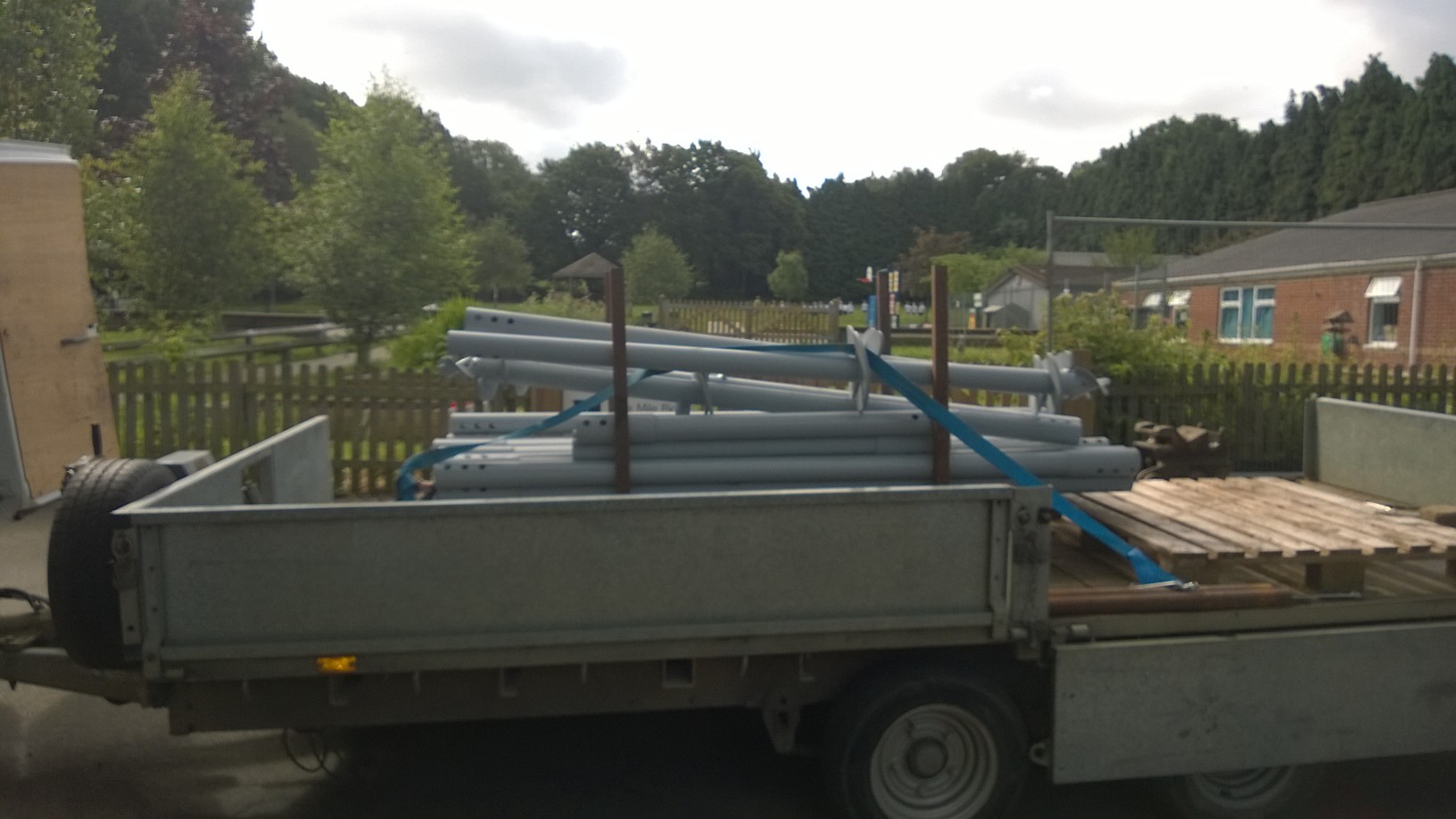
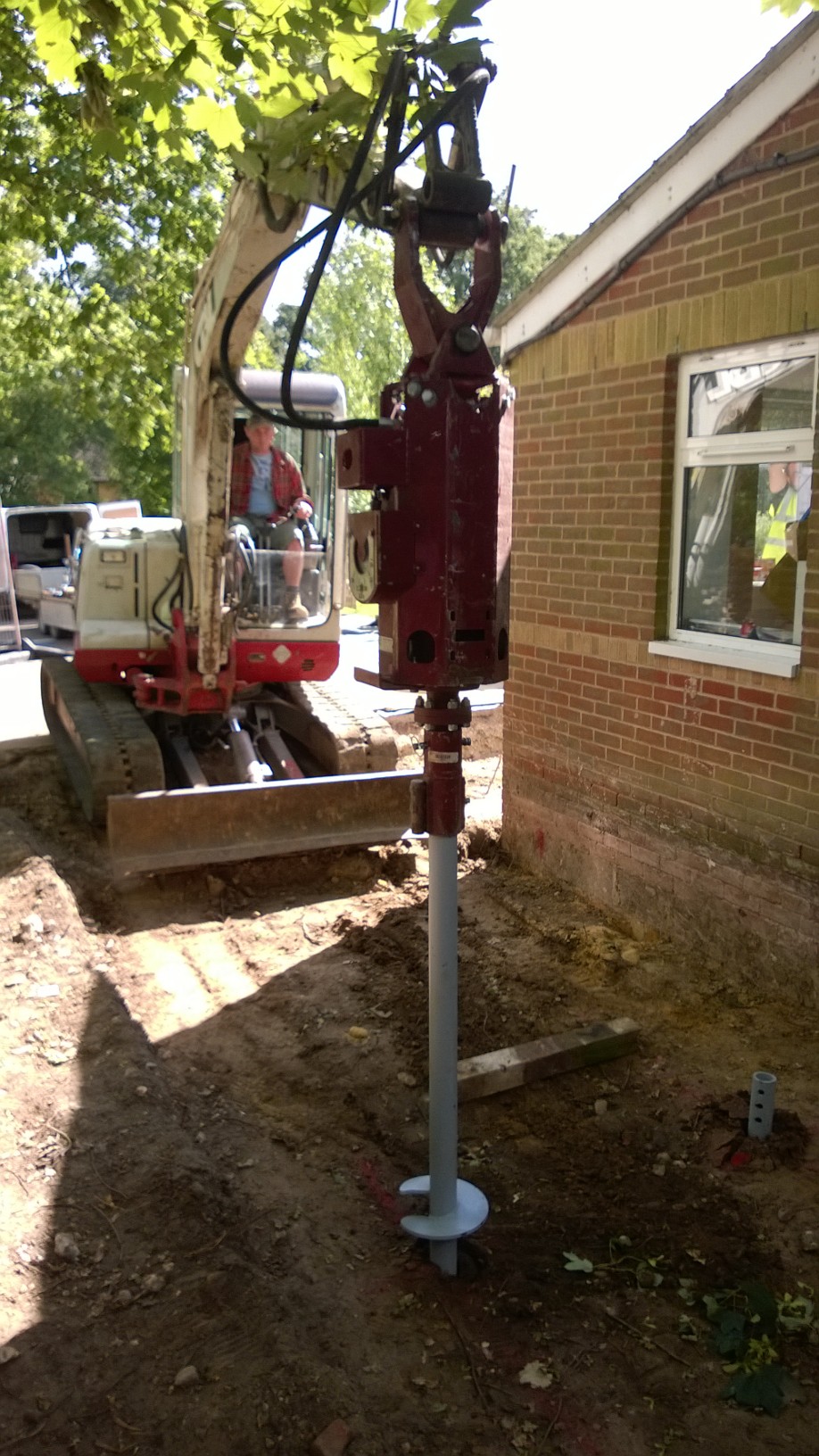
A screw pile consists of a slender, hollow steel shaft with a small number of steel helices (or screw threads) welded to it.
What are the Advantages of Screw Piles?
There are many advantages of screw piles;
Deep foundations – where foundations need to be more than 2.5m its more cost effective to have piles. Using screw piles ensures the bearing strata is below either soft ground or below ground that is influenced by moisture changes eg clays
Difficult access – You can use screw piles on sites where access is difficult, as the machines are small and can fit through a pedestrian access
Light Loads – If loads are light screw piles are a good alternative
Faster construction time – you can build on them as soon as they are installed (see case study below)
They can be loaded immediately after installation – you don’t have to wait for concrete to harden, or in the case of driven piles, for excess pore water pressures to dissipate.
No heavy plant is required to install them
Planners Like Them – where trees are on a development site and have a tree protection order, using screw piles limits potential damage to roots during installation. They also make sure that no part of the tree bears any load from the structure.
Any Disadvantages of Screw Piles?
If you are just looking at the foundation cost and not the overall project cost, then screw piles are slightly more expensive than trench fill. However, if you take in to account the savings by not having any “muck away” costs, then they are cost effective.
Historically building control were nervous about this “new technology” now they are more familiar, and we are able to answer any technical questions that they have.
Case Study
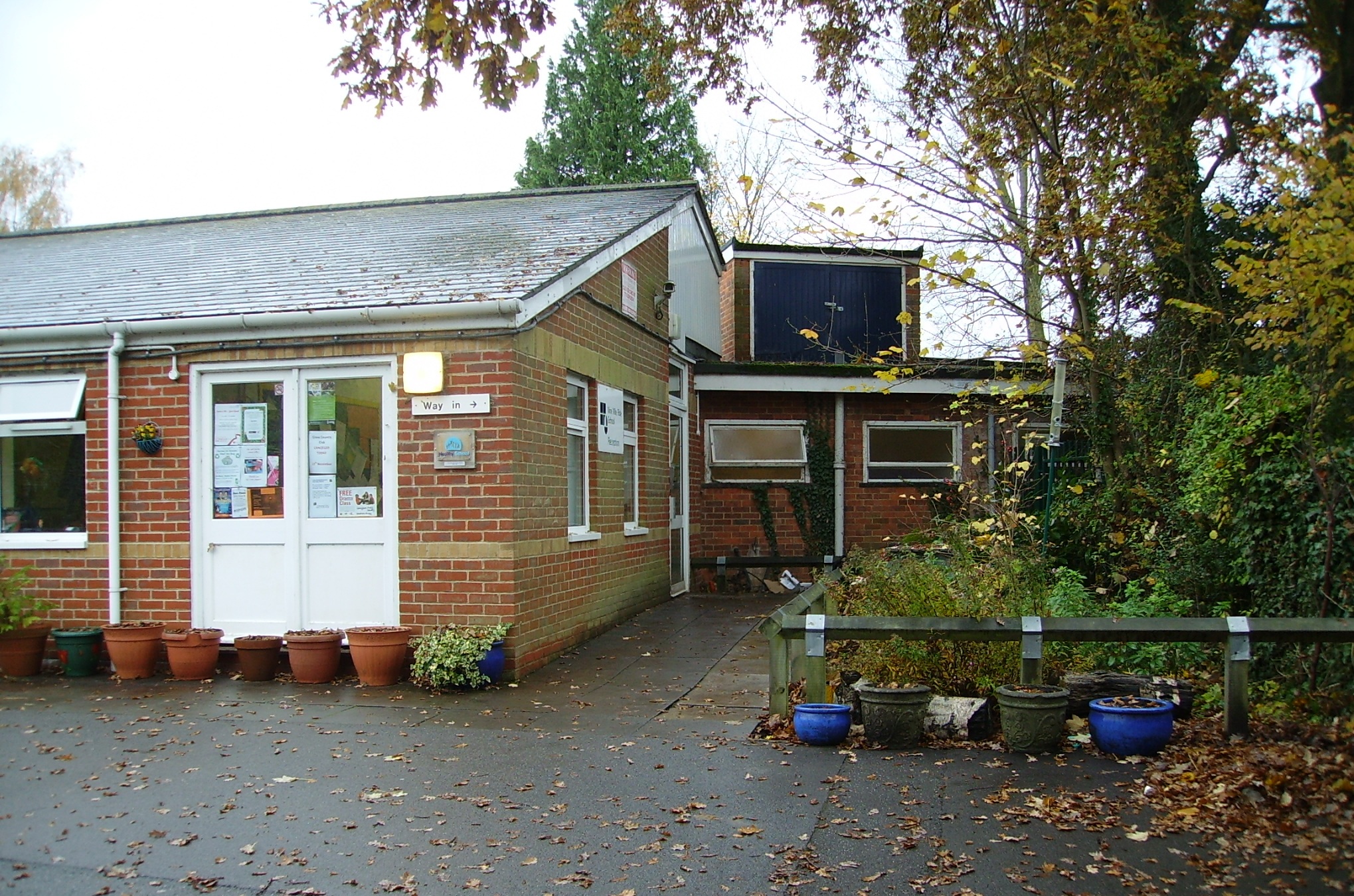
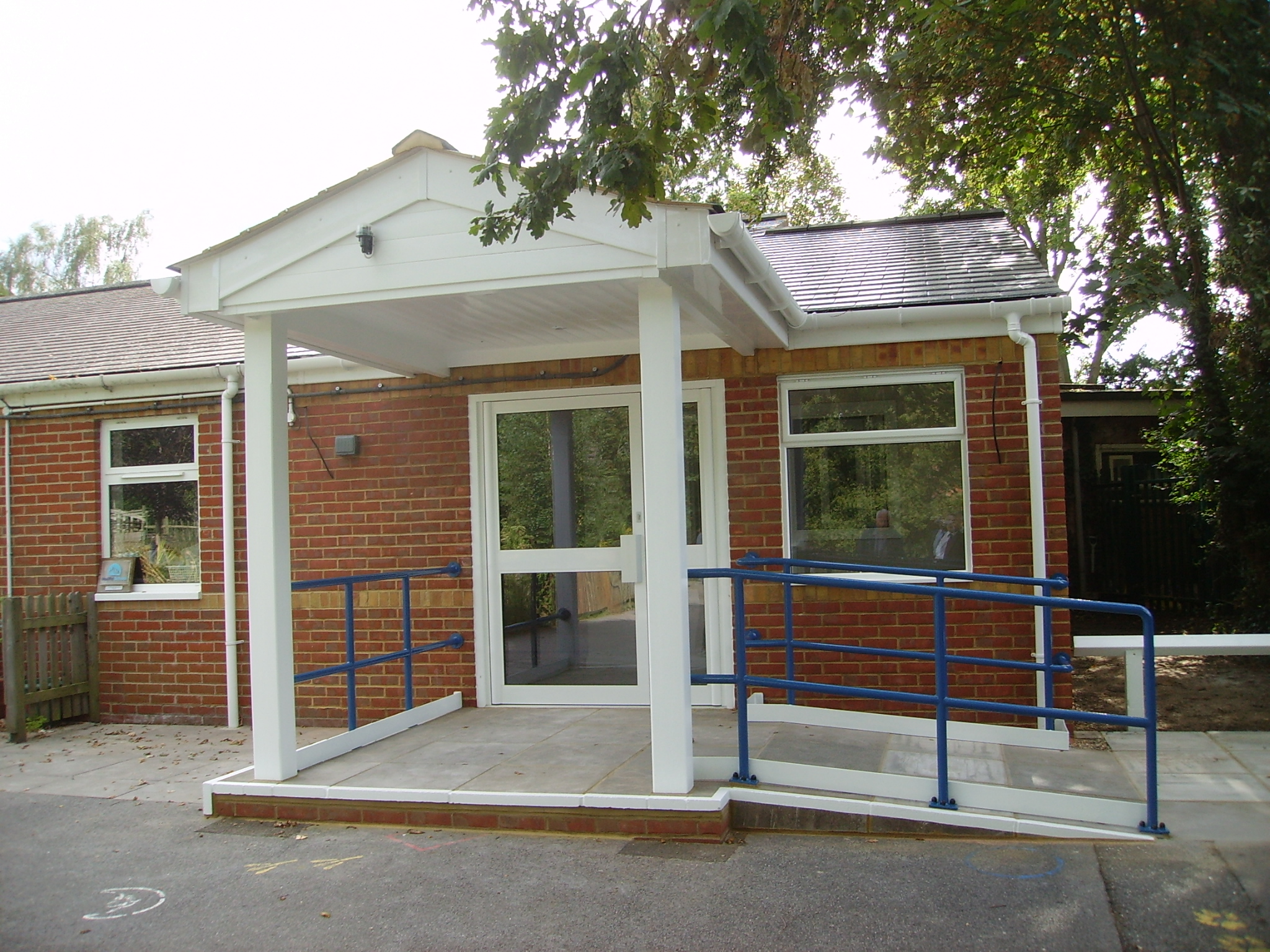
A local school instructed us to design and build a new reception area to increase the floor area and create an obvious entrance area.
It was single storey extension, built next to an Oak Tree which had a TPO (Tree Preservatoion Order).
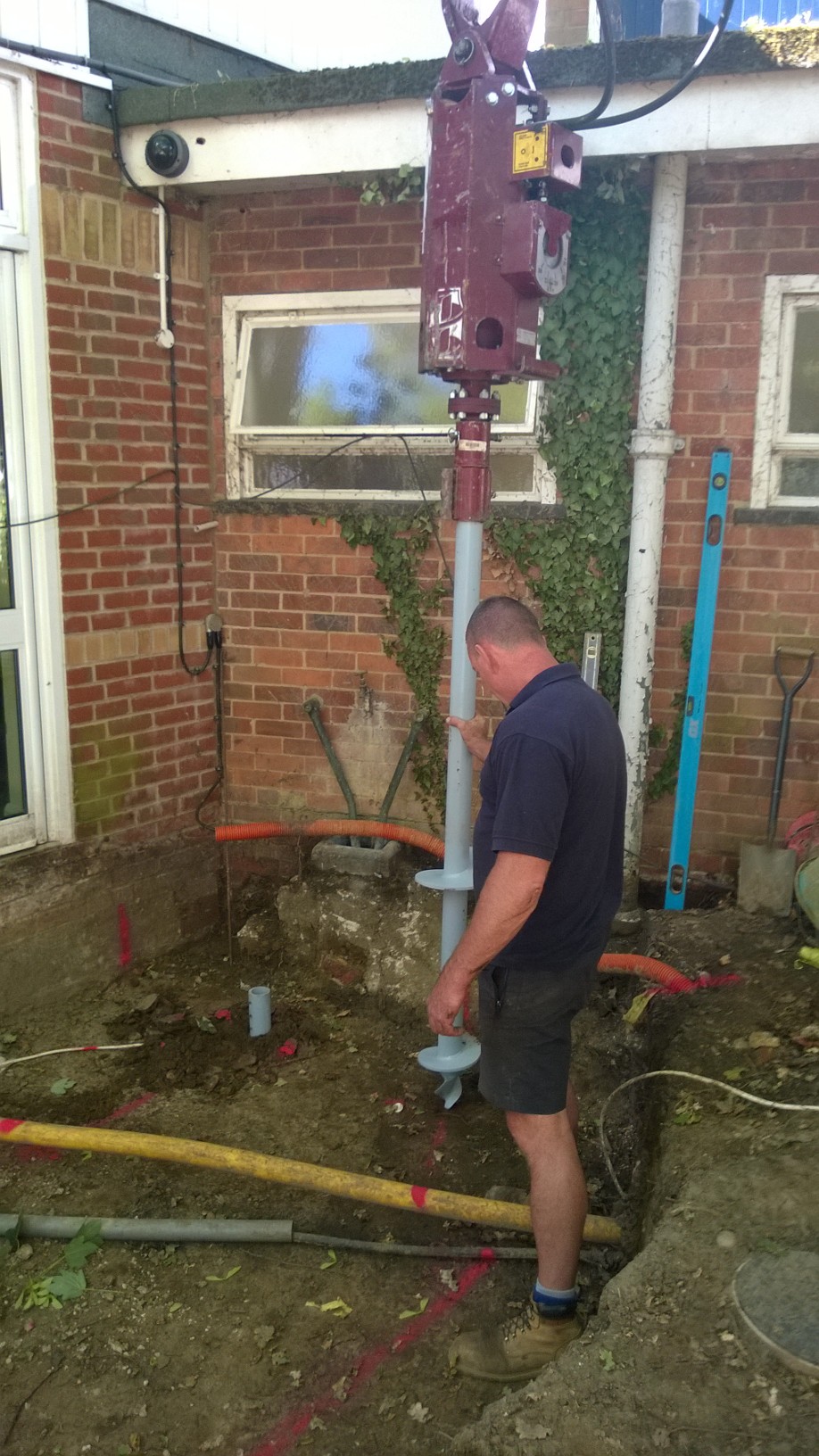
The contractor turned up on site just after 9am to install 8No. screw piles.

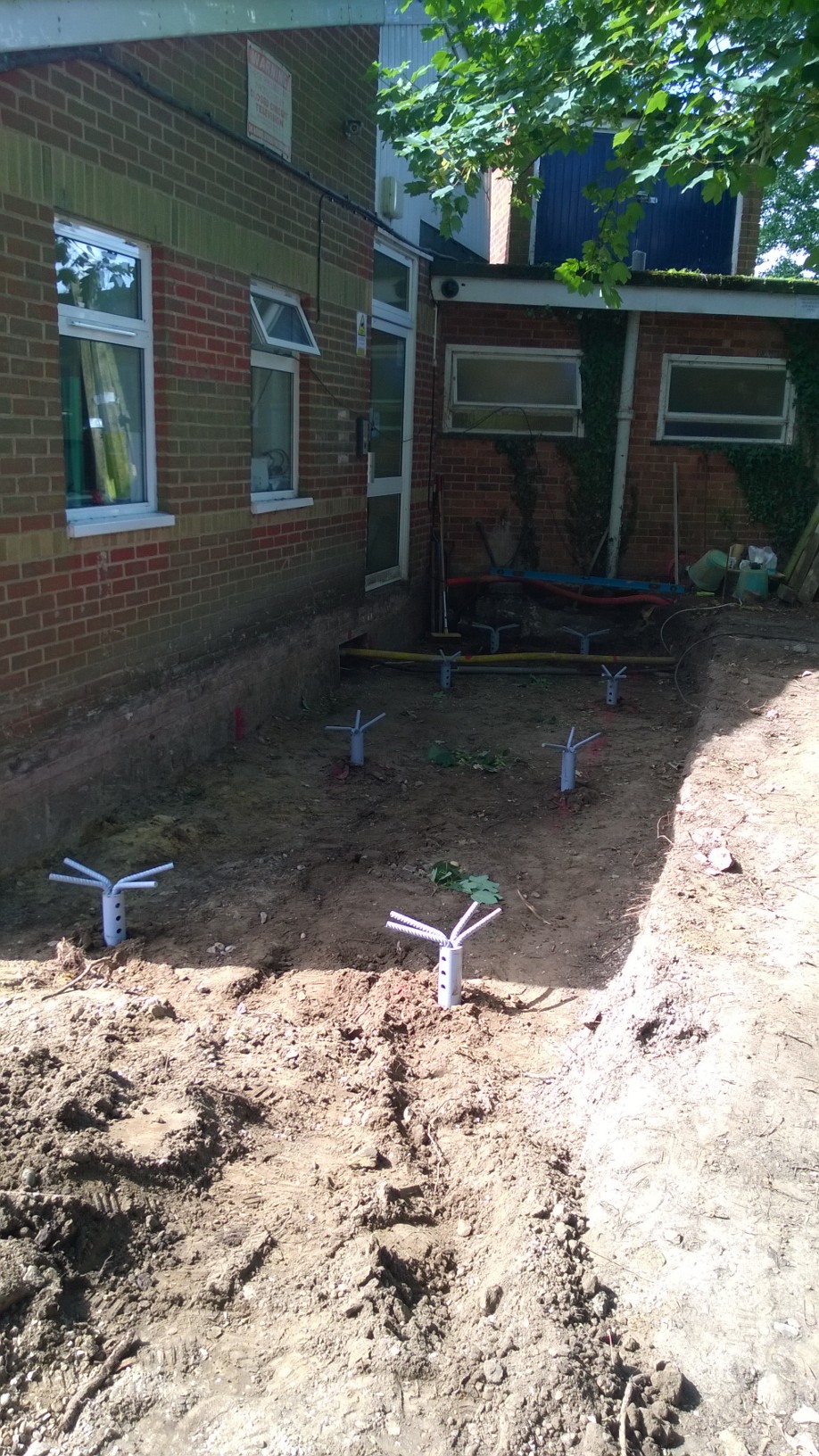
After scraping back the soil, the contractor set out the screw piles.
It was VERY fast.
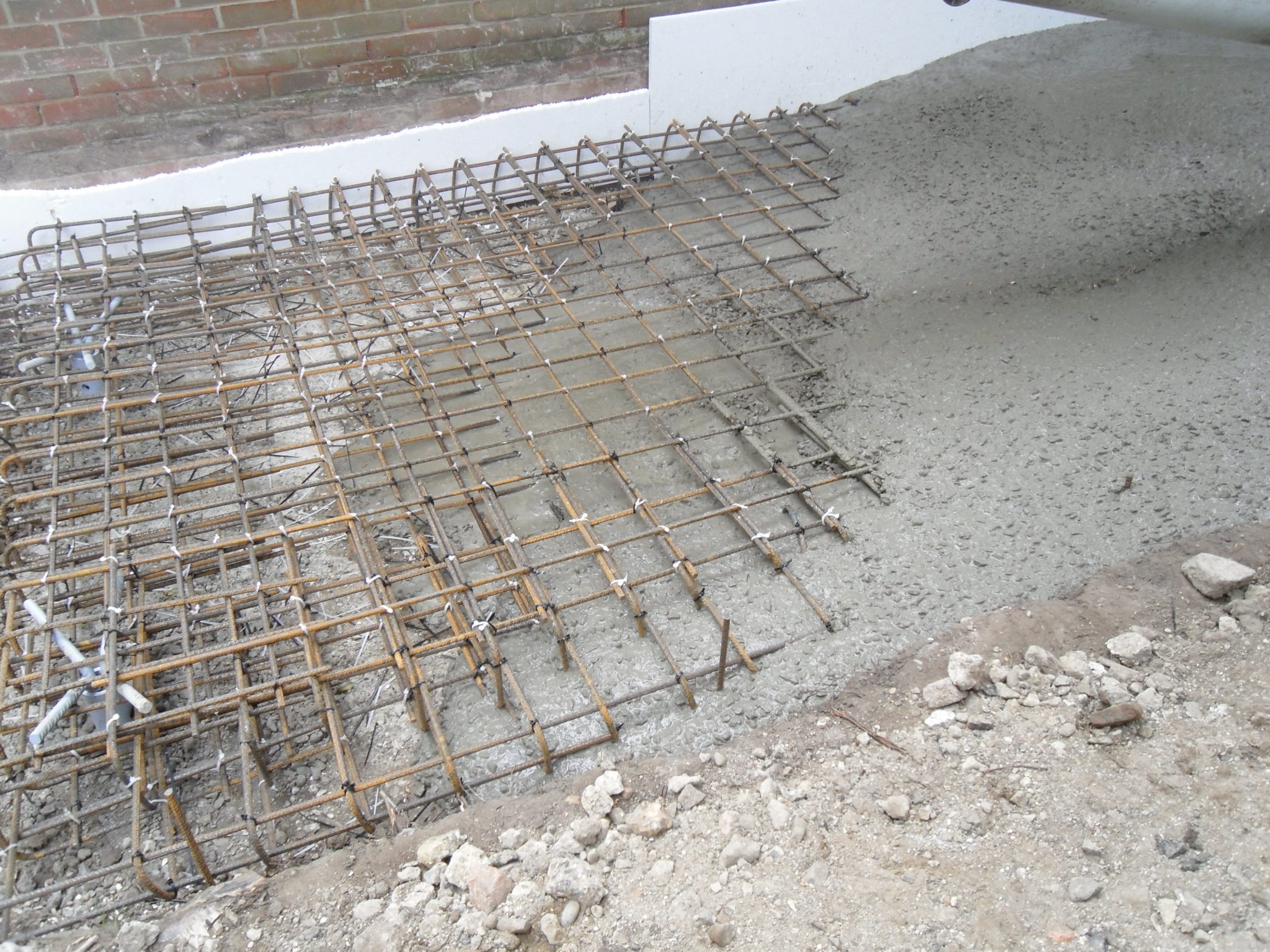
The 8No. screw piles were driven in during the morning and by the afternoon the contractor was laying out the mesh reinforcement, ready to pour the slab.

Installing Screw Piles
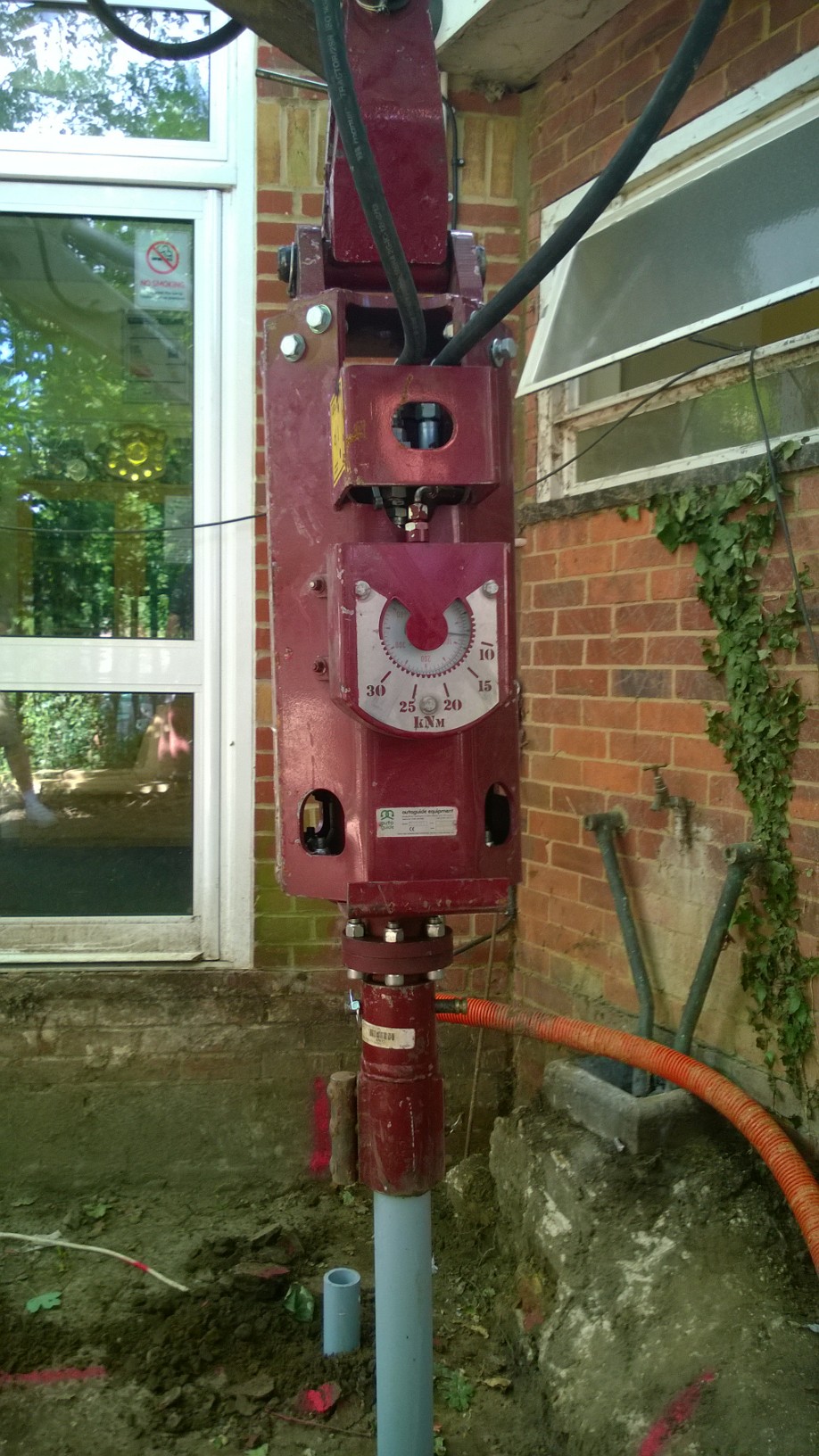
They are installed on site either using either a handheld (or more usually) an excavator mounted torque head. It’s a relatively easy process, they are installed at a constant speed, there is no vibration, nor pre-auguring.
This was a fantastic little project – the excavator was on on site for a few hours in the morning, leaving the slab ready to pour in the afternoon. No “muck” away, a very neat job.
Collaborative Approach
We have been working with ABC Anchors and SEA Construction for a number of years now, providing structural design advice and calculations to their diverse customer base.
Are you considering screw piles for your next project? Please get in touch for a quotation today.
Contact Us