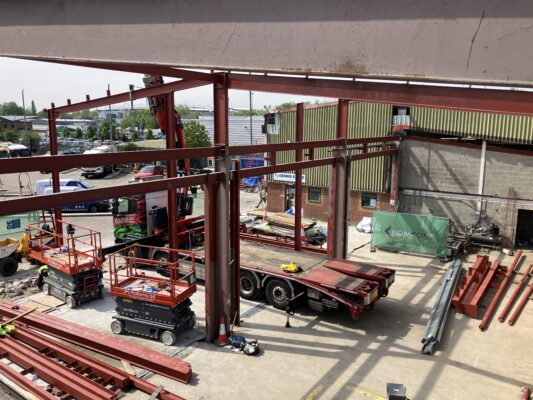

Always Using The Same Structural Engineer

If you’ve worked with the same structural engineer for years, chances are things run smoothly.

They know your style.

They understand what matters to you.

And changing consultants can feel like more hassle than it’s worth.

But staying in the same lane can also mean missing new ideas, especially when structure plays such a key role in value, buildability, and programme.

This isn’t about change for the sake of it.

It’s about keeping your options open.

Exploring how others think.

Comparing approaches.

The right structural engineer can do much more than produce safe designs. They can influence costs, simplify construction, reduce embodied carbon, and help unlock the full potential of your site. And if you’re only ever working with one team, you’re only ever seeing one way to do it.

What other developers have discovered when they looked outside their usual circle:

  • A new engineer removed the need for a transfer structure, saving weeks on site.
  • Another used hybrid framing to increase net lettable area and lower embodied carbon.
  • One reworked a basement to avoid deep excavation, cutting cost, time, and risk.

These weren’t about fixing poor performance, they came from bringing fresh thinking to the table.

You Don’t Have to Commit, Just Stay Curious

Trying another engineer doesn’t mean switching loyalties. It could be as simple as a second opinion, a feasibility study, or a peer review.

Because when structural decisions have such a big impact on how a project performs – commercially, practically, and environmentally – it makes sense to see what’s possible.

Scew Piles for Commercial Builds

In commercial construction, foundations can become a bottleneck, especially when you’re dealing with tight deadlines, poor ground, or restricted access.

Traditional methods involving excavation and concrete can be slow, messy, and disruptive. But there’s a smarter alternative gaining traction across our industry: screw piles.

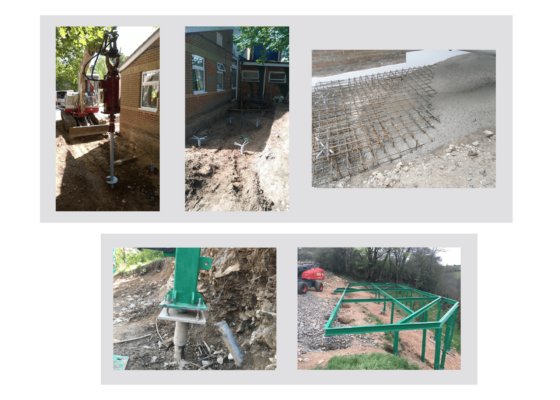
screw piles log cabin

Screw piles are steel shafts with helical blades that are literally screwed into the ground. No excavation, no concrete, no curing time. For commercial clients, that means quicker programmes, cleaner sites, and fewer logistical issues.

screw pile design

As structural engineers, we regularly recommend screw piles on sites where:

  • Access is limited – Ideal for tight city plots, rear extensions, or infill developments
  • Ground conditions are poor – Performs well on soft, made, or variable soils
  • The site is sloped – Eliminates the need for stepped trenches or complex formwork
  • Environmental sensitivity is a concern – Minimal disturbance near utilities or tree roots
  • Speed is critical – Rapid installation and instant load capacity keep programmes on track
  • Existing buildings are involved – Great for underpinning or strengthening foundations in retrofit projects


screw pile concrete

For developments, especially those in built-up or brownfield areas, screw piles offer a low-impact, high-efficiency solution. They reduce the risk of weather delays, cut out the need for wet trades, and help projects stay on budget and schedule.

Whether you’re planning a new-build, extension, or remedial works, screw piles provide a more predictable and scalable foundation method that aligns with the fast pace of commercial construction.


If your project involves difficult ground, limited access, or a compressed timeline, it’s time to rethink traditional foundations. Screw piles aren’t just an alternative, they’re often the commercial edge you’ve been looking for.