
RAAC Inspections
We specialise in providing expert RAAC (Reinforced Autoclaved Aerated Concrete) inspections to help building owners, local authorities, and organisations manage the structural challenges associated with 1960s – 1980’s building stock.
With decades of experience in structural engineering and a proven track record in defect assessments, we are the trusted choice for identifying and addressing RAAC-related issues.

Award-winning innovation delivering practical RAAC repair solutions – without the need for demolition.
Talk to a Structural Engineer
You’ll gain clear, authoritative guidance on RAAC risks and next steps – supporting informed decisions around safety, compliance, and asset management.
Provide a few details below and we’ll guide the next steps.
Trusted by:













How Our Qualified Structural Engineers Can Help You
We provide a comprehensive service to help you identify RAAC in your building and specify effective repair solutions. Here’s how we support building owners, local authorities, and organisations extend the life of buildings;
RAAC Identification and Surveys
- Conduct thorough visual inspections and structural assessments to identify the presence of RAAC in your building.
- Use advanced techniques to assess the condition of RAAC panels, including signs of cracking, deflection, or moisture damage.
- Document findings with detailed reports and photographs, giving you a clear understanding of the risks.
Next Steps Once RAAC is confirmed
- Risk Assessment to determine immediate safety response for users of the building
- Structural Integrity Assessments
- Remedial Options – Replace or Repair
- Repair and reinforcement solutions
Structural Integrity Assessments
- Evaluate the load-bearing capacity of RAAC elements to determine their ability to support current and future loads.
- Identify areas where RAAC has deteriorated to the point of requiring immediate attention.
Repair and Reinforcement Specifications
- Provide tailored recommendations for repairing or reinforcing RAAC elements, ensuring long-term structural stability.
- Specify modern materials and techniques, such as Carbon Fibre Reinforced Polymers (CFRP), to strengthen and extend the lifespan of RAAC components.
Compliance with Standards
- Ensure all assessments and repair specifications meet the latest building regulations and safety standards.
- Help you navigate compliance requirements, providing peace of mind for building owners and stakeholders.
Collaboration with Your Team
- Work closely with contractors, architects, and facilities managers to ensure seamless implementation of repair solutions.
- Provide ongoing support and advice throughout the remediation process.
Why Choose Michael Aubrey Structural Engineers for RAAC Inspections?
- Qualified Expertise – All inspections are carried out by chartered structural engineers with extensive experience in defect assessments and RAAC-related projects.
- Proven Track Record – With over 30 years of experience, we have successfully helped countless clients identify and resolve structural issues in aging buildings.
- Tailored Solutions – We deliver practical, cost-effective recommendations that prioritise safety and minimise disruption.
- ISO 9001:2015 Accreditation – Confidence in our well-managed processes and high-quality service.
- Innovative Techniques – Expertise in modern reinforcement methods, including CFRP, ensures durable and efficient repair solutions. Successfully pioneering remedial solutions for Network Rail.
Who We Help
Our RAAC inspection services are tailored to meet the needs of:
Building Owners.
Protect your investment and ensure the safety of occupants.
Local Authorities.
Identify and address RAAC issues in public buildings, schools, and housing stock.
Organisations.
Maintain compliance and mitigate risks in commercial and residential properties.
What is RAAC and Why is it a Concern?
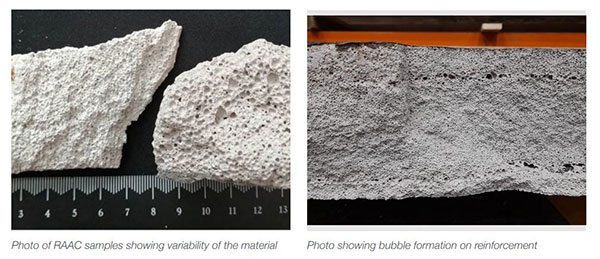
RAAC, a lightweight concrete material used in buildings from the 1960s to the 1980s, has been found to deteriorate over time, posing significant risks to structural integrity. Commonly used in roof slabs, floor panels, and walls, RAAC is prone to:
Cracking and Deflection
Over time, RAAC can lose its strength and stiffness, leading to cracks and sagging.
Moisture Absorption
RAAC is highly porous, making it susceptible to water ingress, which accelerates degradation, failing to protect reinforcement in the way normal weight concrete does.
Installation Defects
Some problems have been attributed to manufacture and installation defects.
Structural Failure
If left unchecked, deteriorated RAAC can lead to catastrophic failures, endangering occupants and property.
Let’s Secure Your Building’s Future – Take the first step
If you suspect RAAC, don’t let it compromise your buildings safety
It’s crucial to assess whether RAAC is present and take proactive measures to address it.
Our team of qualified structural engineers is here to help you identify, assess, and resolve RAAC-related challenges with confidence.